


The 11-second wonder: How Sukur stunned the hosts

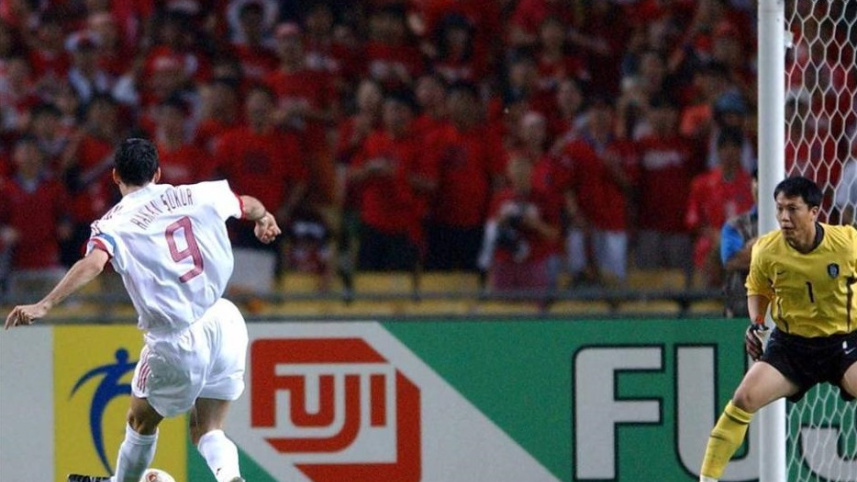
In a country where football is not merely a game but a pulse of everyday life, he was once its brightest star.
Today, after falling out of favour with the government of Recep Tayyip Erdogan in Turkiye, Hakan Sukur lives in exile in the United States. A return to his homeland could mean imprisonment -- or worse. And yet, it was this very man, now living a life in the shadows, who once etched his name into history with the fastest goal ever scored on the World Cup stage.

Turkiye’s all-time leading scorer for both the national team and giants Galatasaray, Sukur earned the nickname ‘Bull of the Bosphorus’. His instinctive finishing was so devastating that even the fiercest supporters of arch-rivals Fenerbahce and Besiktas held him in reluctant admiration.
The 2002 FIFA World Cup, co-hosted by Japan and South Korea, marked an epic chapter in Turkish football. Ending a painful 48-year wait, they returned to the global stage -- not merely to participate, but to stun the world. At the heart of that fearless journey stood their captain, Sukur.
He had scored six crucial goals during the European qualifiers, raising expectations that he would dismantle defences at the main event as well. But once the tournament began, his magic boots fell strangely silent.
Turkiye surged to the semifinals, shaking the footballing world along the way, before suffering a heartbreaking defeat to eventual champions Brazil. Across six matches and 435 minutes on the pitch, Sukur managed eight shots -- but not a single goal. For a striker, such a drought can be mentally crushing.
Criticism poured in from all sides, yet he seemed to wait patiently for his moment. That moment arrived in the third-place playoff against South Korea at Daegu Stadium -- a final chance for redemption.
Amid the deafening roar of home supporters, Sukur stepped onto the pitch, desperate to rediscover himself. The hunger was written all over his face.
South Korea kicked off, stringing together three precise passes in their own half before the ball reached centre-back Hong Myung-bo. For a fleeting second, his concentration slipped -- and Turkiye pounced like predators.
In-form forward İlhan Mansız stole the ball swiftly and, without hesitation, squared it to his captain just outside the box. This time, Sukur made no mistake.
As the ball hit the net, the commentator cried out in disbelief: “Eleven seconds! It’s one of the earliest World Cup goals of all time.”
In reality, the clock read 10.8 seconds.
In that blink-and-you-miss-it moment, the stadium fell silent. After enduring a month-long drought, Sukur needed only seconds to rewrite history -- scoring the fastest goal ever in World Cups.
His lightning strike broke a 40-year-old record set at the 1962 FIFA World Cup, when Czech footballer Vaclav Masek scored after 16 seconds against Mexico -- also from the opposition’s kickoff. Four decades later, history echoed itself in remarkable fashion.
The goal lifted a mountain of pressure off Sukur’s shoulders. Reflecting after the match, he said they had desperately wanted the bronze medal -- but he had also been eager to score, especially after enduring such scrutiny.
“Everything happened so fast,” he said. “It was a feeling of relief, of great joy. I went home with a World Cup goal and a medal.”
He went on to assist two more goals in that match, both finished by Mansız, as Turkiye defeated South Korea 3-2 to secure third place.
Sukur may now be an outcast in his own country, but that 10.8-second strike remains immortal in the memory of football lovers -- a moment where time stood still, and history was rewritten in a heartbeat.
 For all latest news, follow The Daily Star's Google News channel.
Comments