


The silence of the Maracana

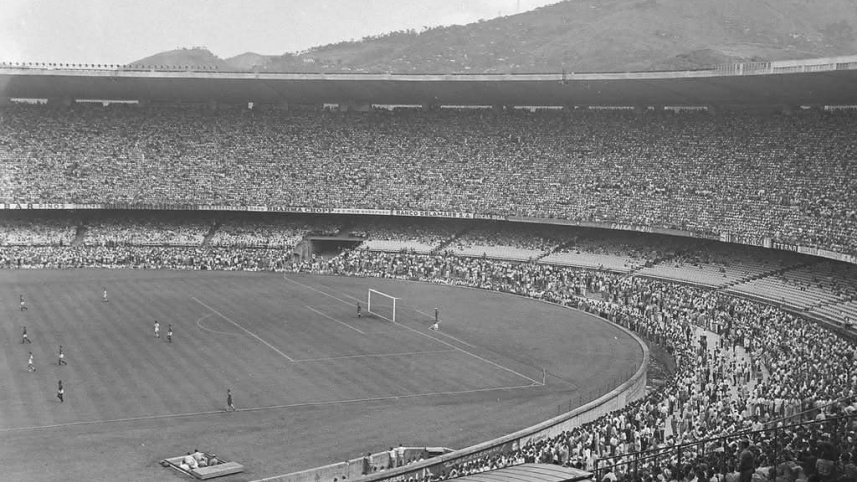
On July 16, 1950, the skies above Rio de Janeiro carried not just the glare of the sun, but the blazing pride and golden dreams of an entire nation, Brazil. Rising beside the shores of Guanabara Bay stood the newly built concrete giant -- the Maracana Stadium. It was not merely a structure of brick and cement; it was a vast temple of hope, ambition and supremacy for nearly 200 million Brazilians.
The decisive match of the 1950 FIFA World Cup felt less like a contest and more like a coronation ceremony for Brazil. From the main avenues to the narrow alleys of Rio, the city swayed to the rhythm of samba. It was as if another carnival had arrived before the real one.

On the eve of the final against Uruguay, Brazilian newspapers boldly printed photos of the team on their front pages with the headline: “Here are our world champions.” Brazil needed only a draw to secure the title. Nearly 200,000 spectators, dressed in the then traditional white jerseys, flooded the vast galleries of the Maracana. Few could have imagined that the pristine white would soon turn out to be a burial shroud rather than a robe of celebration.
While thunderous roars echoed across the stands, the atmosphere in the dressing room of the Uruguay team was calm, almost like a graveyard – yet charged with tension. Brazil’s overwhelming confidence and premature celebrations seemed to have fueled Uruguay’s determination, especially their captain, Obdulio Varela, famously known as El Negro Jefe (The Black Chief).
Throwing the Brazilian newspapers on the dressing room floor, Varela delivered a stirring message to his teammates.
Ignoring his coach’s defensive tactics, Varela said: “The millions in the stands will not play against us. Only the eleven on the field will. The people outside are just wooden dolls. Go out there, stand tall and fight. Our only job today is to beat them.”
His steel resolve that day would cloak Uruguay in an armour of defiance.
The test of nerve began as soon as the referee blew his whistle. The first half ended goalless, with the gallery full of Brazilian supporters still waiting for a moment of joy. Then, just two minutes into the second half, Friaca gave Brazil the lead. The Maracana erupted like a living volcano, its joy spilling across Rio in waves.
But the celebration was short-lived. In the 66th minute, Juan Alberto Schiaffino equalised for Uruguay. A strange silence crept into the stands, as did a fear of the unthinkable in the hearts of the Brazil fans.
Then came the 79th minute -- perhaps the darkest moment in Brazilian football history. Alcides Ghiggia surged down the right flank with pace. Brazilian goalkeeper Moacir Barbosa expected a cross, as Ghiggia had done earlier. As Barbosa moved slightly forward, Ghiggia struck a low shot through the narrow gap between the goalkeeper and the post.
The ball nestled into the net.
In an instant, the world seemed to freeze. The deafening roar of nearly 200,000 spectators turned into an unfathomable silence -- heavier than tears, colder than death. It was as if an entire nation’s heartbeat had stopped.
Ghiggia would later recall that surreal moment: “Only three people in history have silenced the Maracana with a gesture -- the Pope, Frank Sinatra and me.”
When the final whistle blew, Brazilian players collapsed onto the grass in tears. In the stands, there was disbelief, shock and an eerie stillness. The Jules Rimet Trophy was quietly handed to Uruguay almost unnoticed.
The tragedy extended far beyond the stadium. Some listening on the radio reportedly suffered heart attacks, while others, unable to bear the grief, took their own lives. Brazil fell under a blanket of mourning, and the Maracana turned into the stage of a tragic tale. Streets that had awaited samba celebrations were suddenly engulfed in cemetery-like silence.
Famous Brazilian writer Nelson Rodrigues later wrote in despair: “The defeat of 1950 was our own Hiroshima.”
It was not merely a football loss; it was a blow to Brazil’s national identity.
The Brazilian public never truly forgave their unfortunate heroes -- particularly goalkeeper Barbosa. Throughout the tournament, he had guarded the goal like an impregnable wall, yet Ghiggia’s single strike condemned him to a lifetime of blame.
Once, in a shop, a mother pointed at Barbosa and told her child: “Look, that is the man who made all of Brazil cry.”
Until his death, Barbosa carried the burden of that accusation. People avoided him on the streets; he was even barred from entering national team training camps. Shortly before his death in 2000, a broken Barbosa said in an interview: “In Brazil, the maximum prison sentence is 30 years. But since 1950, I have been serving a 50-year sentence for a crime I did not commit alone.”
 For all latest news, follow The Daily Star's Google News channel.
 The unimaginable tragedy permanently changed Brazilian football. Many began to believe the white jersey had become a symbol of misfortune. The traditional kit was abandoned, and Brazil adopted the now-famous bright yellow Canarinho jersey.
Yet even the golden glow of that shirt could not fully heal the wound of Maracana. When a young Pele led Brazil to their first World Cup triumph in 1958, some elderly fans were perhaps still sitting beside their radios, listening for the haunting echo of the final whistle from 1950.
The suppressed sob of the Maracana never truly faded. Even today, if one listens closely to the winds of Rio, the echo of that silence -- of 200,000 stunned voices -- seems to whisper through the air.
It remains an epic tragedy where a green football field turned into the mass grave of a nation’s dreams, and a single ball crossing the line became the name of an eternal curse.
Comments