


(Un)passing thru' Jahangirnagar with 'radiant, cool eyes'
After all, if you do not resist the apparently inevitable, you will never know how inevitable the inevitable was.
— Terry Eagleton
Where there is power, there is resistance.
— Michel Foucault
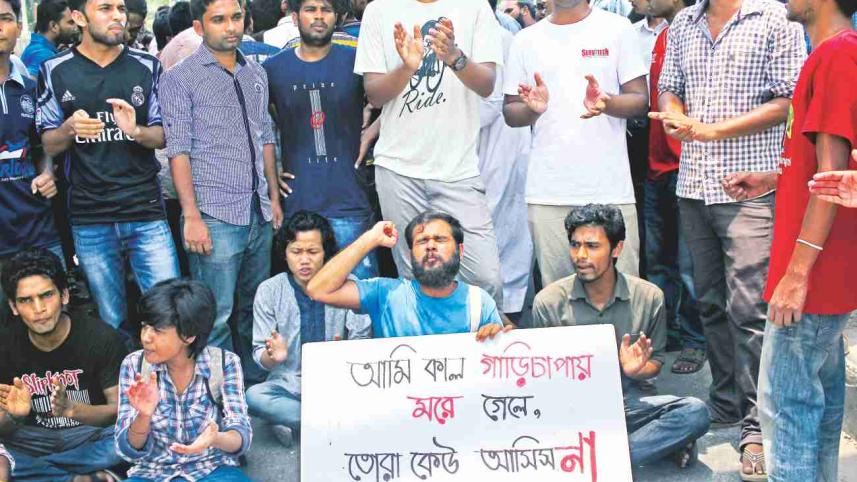
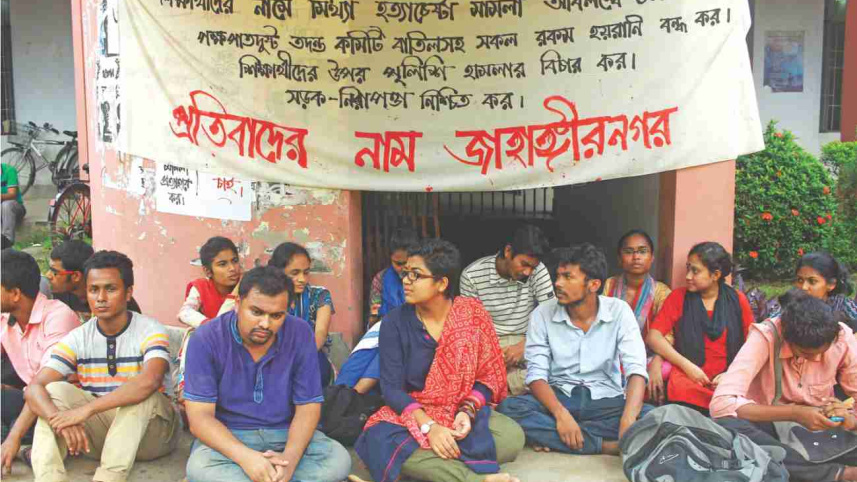
'Mithya mamla huliya, nite hobe tuliya'. As slogans are chanted in the streets of Jahangirnagar University demanding the withdrawal of the fabricated case against students, the presence of power is invoked, but more loudly so, the possible absence of it—the possible absence of the repressive technology of power. As the repression by police and university authorities intensify against students, resistance comes to be. 'Protibader Naam Jahangirnagar' or, 'Jahangirnagar Signifies Protest' is the name of a movement whose very sign, the name, negates the non-questioning or non-protesting silence in the face of repressive power—repressive power that seeks to silence the students who question its authority and violent insertion.

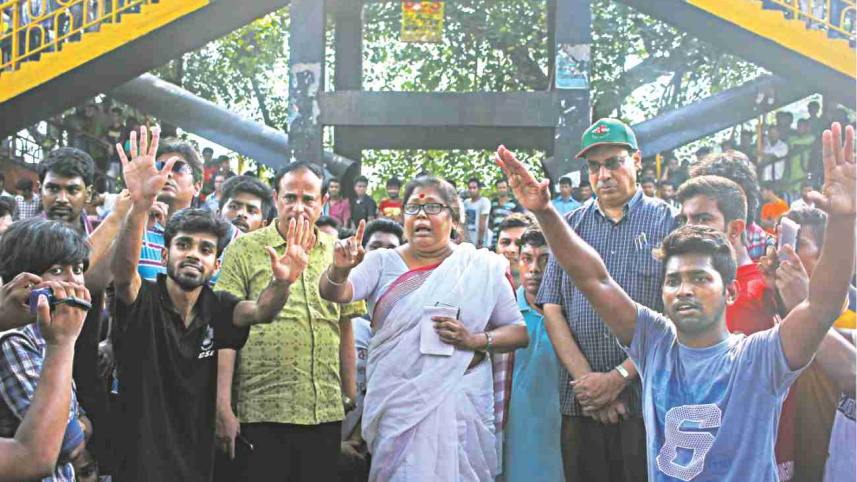
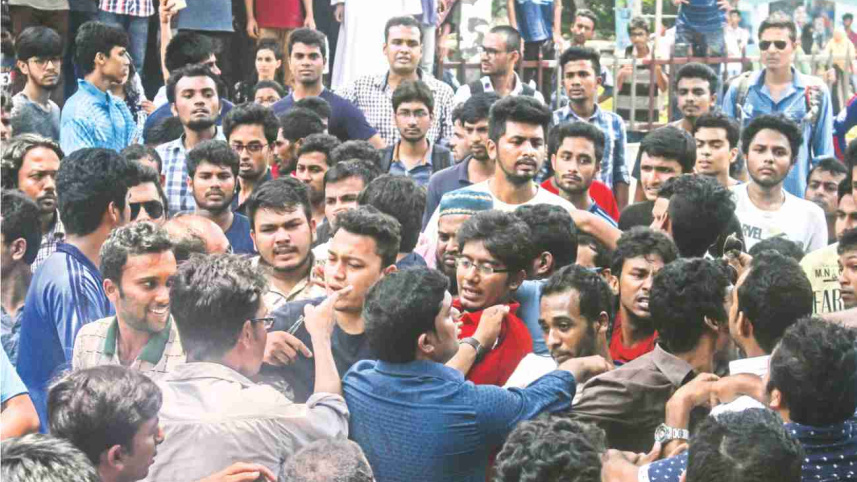
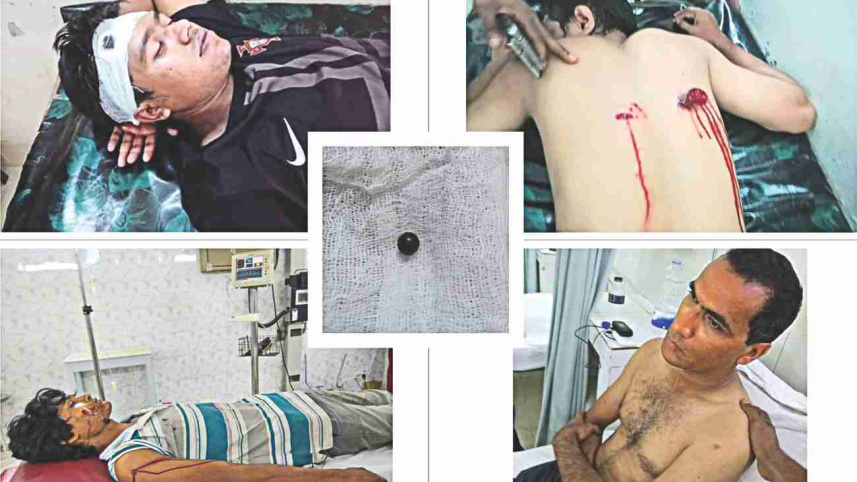
The movement for road safety began on May 27 after the death of two students of Jahangirnagar University, Arafat and Rana, in a tragic road accident; it faced betrayal from the university authority and consequently police brutality that left three students severely wounded by gunshot and many others injured. Faced with such violence, the agitated students marched toward the residence and office of the Vice Chancellor to demand answers for the police attack on students since a representative body of the protesting students and the authority had already agreed on the withdrawal of the movement and the immediate implementation of the demands of road-safety in a meeting at the Vice Chancellor's residence two minutes before the police attack. The authorities' silence about the brutal police attack on students and the police's breaching of the university's autonomy in such a manner endorses the attack on students and exposes the university's authorial fraternity with the police. But to have faith in the goodness of the university authorities, an interpretation can be imagined as such—they 'kept mum' due to their activated guilt-conscience as the wounds and screams of students did resonate with them. This very guilt was later neutralised or rather masked through the arrest of the students who went to the Vice Chancellor's residence to demand answers for the police attack.
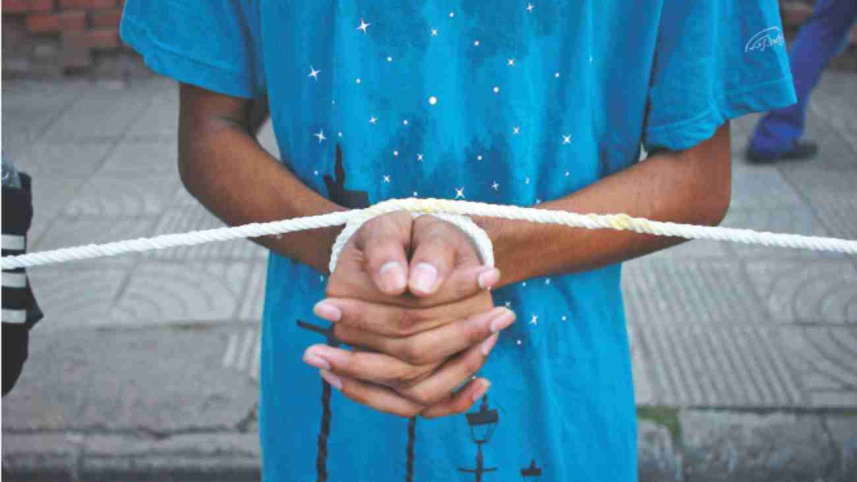
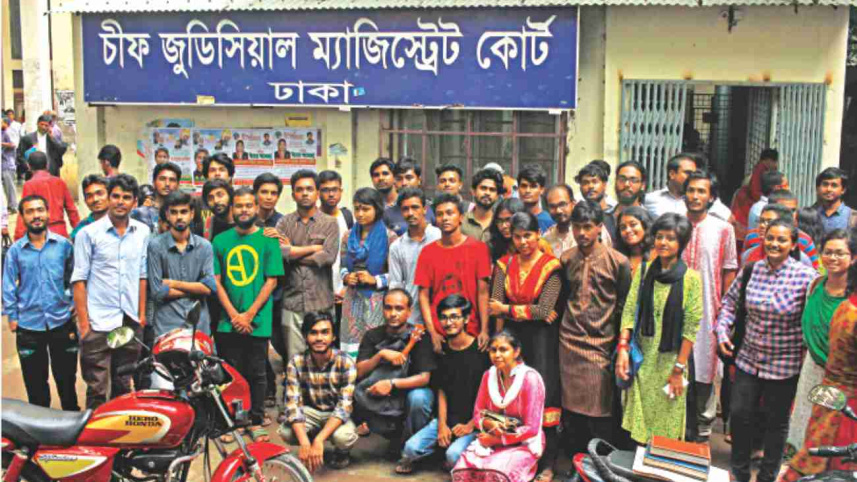
The students were doubly victimised as the university authority exerted repressive power in the form of police arrest as well as a fabricated case. Did they try to get rid of the torment of their super-ego by completely giving themselves up to their id? Only Frued can tell for sure. However, the students knew that what they confronted that day and the days after was the uncritical unconscious of power. It is the power that represses its strategic adversary—students who rise against the injustice that power inflicts. It is the power which always looks for the projection of its un-conciliated repression, i.e. the repression of people who questions it, the repression of people who threaten its very existence. It is the power that 'others' the people—the students. When the students no longer want to be othered and they resist power's repressive self, the power assumes its annihilation. It is this very assumed annihilation that was projected through the unprecedented arrest of 42 students, including 12 female students, from inside the university campus at midnight, marking the night as one of the darkest in the history of public universities in independent Bangladesh. Sitting in an unknown prison designated for 'cross-fire criminals', as the police would put it, or being harassed for being mistaken for a prostitute while in prison van and court—the ordeal the students had to face in custody before they were granted bail in court was as unprecedented for them as the fabricated case against students was for Bangladesh.
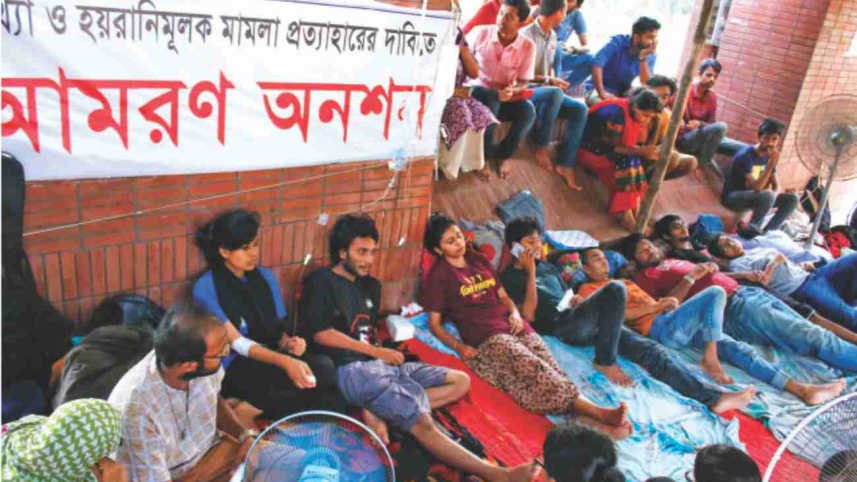
56 students were charged with attempted murder and sedition for raising their voices against the police attack and the authority's betrayal. Many of the accused students were not even present during the movement for road safety and the later demonstration in front of the Vice Chancellor's residence. One of the accused had went to his hometown three days before the movement even began and had not returned until he came to know that the registrar of the university had filed a case against him too. The authorities opened the door for the police, sacrificing the autonomy of the university, to silence the students for questioning them. Losing their moral ground to justify their unjustifiable actions, they tried to simulate the event by magnifying the outburst of some students who faced immediate violence in the hands of the police. This simulated story in the form of a loosely-made video definitely got them sympathy, especially from the people in power as we live in an age of pure simulation. But the reality of repression, however, simulated itself through the students who took to the streets of Jahangirnagar University ever since the university was opened after the forced vacancy and Ramadan vacation. Human chains were formed, rallies were held and yet the authorities clinged to their repressive ego governed by repressive power. It was only when students went on hunger strike till death that the productive nature of the authorities' power seemed to peep through, as they assured the student of immediate steps for an 'amicable solution,' which ultimately led to the withdrawal of the case. But time went by and not a step was taken to withdraw the fabricated case. The authorities started gambling with the students' lives only to caress their ego, which has already lost all of its moral ground resorting itself only to the authorial power. But the power did not remain uncontested—with great power comes great resistance.
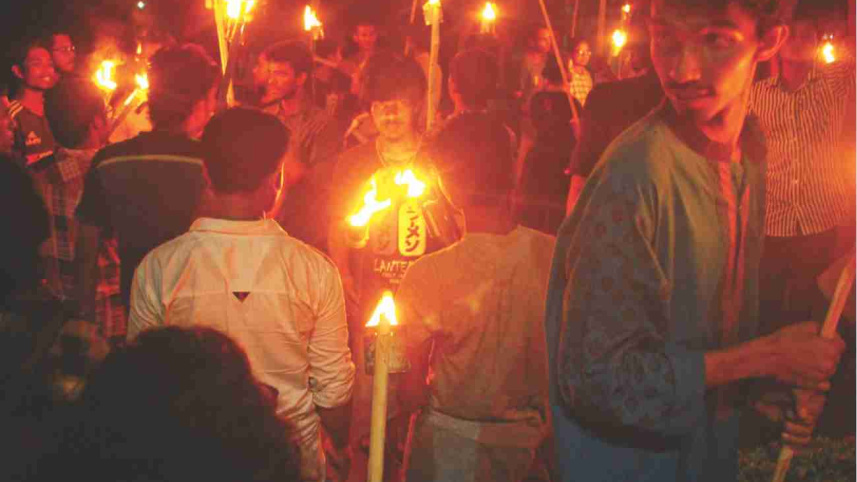
The students brought out the largest torch procession in the recent history of Jahangirnagar University and light pierced through only to unmask the darkness of repression. The movement demanding the withdrawal of the fabricated case continues to bring students together along with three other demands including the promised, but still mostly unmet demand of road safety.
'Protibader Naam Jahangirnagar' is not just a name created to demand the withdrawal of the fabricated case against students; it is a spirit that resists any form of repressive power. The history of resistance of Jahangirnagar University, which itself resists to be (frozen in) history by constantly resisting the seizure of power, inspires students not to pass university with 'radiant cool eyes hallucinating' a BCS or corporate dream, but rather to subvert the matrix of control—to un-pass the university being ideologues of the state power or multinational-capitalism; to un-pass the university being silent in the face of repressive power; to un-learn the very teaching:
What did you learn in school today,
Dear little boy of mine?
I learned the policemen are my friends
I learned that justice never ends
Oliur Sun is a non-philosopher currently studying Literatures and Cultural Studies at Jahangirnagar University.
Timeline
 For all latest news, follow The Daily Star's Google News channel.
Comments