


QUIRKY SCIENCE
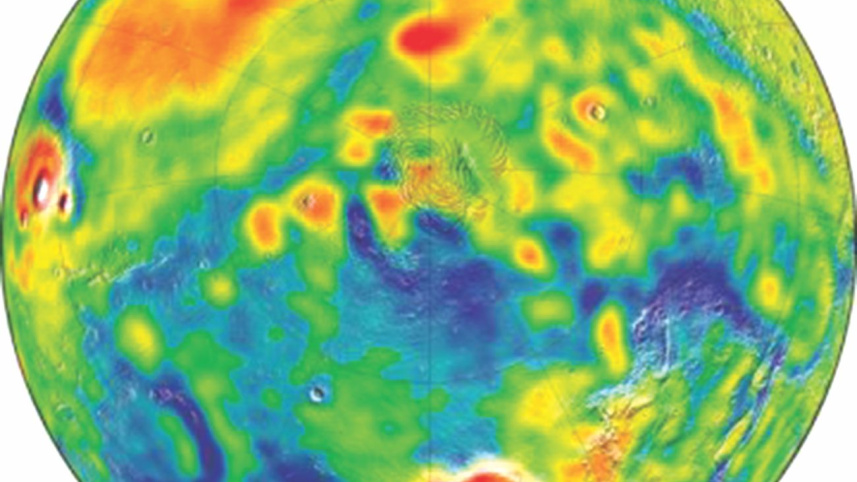
New Gravity Map
A new map of Mars' gravity made with three NASA spacecraft is the most detailed to date, providing a revealing glimpse into the hidden interior of the Red Planet.

"Gravity maps allow us to see inside a planet, just as a doctor uses an X-ray to see inside a patient," said Antonio Genova of the Massachusetts Institute of Technology (MIT), Cambridge, Massachusetts. "The new gravity map will be helpful for future Mars exploration, because better knowledge of the planet's gravity anomalies helps mission controllers insert spacecraft more precisely into orbit about Mars. Furthermore, the improved resolution of our gravity map will help us understand the still-mysterious formation of specific regions of the planet." Genova, who is affiliated with MIT but is located at NASA's Goddard Space Flight Center in Greenbelt, Maryland, is the lead author of a paper on this research published online March 5 in the journal Icarus.
The improved resolution of the new gravity map suggests a new explanation for how some features formed across the boundary that divides the relatively smooth northern lowlands from heavily cratered southern highlands. Also, the team confirmed that Mars has a liquid outer core of molten rock by analyzing tides in the Martian crust and mantle caused by the gravitational pull of the sun and the two moons of Mars.
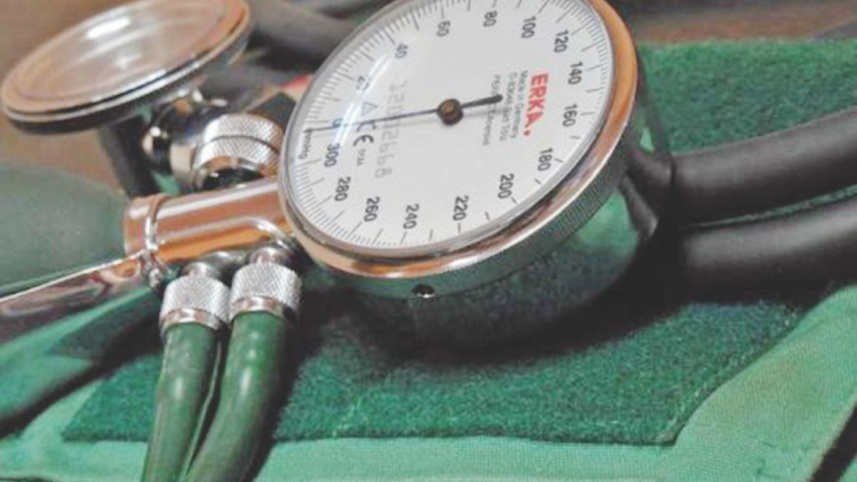
US Adults Get Failing grade in Healthy Lifestyle
Only 2.7 percent of the U.S. adult population achieves all four of some basic behavioral characteristics that researchers say would constitute a "healthy lifestyle" and help protect against cardiovascular disease, a recent study concluded.
In this study, researchers from Oregon State University and the University of Mississippi examined how many adults succeed in four general barometers that could help define healthy behavior: a good diet, moderate exercise, a recommended body fat percentage and being a non-smoker. It's the basic health advice, in other words, that doctors often give to millions of patients all over the world.
Such characteristics are associated with a lower risk of cardiovascular disease as well as many other health problems, such as cancer and type 2 diabetes.
"The behavior standards we were measuring for were pretty reasonable, not super high," said Ellen Smit, senior author on the study and an associate professor in the OSU College of Public Health and Human Sciences. "We weren't looking for marathon runners."
From the perspective of public health, the findings of the research were not encouraging, Smit said.
"This is pretty low, to have so few people maintaining what we would consider a healthy lifestyle," she said. "This is sort of mind boggling. There's clearly a lot of room for improvement."
Source: Sciencedaily.com
 For all latest news, follow The Daily Star's Google News channel.
Comments