


Put rights issues at the heart of polls pledges

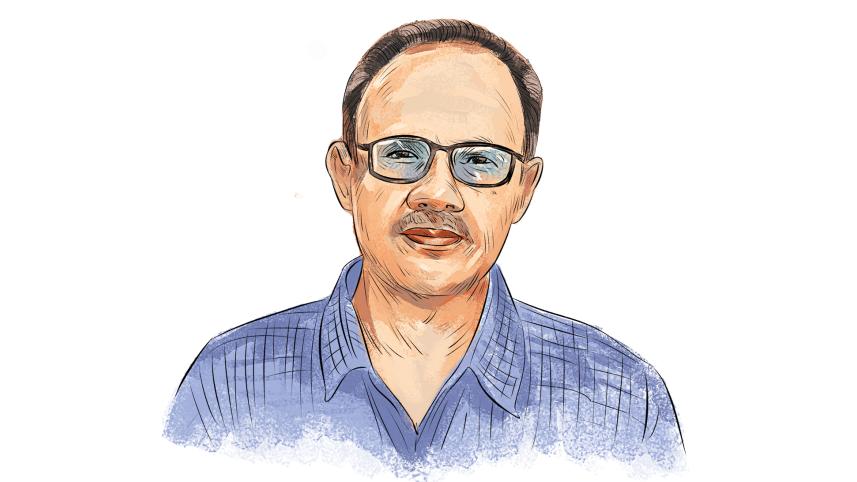
Bangladesh now needs a government prepared to confront long-standing issues such as custodial torture, extrajudicial killings, and border violence instead of repeating earlier patterns of inaction, rights activist ASM Nasiruddin Elan has said.
In a recent interview with The Daily Star, he stressed that human rights must be central to election pledges and that the next administration must demonstrate from the outset that it is serious about ending these violations and ensuring accountability within law enforcement agencies.

According to Odhikar's latest report, at least 40 people were victims of alleged extrajudicial killings, and 35 Bangladeshis were killed allegedly by the Indian Border Security Force (BSF) between August 9, 2024, and September 30 this year.
Most extrajudicial deaths occurred in custody rather than in "crossfire", while border killings continued with little change in pattern, said Elan, director of the rights body.
He said the recurring custodial torture and persistent BSF shootings show no meaningful improvement in internal reforms or border protection.
The overall pattern over the past year mirrors that of the previous 17 years, with most killings happening inside police stations, during remand, or while in the custody of joint forces.
Elan noted that the Torture and Custodial Death (Prevention) Act, 2013 remains largely unenforced, as victims or families often lose the motivation to pursue cases, rendering the law ineffective.
Responsibility for custodial deaths ultimately lies with the government in power, he said, but the roots of the problem run deeper. Years of political influence over law enforcement have fuelled allegations of enforced disappearance, torture, and other abuses. Actions by certain agencies during the July uprising further eroded public trust.
Reforming a force shaped by long-standing impunity is difficult, he said.
Reports persist of individuals being tortured or threatened with false cases unless they pay large bribes -- practices that continued from the previous administration. Although the frequency may have dropped, "the mindset within the force has not changed and genuine accountability remains missing", Elan said.
"The interim government faced political divisions and instability, limiting its ability to deliver the reforms people expected. This is why the next elected government must take early and decisive steps."
According to him, those steps include ending extrajudicial killings, stopping torture in custody, and ensuring proper forensic investigations in every allegation.
He warned against using the police as a political instrument again. "Recruitment and deployment have long been shaped by partisan considerations. If a new government maintains that pattern, the same crises will return," he said.
Elan also questioned the need for multiple specialised security units with no clear mandates. In a democracy, a well-trained, accountable police force should be enough to maintain order. "Special forces often take on political responsibilities rather than serving public interest," he added.
He pointed out that fabricated cases remain a serious issue, used for political or financial gain. Officers responsible for false arrests must be held liable to end the practice, he said.
On border killings, he blamed a long-standing subservient foreign-policy approach, deepened under the previous Awami League government, which allowed Indian border forces to act with significant impunity. Children, teenagers, and women were among those shot dead, he said. He also noted that push-ins from India have increased since the July uprising.
According to Elan, such incidents send intentional signals of dominance, and their recurrence shows Bangladesh has yet to demand accountability effectively.
He urged the next government to pursue foreign policy "with its head held high" and raise border-killing cases in international forums when necessary.
"Killing unarmed civilians is a grave human-rights violation and cannot be justified by claims of illegal border crossings. The proper remedy is a legal process," he said.
As the nation heads toward the polls, Elan said the next government faces a defining test: whether it will finally address custodial torture, extrajudicial killing, and border violence, or continue the patterns of the past.
 For all latest news, follow The Daily Star's Google News channel.
 "The public has waited a long time. This time, the commitments must be real."
Comments