


Elon Musk's Twitter takeover: The complete timeline
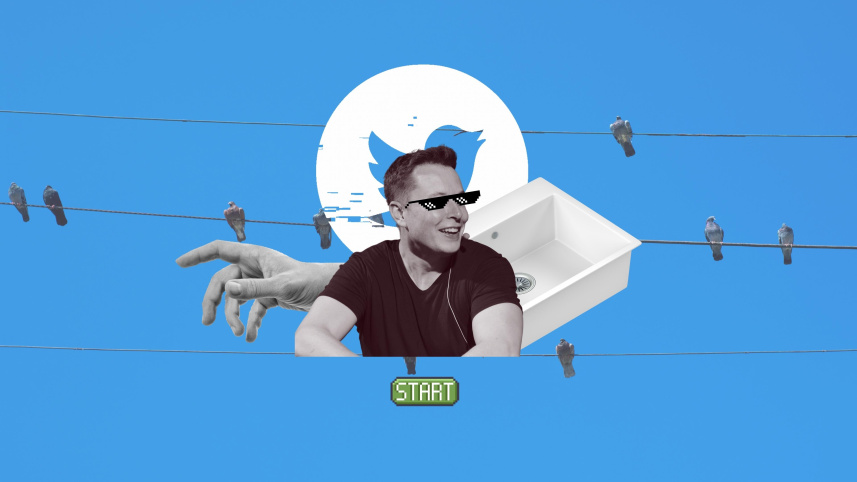
After months of back and forth, including federal investigations, court hearings and legal accusations, tech tycoon Elon Musk finalised his purchase of the popular social media platform Twitter on October 27. Here is a breakdown of Elon Musk's "Twitter takeover saga" up to October 27.
On April 4, Musk disclosed a share of over 9% in Twitter, which made him the platform's largest shareholder. Subsequently, this caused an increase of over 27% in the company's share. At the same time, Musk was making public polls on whether users wanted an edit button on Twitter.

The next day, on April 5, Twitter revealed that Musk will join the company's board on the seat of directors. Despite Musk confirming this on his Twitter profile, on April 10, he announced backing down from the position and not joining the Twitter board.
Four days later, on April 14, Musk offered to buy Twitter for about $43 billion - $54.20 per share. The next day, Twitter adopted the 'poison pill' strategy to disallow shareholders to purchase additional stock in events of 'hostile takeovers'.
On April 21, Musk said that he had ensured $46.5 billion in funding to complete the Twitter takeover. Four days later, Twitter officially accepted Musk's offer. On April 29, Musk sold over $8 billion in Tesla shares to further finance the acquisition funding. Over the next few weeks, Musk confirmed seeking additional investment for the takeover fund.
The story takes a turn on May 13, when Musk said that he is holding off on the Twitter acquisition. His reason: Twitter has yet to provide him with an accurate calculation on spam and fake accounts. Over the next few days, Musk stated in his tweets that the $44 billion purchase deal would not move forward unless Twitter showed proof that spam bots constitute less than 5% of all Twitter accounts. If the count is higher than what Twitter had officially stated before, Musk suggested that he might even lower the purchase price.
Amidst the stirring controversy, on May 26, Musk got sued by Twitter investors on account of "stock manipulation". Federal investigations began, which eventually lead to June 6, when Musk threatened to cancel the Twitter purchase deal if sufficient data regarding spam bots and fake accounts were not provided. On July 8, Musk announced that because Twitter had breached "multiple provisions of the merger agreement", he is cancelling the acquisition.
On July 12, with the help of prominent US law firms, Twitter retaliated against Musk, suing him for deal violation. On July 19, it was announced that an official trial would be held in October to determine the legality of Musk's Twitter acquisition deal.
On July 22, Twitter named Musk as the reason behind their declining Q2 2022 revenue. A week later, on July 29, Musk dealt another blow - countersuing Twitter in a confidential filing. On August 4, Twitter rejected such claims. Two days later, Musk asked Twitter if they could provide their sampling method for testing fake accounts. If Twitter provided sufficient information, the deal was back on.
On October 4, Musk gave the green light, once again, on his original $54.20 per share deal over. Two days later, a Delaware judge officially postponed the Twitter vs Musk lawsuit hearing until October 28, so that Musk could close the acquisition. On October 13, Twitter stated in a court filing that Musk is under federal investigation over his $44 billion deal.
On October 25, according to an inside source, Musk informed his co-investors that he will finalise the Twitter deal by October 28 - the deadline given by the Delaware judge. This brings us to October 27 - with Musk walking into the Twitter HQ with a sink, saying in a tweet to "let that sink in". First day in the office, now the owner of Twitter, Musk fired several top executives, including CEO Parag Agrawal.
Now that "the bird is freed", only time will tell how Musk will potentially change the popular social media platform.
 For all latest news, follow The Daily Star's Google News channel.
Comments