


Handling machines requires training. What about ‘handling’ humans?
We are all well-versed in enumerating the most prominent social problems in our country and can probably elaborate on each eloquently. Murder, abduction, bribery, truck and bus drivers' blatant neglect of traffic rules resulting in deaths, and a general lack of honesty in multiple walks of life. Violence against women has been an age-old form of injustice. Where does all this crime, corruption and negative perceptions and notions stem from? Are they innate to human beings? Or are they picked up from our families, communities and society at large?
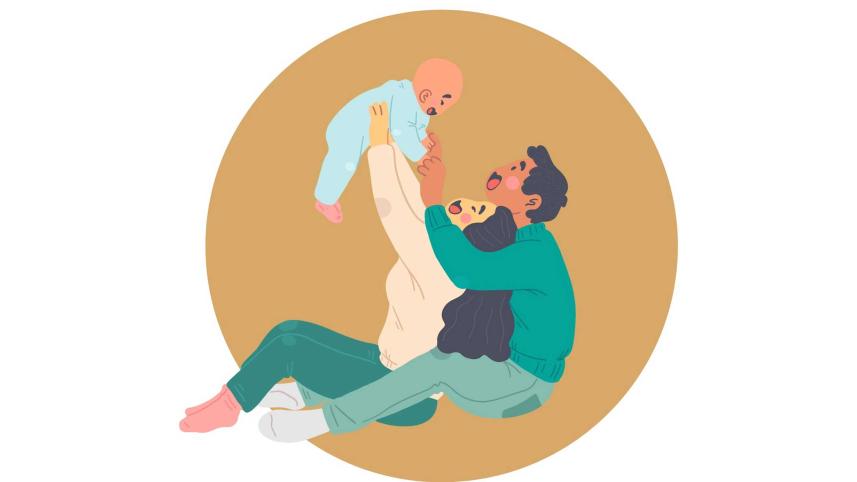
Is parenting about putting food on the table, or is there more to it? How is it that handling the smallest of machines, such as a physiotherapist's electric devices, requires training, certificates and licences, but parenting does not? Is the handling of humans not more significant than that of machines? Doesn't every single problem—whether of an individual, family, society, or a nation—have its roots in human behaviour? How, then, has the moulding of human character been left to the whims of parents, elders and teachers?
 For all latest news, follow The Daily Star's Google News channel.
 Just as trees grow up straight and bear fruits if pruned as young saplings, humans, too, can develop into worthy beings capable of the highest attainments if trained from childhood. In fact, harmful habits can best be curbed in childhood so that a firm foundation for good ones may be laid down.
Parents need courses that impart knowledge and skills in "handling" humans. Good parenting is exceedingly paramount to building a just and peaceful society. And parents can only do justice to their roles if they inculcate good qualities and lofty perceptions in their children—by the power of words as well as through their own examples.
Academic institutions must also include moral and character training for children. Academic education is obviously not enough for building a civilised society dedicated to advancement. There's no scarcity of doctors, nurses, engineers, architects, managers and the like. And yet, crime and injustice, dishonesty and violence abound. Might we not assume that, unless trained in ethics and morals, human beings cannot attain true civilisation no matter how elevated a level of academic education they might achieve? The engineers who designed the gas chambers during the Holocaust did a perfect job at it. The doctors and nurses excelled in testing chemicals on humans. But did that add value to human civilisation, or did it sink it into the lowest abyss?
Honesty, trustworthiness, fairmindedness, compassion, empathy and cooperation can be taught to children through stories, songs and cooperative games. In a world where even children's movies are filled with images of brutality and vengeance, and where unequal gender roles are promoted, the importance of such training cannot be overemphasised.
I believe understanding the coherence between material and ethical aspects of civilisation is crucial to forming a just and peaceful society. If the material aspect is a lamp, the ethical aspect would be the light in the lamp. The lamp will only be functional if there is light in it. Material progress alone does not bring about true advancement.
As Baha'u'llah, the founder of the Baha'i Faith, stated, "Regard man as a mine, rich in gems of inestimable value. Education alone can cause it to reveal its treasures and enable mankind to benefit therefrom."
Mozhgan Bahar has authored seven books and enjoys conducting discourses online on various social issues.


Comments