


Slain journalists remembered
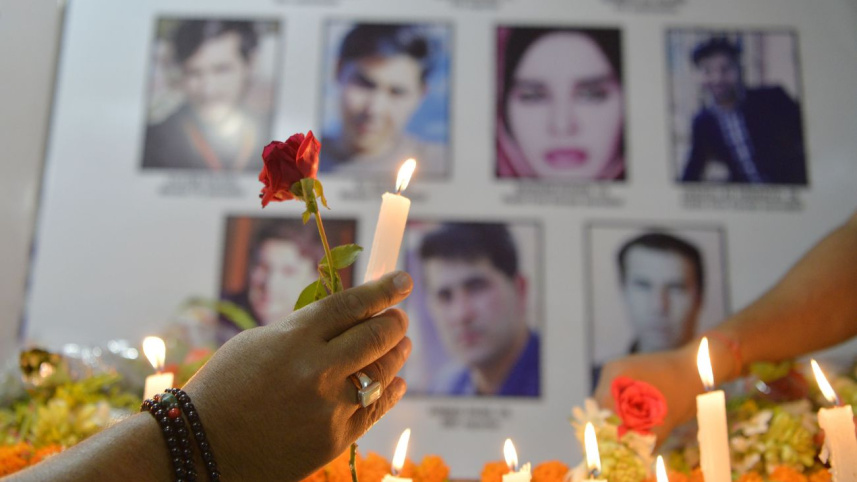
Afghanistan's slain journalists were remembered on World Press Freedom Day yesterday, days after the deadliest attack on the country's media since the fall of the Taliban in 2001.
Ten journalists, including Agence France-Presse chief photographer Shah Marai, were killed Monday, underscoring the dangers faced by the media as the war-torn country slips deeper into violence.

A double suicide blast in Kabul on Monday, claimed by the Islamic State group, left 25 people dead including Marai and eight other journalists, while BBC reporter Ahmad Shah was killed in a separate attack in eastern Khost province.
Afghanistan was last year ranked the third most dangerous country in the world for journalists by Reporters Without Borders (RSF).
Afghan media outlets have condemned the government's failure to protect them, particularly at the scene of suicide attacks where secondary blasts are a constant concern.
Around 100 journalists held a vigil outside the BBC's Broadcasting House in London on Thursday to pay tribute to the fallen journalists, observing a minute's silence while carrying photographs of Shah.
The attack on the Afghan journalists comes amid increasing concerns over press freedom across Asia, including in the Philippines, Myanmar and Pakistan.
On the same day as the Afghan journalists were killed, Philippine radio broadcaster Edmund Sestoso was shot by assailants in the southern city of Dumaguete, said Human Rights Watch. Sestoso died Tuesday.
"The world is getting worse for journalists," Director of BBC News Francesca Unsworth told AFP at the London vigil.
"It's being normalised by politicians that journalists are not there to serve the people, that they are the enemy in some way. It's a very dangerous precedent."
A collaborative of press advocates said in a report that attacks against journalists in the Philippines have spiked since Rodrigo Duterte won the presidency in May 2016, citing 85 cases -- including murder.
In Myanmar, hopes have been dashed of more press freedom under the government of Aung San Suu Kyi, which took power in 2016.
The country has fallen six places to 137th on the 2018 World Press Freedom Index. A recent survey of journalists cited an increase in threats, physical attacks and arrests of reporters.
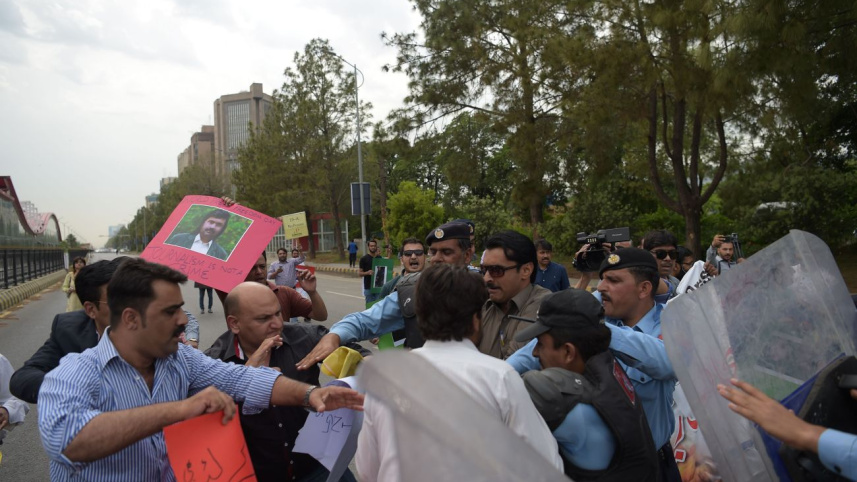
Journalists in Pakistan, where fears of a crackdown are also growing, marked the day with a march in the capital Islamabad, carrying photos of fallen comrades -- including those from Afghanistan -- with slogans such as "Killed but not silenced".
Pakistan is already routinely ranked as one of the most dangerous places for media, with journalists caught between militants and the military. Enforced disappearances are on the rise, newspaper columns are being pulled and TV channels forced off the air for failing to toe the line.
RSF figures show 50 professional journalists were killed worldwide in 2017, the lowest toll in 14 years.
 For all latest news, follow The Daily Star's Google News channel.
Comments