


Suu Kyi vows to lead efforts
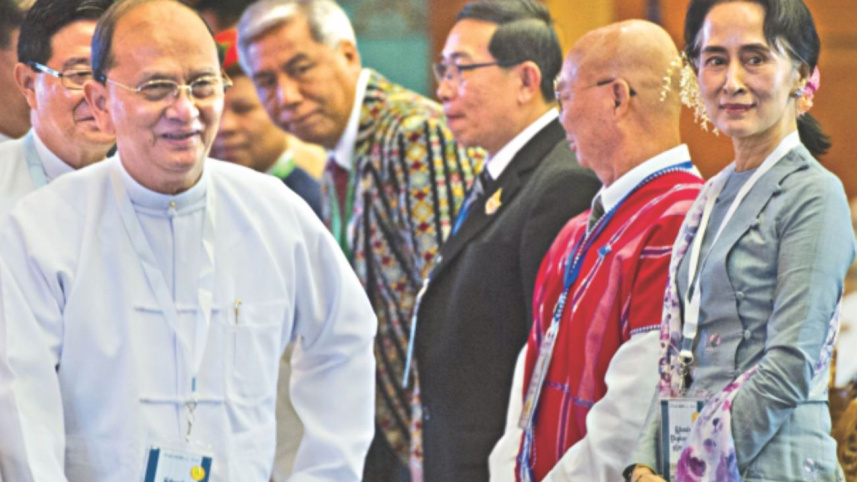
Aung San Suu Kyi promised yesterday to use her party's popular mandate to drive Myanmar's peace process as she outlined a vision of a federal future to ethnic rebels who have battled for decades.
She was speaking at a fresh round of talks between the government, army and ethnic minority armed groups, at which crucial economic and social issues that spurred the violence will be discussed.

Those include the ownership of natural resources, seen as a major factor in conflicts that have displaced tens of thousands of people and cost countless lives.
Suu Kyi, whose party won the November general election, said she was optimistic the "fighting will be finished soon" if the nation's political standards are improved and all groups work together.
"We cannot build lasting peace without national reconciliation," she said.
"Now we are ready to lead the peace process, because we have the power invested in the mandate given to us by the people and ethnic minorities."
It was the first time the democracy champion had taken a leading role in years-long official peace efforts.
The painstaking negotiations have until now been steered by reformist President Thein Sein, who was also present at the talks in the national capital Naypyidaw.
However, deep challenges remain. Some major armed groups have shunned the talks altogether and clashes are continuing in parts of the country between rebels and soldiers.
Observers say major stumbling blocks lie ahead, including fostering unity and negotiating the thorny issue of ownership of resources.
But the most critical challenge is seen as Suu Kyi's uneasy relationship with the nation's still hugely powerful military, which holds the key to securing a lasting peace.
In October Thein Sein's efforts yielded a ceasefire with some rebel groups, although the agreement fell short of a binding nationwide truce. But several major ethnic armies, including in war-torn northern Kachin and Shan states, have refused to sign a national truce until all groups are brought into the deal -- notably smaller organisations locked in conflict with the military.
 For all latest news, follow The Daily Star's Google News channel.
Comments