


NASA’s Artemis II crewed lunar flyby is a tale for the ages
On April 1, 2026, no joke — humanity left Earth’s orbit once again for the first time since 1972 to profess ephemeral devotion to our dearest Moon. Four astronauts aboard NASA's Orion spacecraft, “Integrity”, flew around the Moon and broke more than a few records before splashing down in the Pacific on Friday, April 10.
With their 10-day expedition and new chic spacesuits, having travelled boldly where no one has gone before, Artemis II astronauts swung their moonship back with a lunar flyby that has revealed views never beheld by eyes until now, from the Deep Space Network.

Artemis II is the first crewed flight beyond low Earth orbit since Apollo 17. Its objectives echo those of Apollo 8 in 1968: go around the Moon, don't land, prove the hardware works, and come home alive. Commander Reid Wiseman, Pilot Victor Glover, and Mission Specialists Christina Koch of NASA and Jeremy Hansen of the Canadian Space Agency lifted off at 6:35 PM EDT, bound for a 1.11-million-kilometre round journey.
This was a mission to inspire the entire human race and instil hope in the most trying of times. Victor Glover became the first African-American, Christina Koch the first woman, Jeremy Hansen the first non-US citizen, and Reid Wiseman the oldest person ever to travel beyond low Earth orbit.
"This is an opportunity for us to remember where we are, who we are, and that we are the same thing — and that we've got to get through this together," said Glover to CBS News, clasping hands with his crewmates, overwhelmed by what some call “moon joy” – the cognitive shift astronauts report when Earth appears small and alone in the window of space.
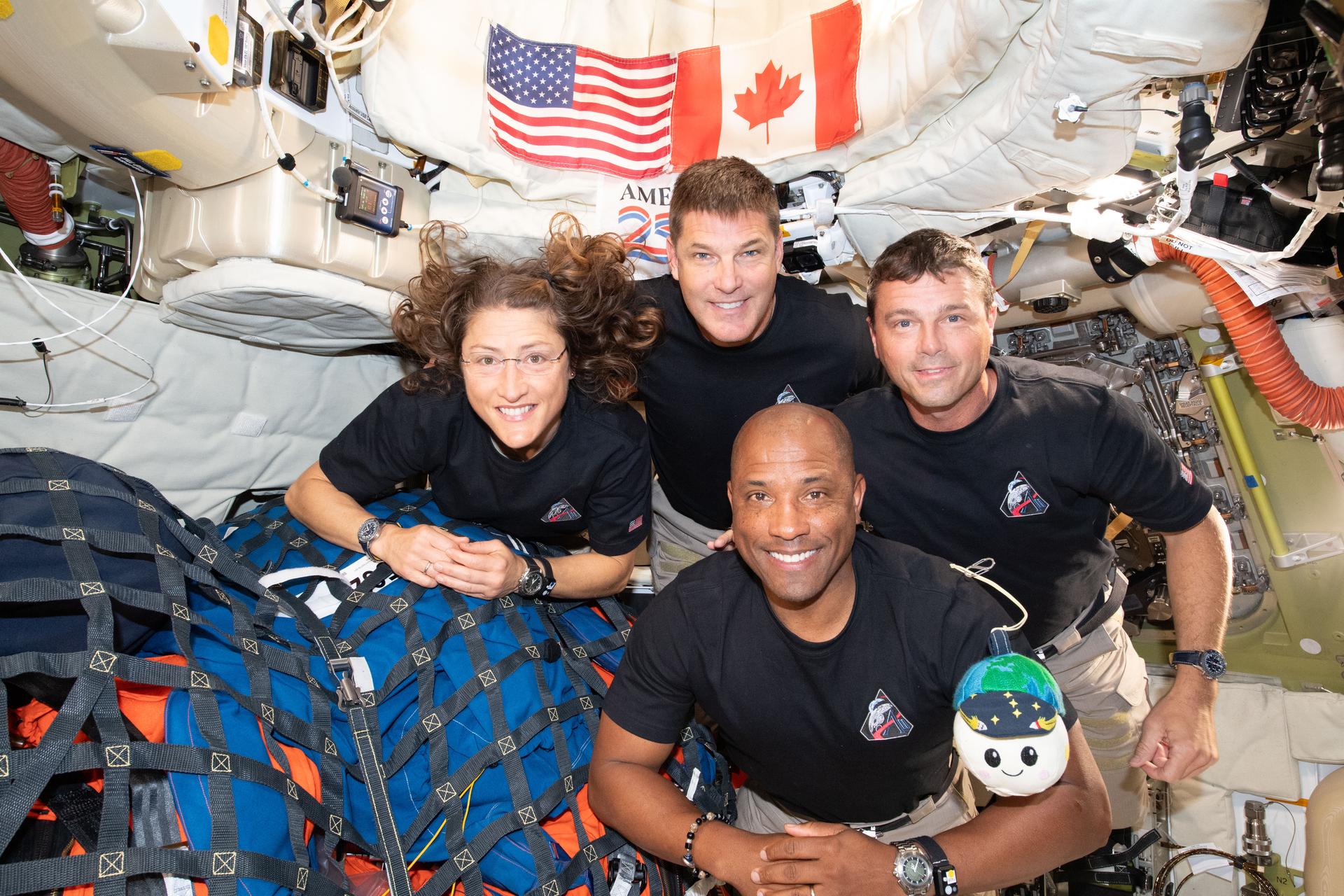
Artemis II carried four formal objectives.
First, lunar surface photography. The crew used high-resolution cameras and, for the first time ever, hand-held devices, to document impact craters, lava plains, and geological formations on both the near and far sides. This imagery will inform landing site selection for Artemis IV's South Pole touchdown in 2028.
At almost 6,500 kilometres from the lunar surface, the crew photographed craters, ridges, and lunar mares with Nikons and iPhones, like tourists with the best zoom in history.
Second, solar corona observation. During the lunar eclipse, with the Sun blocked behind the Moon, the crew studied the Sun's outer atmosphere, data typically only accessible during brief Earth-based total eclipses.
Third, meteoroid impact flash monitoring. Watching for brief light bursts from tiny rocks striking the lunar surface, using computational models to assess surface suitability for future astronauts.
Upon arrival, the astronauts requested permission to name two bright, freshly carved craters. The first was "Integrity", after their capsule, and the other, “Carroll” – Commander Wiseman's wife, who passed tragically of cancer in 2020. Wiseman wept as Hansen put in the request to Mission Control, and all four astronauts joined in an embrace. Tears were the memo all the way to Houston.
Wiseman and crew spent years studying lunar geography to prepare for the big event. Topping their science target list: Orientale Basin, a sprawling depression with three concentric rings, the outermost of which stretches nearly 950 kilometres across. "Such a majestic view out here," Wiseman radioed once he regained his composure and started picture-taking.
Fourth and finally, deep-space physiological assessment: crew members wore personal dosimeters throughout, establishing human radiation exposure baselines beyond Earth's protective magnetosphere. This is crucial for planning longer Artemis missions and an eventual Mars transit. Cardiovascular and cognitive performance were monitored continuously, building a medical dataset fed directly into mission planning for Artemis III, IV, and the proposed lunar base camp – the holy grail of NASA’s ambitions.
As Orion approached the Moon, lunar gravity accelerated the spacecraft – pulling it inward and around the far side. Think of it like a ball on a string: swing it around a post, and it whips back in the opposite direction, faster than it started. NASA calculated the entry angle precisely so that instead of being captured into lunar orbit, Orion used that gravitational pull to bend its trajectory back toward Earth, emerging faster than it arrived. No major engine burn required.
Below them, the landing sites of Apollo 12 and 14 caught sight, poignant reminders of NASA's first age of exploration, more than half a century gone.
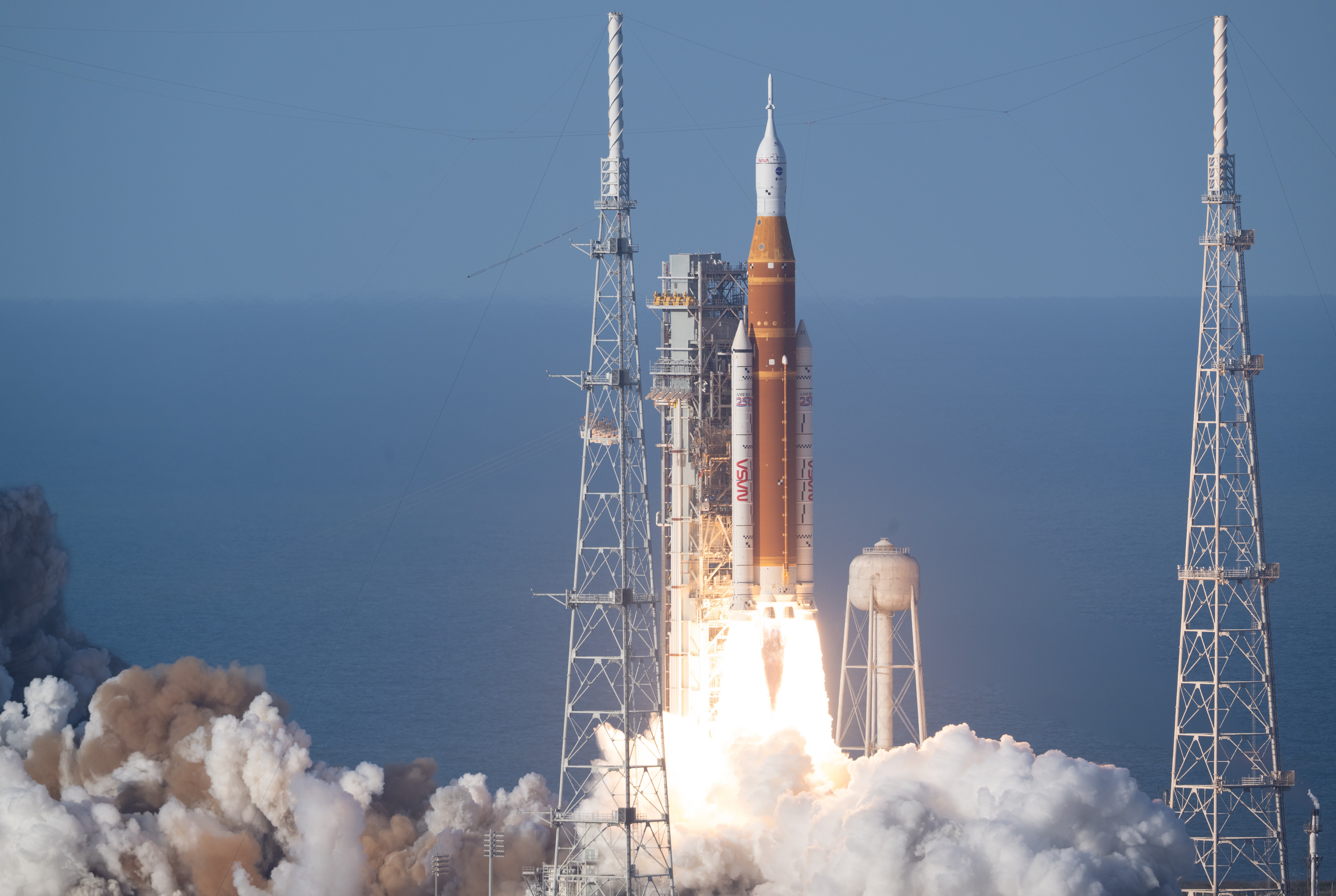
To bring all of this together, NASA drew on its signature institutional architecture of layered collaboration. Aerospace and defence giant Lockheed Martin built the Orion capsule; Boeing and Northrop Grumman engineered the Space Launch System (SLS) – atop which the crew capsule sits. The European Space Agency contributed Orion's critical service module, which enables the manoeuvring of the capsule. Aerojet Rocketdyne supplied the main engines.
Overseeing it all was NASA Administrator Jared Isaacman, sworn in December 2025. Mission operations are anchored at Johnson Space Center, Houston, and launch operations are at Kennedy Space Center, Florida. The bill? Staggering. SLS development alone exceeded USD 20 billion altogether, with each launch estimated at roughly USD two billion.
 For all latest news, follow The Daily Star's Google News channel.
 Artemis II sets the stage for next year's Artemis III, which will see another Orion crew practice docking with lunar landers in orbit around Earth. The culminating moon landing by two astronauts near the moon's south pole will follow on Artemis IV in 2028.
On April 8, 2025, Bangladesh became the 54th nation to sign the Artemis Accords, committing to the safe and sustainable exploration of space. Bangladesh's Secretary of the Ministry of Defence, Md Ashraf Uddin, signed on behalf of the government, in the presence of US Chargé d'Affaires Tracey Jacobson, at the 2025 Investor Summit in Dhaka.
Artemis II was merely a declaration of intent in a new, bruising contest for lunar dominance. We are officially one of 61 nations and one of 15 from Asia to be a signatory to the accords that may spawn the ascension of humankind to an interplanetary species. NASA continues to target early 2028 for the first Artemis IV lunar landing — a date that has remained unchanged since mid-2025. The Moon is waiting. It always has been.
References
- National Aeronautics and Space Administration (2026). Artemis II Reference Guide
- National Aeronautics and Space Administration (2025). Artemis II: Science Operations
- European Space Agency (2026). Artemis II: European Service Module Overview U.S. Department of State (2025). United States Welcomes Bangladesh's Signing of the Artemis Accords