


Korean ties get warmer
South and North Korea will launch a field study soon to relink railways cut since the 1950-53 Korean conflict, Seoul's Unification Ministry said yesterday, the latest development in improving ties between two sides technically still at war.
The announcement came after the UN Security Council granted sanctions exemptions last week following consultations between South Korea and the United States.

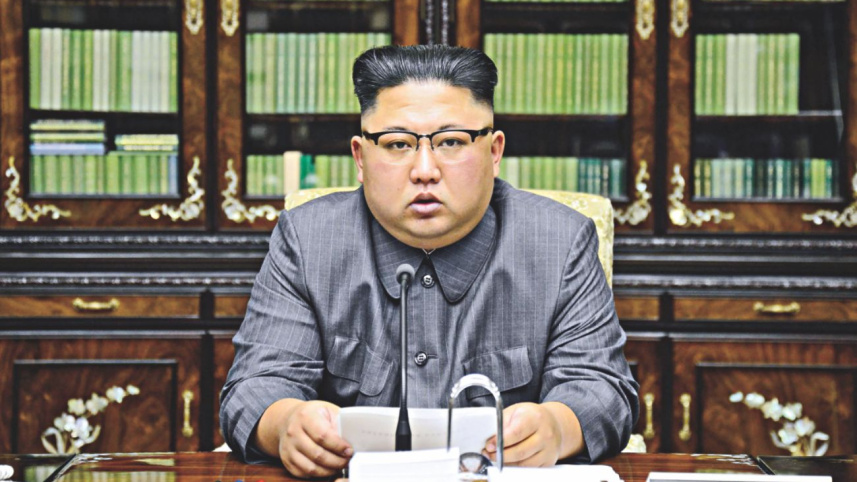
The Friday's survey would be a first step in an agreement to reconnect rail and road links reached by South Korean President Moon Jae-in and North Korean leader Kim Jong Un at their first summit in April.
About 30 officials from each side are expected to take part in the 18-day study, which will include a 2,600-km (1,615-mile) train trip. They will inspect two routes in North Korea, between Kaesong and Sinuiju in the west and Mount Kumgang and the Tumen River in the east, which would ultimately be linked to the South, the ministry said.
"After the joint survey, we will work on drawing up a basic framework for the project, additional research and design, and the actual construction would be conducted in line with progress on North Korea's denuclearisation," the ministry said in a statement.
Meanwhile, South Korea's Yonhap news agency, citing a senior diplomatic source, reported on Tuesday that North Korean leader Kim is willing to allow inspectors into the reclusive country's main nuclear complex in Yongbyon.
Kim had earlier expressed openness to shutting down the site if Washington took "corresponding" measures, but no offer to allow inspectors in to verify had been reported.
Asked about reports on Tuesday on North Korean willingness to allow inspectors in and whether there had been new developments, State Department spokeswoman Heather Nauert said she was "not aware of any of that," but Kim had agreed to inspections in a meeting with Pompeo recently.
The United States has stressed the importance of verification as it negotiates with the North about the denuclearization of the Korean Peninsula.
US officials have been concerned that inter-Korean relations may be advancing too fast even as Pyongyang and Washington struggle to make headway in denuclearisation talks.
North and South Korea are technically still at war because the 1950-53 conflict ended in a truce, not a peace treaty.
North Korea has for years pursued nuclear and missile programmes in defiance of UN sanctions. But the two Koreas moved to defrost relations this year.
 For all latest news, follow The Daily Star's Google News channel.
Comments