


Bangladesh breaks language barriers
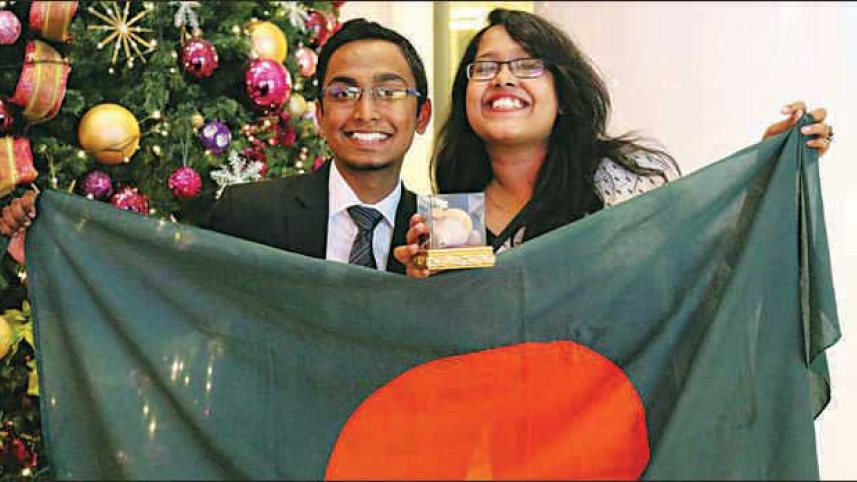
New Year's Eve. Kuala Lumpur is decorated from top to bottom, looking for all intents and purposes, like a big party place; “Truly Asia” knows how to put the glamour on. The lights are brighter than ever, the dance floors are full and the air is electric with the anticipation of a new year.
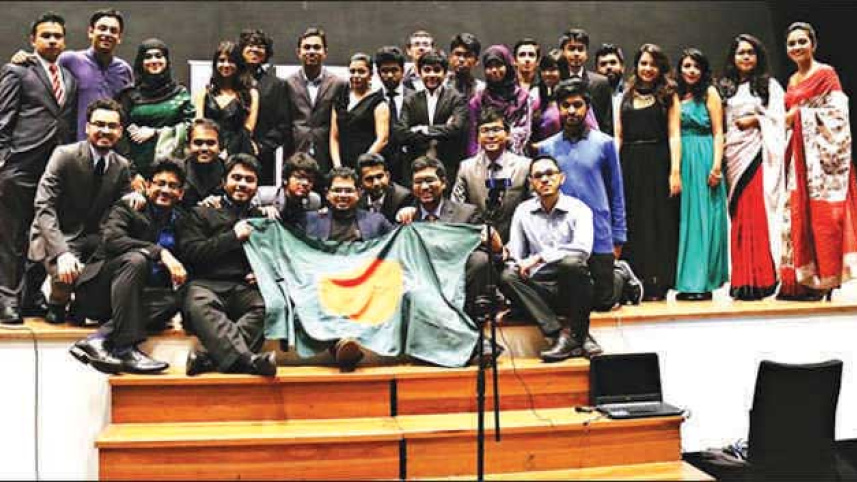
Somewhere in the city, in a small corner of a big congregation of the world, thirty-three Bangladeshis wait with baited breath for something far more important that it all.
December 2010, Kuala Lumpur:
It started, as it so often does, with a spark of hope. In 2010, three Bangladeshis went to Malaysia to compete for the title of OIC Intervarsity Debate Champions. The final was between the Asian giant IIUM-1 and the underdog IBA-DU 1 and in a cinematic defiance of the expected result, Institute of Business Administration landed the bigger trophy and all was in uproar. Tiny country as we are, Bangladesh created big ripples. Abir Hasan Niloy, the best speaker of the final, recalls the glistening tears of one Bangladeshi migrant student who couldn't thank him enough for giving a reason to walk with pride. “They don't know about us, and we stick to the shadows. Thanks to your team, we won't any more.”

December 2012, Berlin:
The spark had transformed into a full on fire. At 3 in the morning, thousands of Bangladeshi girls and boys in various states of sleeplessness and excitement, live-stream Ratib Mortuza Ali and Aaqib Farhan Hossain from BRAC University creating history on one of the final stages of the Worlds Universities Debating Championship (WUDC). It is the English as a Secondary Language (ESL) final, reserved for the speakers from nations where English is given a secondary language status, but it is a stage thousands covet, and few achieve. They shine like a beacon on to Bangladeshi households where young people some day dream to speak, fight and win at a global stage that always seemed impossible to conquer.
December 2014, Kuala Lumpur.
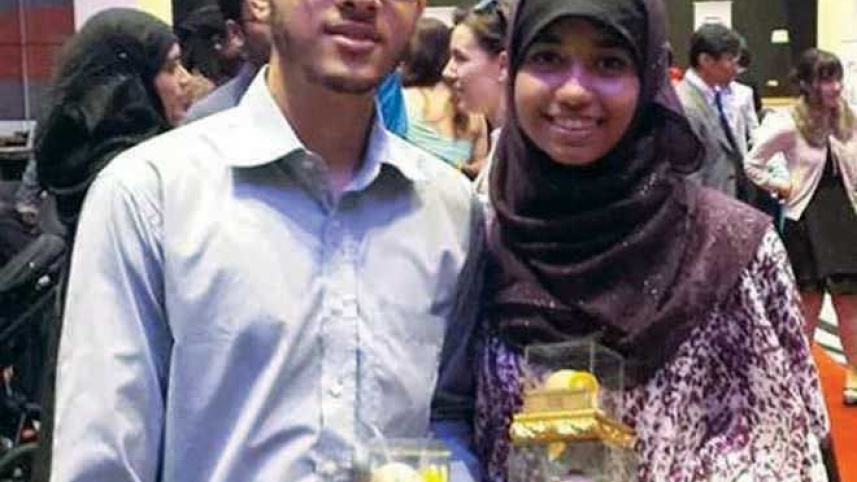
Come full circle on the brink of 2015. ESL is done, but EPL (English as a Primary Language) is the big leagues. Breaking here, making it to the pre-octo-finals, is the biggest challenge because you compete against not only ESL speakers, but teams from Harvard, Oxford, Sydney – each of which invest on providing their teams with the best debate coaches and training, this while they hold the automatic privilege that all native English speakers hold at EPL.
Wasifa Noshin and Saad Ashraf of IBA-DU A are the best bet Bangladesh has on that stage. Arguably the most renowned team in the local circuit with countless national championships, they are also the finalists of Asian BP 2014 and broke in Australs 2013 and WUDC 2013. They proved themselves as judges by making it to the top judges list at Asian Schools Debating Championship 2014 and KL Open Challenge 2014. Their talent was spotted at an early age; they also represented Bangladesh on the most prestigious stage for schools debating, World Schools Debating Championship, at Scotland in 2011.
Despite all the credentials and the hard work, there's a nervous tension before the break at the largest international gathering of debaters. Three hundred and seventy teams and around three hundred judges make up over a thousand debate enthusiasts from around the world. And yet everyone turns quiet when the announcements start.
ESL breaks are announced before EPL and as the list of breaking teams are read out, two things become evident:
1. Bangladeshi teams dominate ESL category with four breaks. IBA-DU C, a brand new team made up of Mastura Tasnim and Rawnak Zaheen Wasi, break ESL. This team was also the only Bangladeshi team to break at the KL Open Challenge 2014, hosted a week before WUDC.
2. IBA-DU A does not break ESL, which can either be historic or tragic.
As the EPL breaks are announced, the Bangladeshi contingent huddle up and hold hands, united in the faith of a brighter day. No matter how hard they work, it's hard to imagine a Bangladeshi team as one of the top teams in the world. Saad and Wasifa are at the centre of the dreams and hopes of thousands of young men and women throughout the country, and they feel it. Seconds pass agonisingly slow.
When at last the name is announced, the first three syllables do the magic for the people. Thirty odd Bangladeshis and thousands more peering through computer screens at home, scream in jubilation as they find out that one of the top teams in the world is their very own IBA-DU A. Saad and Wasifa are smothered in hugs, mini pileups and – unmistakably – tears. Social media proudly proclaims: History has been made. For the first time ever, Bangladesh will speak at the main post-break rounds of the World Universities Debating Championship.
On the bus-ride back to the hotel, thirty-three young men and women sing Bangla songs the entire way.
A day later, IBA-DU A face Glasgow A, UBC A and Sydney C in pre-octo-final five. IBA doesn't make it through to the next round, but it doesn't matter.
It doesn't matter because IBA-DU stood against all the odds and did the unimaginable. Many a debater of the country could never think of an EPL break for Bangladesh in this decade, and yet here it was. Many could not imagine a Bangladeshi speaker at the ESL Top Ten, and yet Wasifa proved everyone wrong with 8th position and a 78.9 speaker score. Despite a lack of funding and training, and the disadvantages of not being a native English speaker, IBA-DU showed the country and, indeed, the world that to reach one's dreams one need only aim higher.
Whatever may come in Bangladesh's debating future, one thing is clear – the glass ceiling has been broken. Nothing will ever be the same again.
 For all latest news, follow The Daily Star's Google News channel.



Comments