


Romance, radical hope, and the modern happily ever after

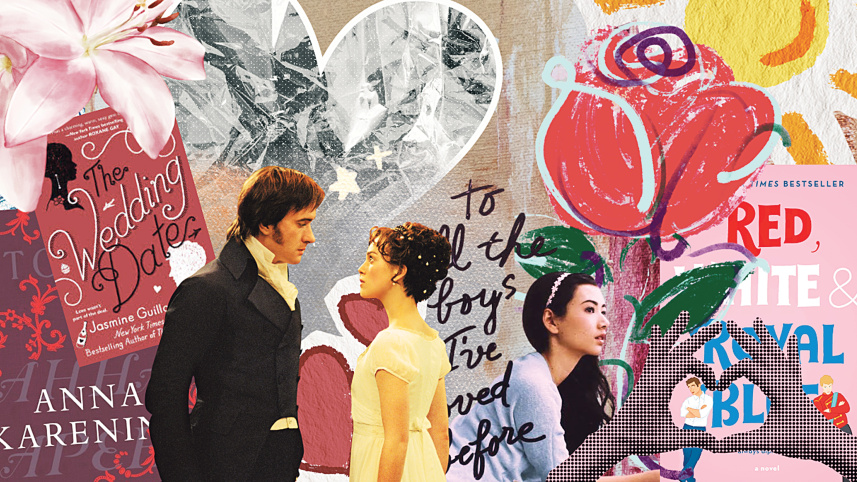
Few genres are as unapologetically optimistic as romance. At its core lies the Happily Ever After (HEA), a convention so fundamental that it often stands in for the genre itself. Romance promises more than love: it offers emotional resolution, stability, and a future worth believing in. In an era marked by political upheaval, social inequity, and relentless crisis headlines, the HEA functions as a cultural battleground, revealing who society permits to claim happiness, security, and belonging. Far from mere escapism, romance’s insistence on joy provides a powerful lens through which to examine whose lives are valued and whose are overlooked.
This optimistic tradition has deep historical roots. The HEA traces its origins from medieval courtly love tales to its crystallisation in the nineteenth century, exemplified by Jane Austen’s Pride and Prejudice (Thomas Egerton, 1813). In that novel, Elizabeth Bennet and Mr Darcy’s union transcends mere romantic closure; it affirms personal growth, mutual respect, and intimacy earned through self-reflection and change. By the mid-twentieth century, mass-market paperbacks had transformed romance into one of publishing’s most reliable and profitable genres. Organisations such as the Romance Writers of America codified its essential requirement—a central love story concluding in emotional satisfaction and commitment—while publishers like Harlequin and Mills & Boon globalised the formula, cultivating loyal readerships that turned to romance for reassurance amid periods of uncertainty. What began as entertainment thus evolved into an emotionally dependable refuge.

However, this promise of resolution was never universal. For much of its modern history, the HEA remained largely reserved for white, heterosexual, cisgender protagonists. Mainstream romance sidelined BIPOC and LGBTQ+ narratives, reinforcing cultural hierarchies through absence as much as through representation. Black authors such as Beverly Jenkins have spoken candidly about publishers dismissing Black heroines as “unrelatable,” while queer characters were frequently consigned to tragedy via the damaging “bury your gays” trope. These exclusions were not incidental; they reflected a literary culture that treated whiteness and heterosexuality as defaults, quietly rationing happiness along lines of identity.
Building on this history, adult romance in the late 2010s and 2020s has increasingly anchored hope in lived realities rather than idealised tropes. Jasmine Guillory’s The Wedding Date series, which debuted in 2018, expanded the genre’s representational scope by earning acclaim for its progressive depiction of interracial relationships and its elevation of Black protagonists in mainstream contemporary romance. Guillory explores love, ambition, and subtle dynamics of race and privilege without allowing difference to eclipse joy or authenticity. Similarly, Casey McQuiston’s Red, White & Royal Blue (St. Martin’s Griffin, 2019) delivers a globally resonant queer love story with an unapologetically joyful ending. Its 2023 film adaptation became one of Prime Video’s most-watched romantic comedies and fuelled widespread BookTok virality. These works illustrate how inclusive storytelling can push boundaries, attract devoted audiences, and achieve dominance in the marketplace. Meanwhile, Emily Henry has cultivated a loyal readership by grounding romance in relatable modern struggles such as creative burnout, grief, and stalled ambition. In novels like People We Meet on Vacation (Berkley, 2021) and Book Lovers ( Berkley, 2022), she positions vulnerability as the foundation of desire. Her success has helped usher romance into critical spaces that long hesitated to take the genre seriously, though her predominantly white, able-bodied protagonists underscore the unevenness of structural progress within the field.
This push towards greater inclusivity extends with particular consequence to young adult romance, where stories of first love shape readers’ conceptions of identity, belonging, and self-worth. Jenny Han’s To All the Boys I’ve Loved Before (Simon & Schuster, 2014) trilogy, centres Lara Jean Covey’s Korean American identity within a widely resonant narrative, without framing her heritage as an obstacle or exception. By contrast, Han’s earlier The Summer I Turned Pretty (Simon & Schuster, 2009) series reflected industry norms that often positioned protagonists of colour as ‘niche,’ resulting in Belly Conklin being coded and marketed as white. The Amazon Prime adaptation’s reimagining of Belly as half-Korean aligns with shifting cultural expectations, broadening representation while preserving the story’s emotional core of longing, jealousy, and self-discovery. Likewise, Alice Oseman’s Heartstopper (Hachette, 2018)—first published as a graphic novel in 2018 and later adapted for Netflix in 2022—has redefined queer YA romance by rejecting tragedy as inevitable and portraying adolescence as tender, hopeful, and emotionally open. Its global popularity demonstrates that centring LGBTQ+ joy can resonate far beyond traditionally marginalised audiences. By treating joy as both credible and inclusive, these works affirm first love not as escapism, but as a formative claim to visibility, dignity, and belonging.
Such literary shifts have paved the way for mainstream adaptations to test the scalability of inclusivity. Netflix’s Bridgerton (2020), now several seasons into its run, has brought colour-conscious casting to Regency romance. It envisions a world where race does not delimit romantic possibility. This approach flattens historical racism in order to allow characters of colour to exist without apology—as objects of desire, agents of power, and emotional protagonists—unburdened by narratives of exception or endurance. The result is less a revisionist history than a liberation of the genre itself. By treating inclusion as a baseline rather than a disruption, Bridgerton reframes period romance as a space of shared fantasy, capable of reaching global audiences long excluded from its pleasures. What it offers is not strict historical accuracy, but access—and in romance, that distinction is profoundly meaningful.
Despite these advances, romance has long been dismissed as frivolous, a judgement rooted in a literary tradition that equates seriousness with suffering. From Madame Bovary (Penguin Classics, 2002) to Anna Karenina (Penguin Classics, 2002), love stories have often been granted narrative weight only when they end in ruin. Romance resists this hierarchy. Its commitment to affirmative endings refuses to let hardship claim the final word. Talia Hibbert’s Brown Sisters series (2019-2021) exemplifies this ethos, centring neurodiverse and chronically ill heroines while affirming desires historically excluded from the romantic imagination. These stories do not deny pain; they simply refuse to treat it as destiny. In doing so, they expand the genre’s emotional horizon, compelling readers to reconsider whose futures have been deemed imaginable—and why.
As someone who has turned to these stories amid post-pandemic fatigue and ongoing global instability, I have found their optimism not naïve but galvanising. To insist on joy in a world that so often withholds it is a political act. Romance does not promise that love will erase suffering, but it asserts that suffering need not define the limits of possibility.
Ultimately, the evolution of the Happily Ever After has transformed it from a once-gated ideal into an open cultural battleground where joy is actively claimed. For those historically relegated to loss, silence, or endurance, this expanding HEA offers both recognition and hope. By insisting that happiness need not be earned through pain—and that love can conclude not in sacrifice but in light—romance models a form of radical optimism that the present moment urgently requires.
Shababa Iqbal is a journalist with a background in entertainment, fashion, lifestyle, literature, and youth-focused storytelling. Reach her at shababa@icloud.com.
 For all latest news, follow The Daily Star's Google News channel.
Comments