


From autumn to winter in the northeast England

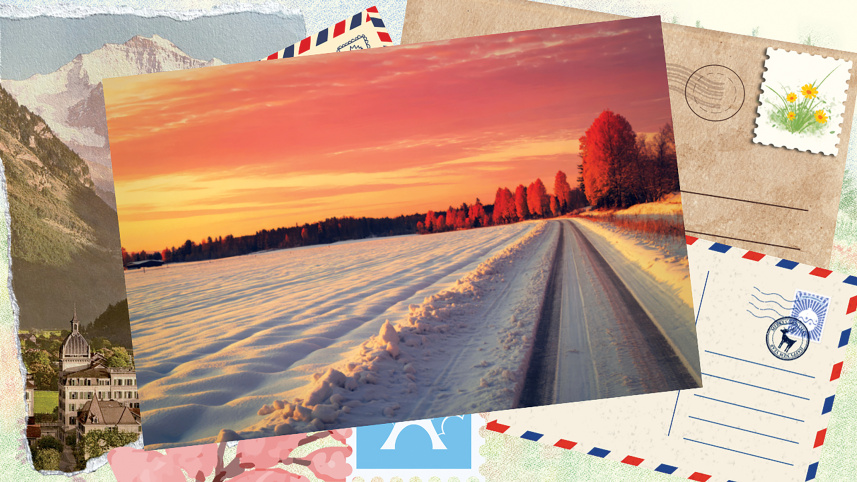
There are a few old trees with wide trunks—I do not know their names—just beside my library. I never forget to have a quick look at the leaves during coming and going to the library. Changes in the colour of the leaves help me to read the seasonal changes here. Nature teaches me how to read nature, especially the transitional moment. I look for the fallen leaves. Sometimes I stop and stare at the fallen leaves—not because I never saw leaves before—but because these fallen leaves signal a promise to me, the arrival of winter very soon. Within weeks, the trunk of the tree is covered with more fallen leaves, creating a soft, carpet-like bed. During that time, the different colour of the fallen leaves reminds me of an Albert Camus quote: “Autumn is a second spring when every leaf is a flower”. Camus does not want to forget the spring. But I feel for the leaves, the fallen leaves. After another few weeks, I saw only a few leaves on the trees, waiting to be fallen at any time. These “waiting to be fallen” leaves remind me of O. Henry’s “The Last Leaf.” I sincerely feel for the last leaves of autumn.
***

While the meteorologists consider December 1 as the start of winter, the astronomical winter starts on December 21. I don’t have any interest in their friendly quarrels. I have prepared myself to embrace winter with all my sensory experiences. The cold has already begun to settle in this small city of northeast England. The temperature is dropping drastically without mercy. This little city had a long history of becoming one of the centres of the coal mining industry which fed the great Industrial Revolution. Though the last coal mine in Durham closed in the early 1990s, its reminiscence is still alive in the form of heritage and culture among the working class of this region. The coal died but its culture is alive here. Even one day, I got excited when I found the name Durham and neighbouring region Cambria as a supplier of coals in Freidrich Engels’ The Condition of the Working Class in England.
Even during such big wounds inflicted on earth by the coal miners, northeast England began to attract several bird species during the winter from the Arctic. Mines that were abandoned sometimes created wetlands for many birds. Besides, the creation of mining villages and human wastes, some bird species like startling, boomed because they lived around human settlement and livestock. Through steam engines, coke ovens, and methane fires from spoil heaps created a warmer atmosphere during the harsh winter which invited many migratory birds for a better survival.
***
I do not know why snow reminds me of our childhood memory of reading Robert Frost’s poem “Stopping by Woods on a Snowy Evening” in high school. I still remember when I first spread my palm under the sky, a feather-like snowflake landed so gently and peacefully in 2020. It melted quickly, leaving a watery print on my thumb.
Snow appears and disappears. I wake up with an expectation to see a white world in the morning. Looking at the snow falling through the glass window is more beautiful than anything else. I am aware that snow has two faces. After two days of snowfall, when the temperature rises a bit, the road, once covered with white snow, turns into hard ice. The whiteness of the ice disappears, leaving the human shoe prints on it.
When I was preparing to go out after two days of self-imposed lockdowns at home, my English housemate came up with the most valuable advice: “Be careful when you step on the hard ice. Walk like a penguin and don’t put your hand into your pockets.” His grandfather went to Iceland before World War I and wrote this technique of walking on hard ice in his personal diary. It might be true that ancient humans learnt how to walk on ice from penguins! The Wright brothers also got the idea of wing-warping of the plane by looking at the flying birds in the open sky. It is not difficult to prove that natural history and human history are entangled.
***
I always get back home from the university before it gets dark. But sometimes due to socialisation, seminars, and workshops, it becomes late. Sometimes, when I walk back from the library to home after it gets dark, I look at the same ancient trees with huge trunks standing tall without a single leaf. They look naked. I feel sad for them. A tree without leaves looks like a bird without wings. But they endure it without complaints because they know after a few months, new leaves would appear.
The winter will deepen in the coming days. It slows me down. The day shrinks and the night stretches. Here, the winter feels heavier, wetter.
Sometimes, breathing tells you the difference. Now, I spend more time on the weather app; winter has already domesticated me. I check the sunrise and sunset time in the weather app but hardly see the actual sun in the sky. Before closing my eyes in bed, I scroll through the app again, simply to know that tomorrow will not be colder than today.
Fahmid Al Zaid is Associate Professor in the Department of Anthropology, University of Dhaka, and a PhD candidate at Durham University, UK. He can be reached at fahmidshaon@du.ac.bd.
 For all latest news, follow The Daily Star's Google News channel.
Comments