


Vacancies, silted ponds leave Moulvibazar govt fish farm struggling

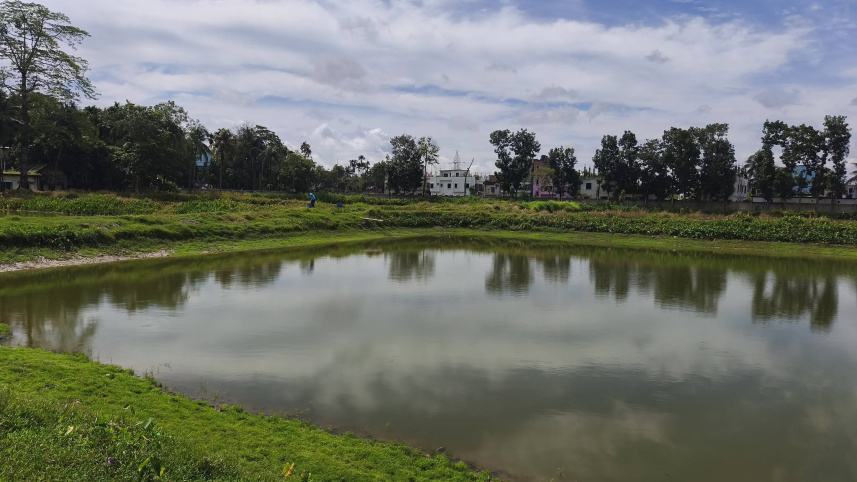
Moulvibazar Fish Seed Production Farm, established to supply quality fish seed to farmers, is struggling to meet local demand as years of manpower shortages and inadequate maintenance have hampered production.
Established in 1962 on 3.7 acres, the government-run farm has nine ponds, including three for brood fish used in egg collection.

But the ponds have not undergone major renovation since they were built. Years of siltation have reduced their depth from the required six to eight feet to around four to five feet, while several banks have collapsed and narrowed.
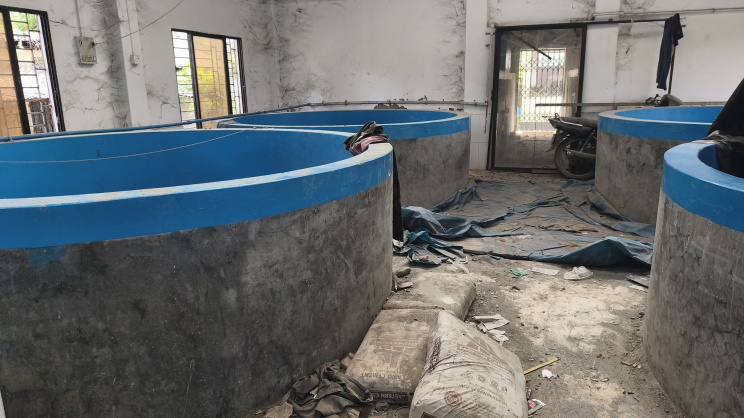
The hatchery facilities are also in poor condition. Two buildings have damaged tin roofs that leak during rain, and the units have not been modernised for years.
The farm's manpower shortage is equally acute. Of five sanctioned posts, three -- including the farm manager's position -- have remained vacant for years. The manager's post has been vacant since 2022.
Sreemangal Senior Upazila Fisheries Officer Joy Banik is currently running the farm in addition to his other responsibilities in Sreemangal and Kamalganj.
The shortage becomes particularly critical during the April-June breeding season, when eggs, hatchlings and fry require round-the-clock monitoring for several months.
"It is not possible to ensure round-the-clock monitoring while carrying additional responsibilities," Banik said, adding that the shortage of manpower and lack of timely renovation were hampering the production of quality fry and brood fish.

The farm's limited production capacity is stark against the district's growing demand. Moulvibazar has around 26,000 ponds and about 1,000 commercial fish farms. Annual demand for shrimp seed is estimated at 6,000-7,000 kg, while demand for fry stands at around 30-40 million.
The government farm's production targets, however, are only 213 kg of shrimp and 926 kg of fry.
Once heavily dependent on haor and other open-water fisheries, Moulvibazar has increasingly shifted towards aquaculture as agricultural expansion, industrialisation and population growth reduced natural fishing grounds.
This has made farmers dependent on quality hatchery-produced seed.
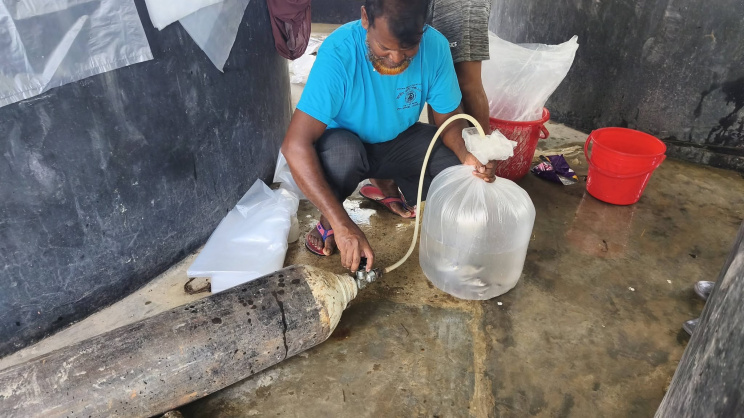
"If the government farm could supply quality fry and shrimp at relatively low prices, farmers would benefit," said Shadek Mia, a fish farmer in Chadnighat.
Banik said renovation of the ponds and hatchery units was planned under a government farm management project.
District Fisheries Officer Md Arif Hossain said the authorities were trying to operate the farm with limited manpower, but more staff, including a full-fledged manager, were needed.
 For all latest news, follow The Daily Star's Google News channel.
Comments