


Plan to curb inflation riddled with holes

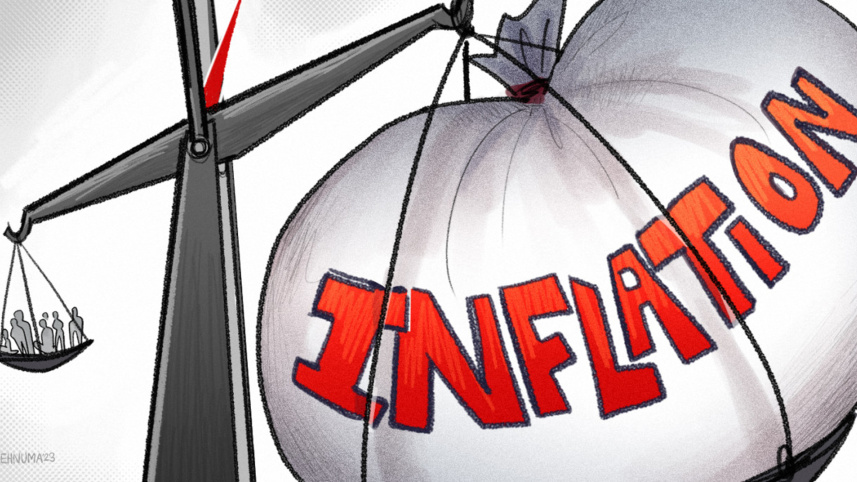
The proposed budget has set a target of bringing inflation down to 7.5 percent in the next fiscal year from the current 9.42 percent, but economists say the finance minister has not outlined a clear plan for achieving that goal.
They also say the budget’s emphasis on higher public spending appears to be at odds with the central bank’s efforts to rein in inflation by keeping credit conditions tight.

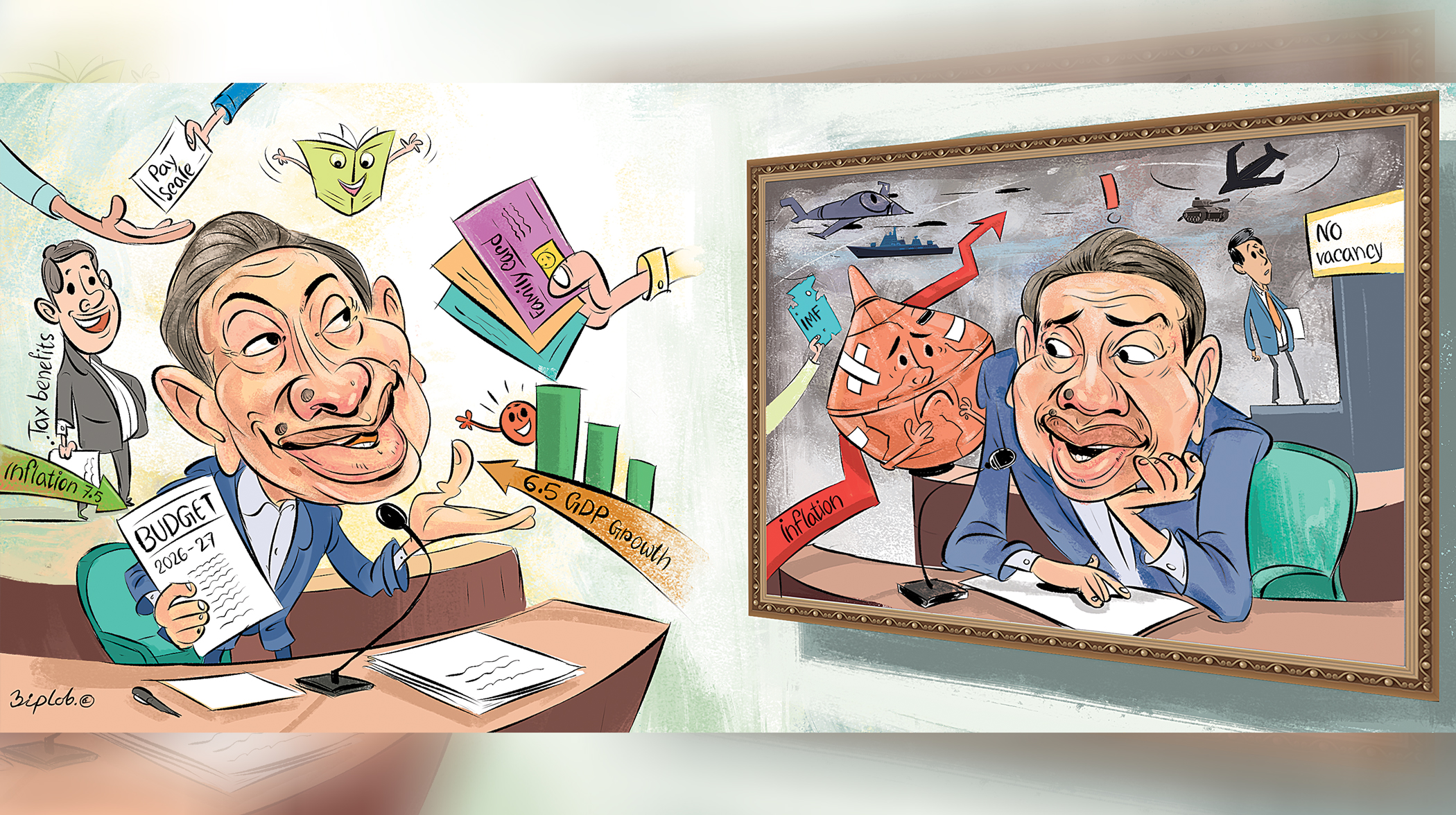
The higher spending envisaged in the proposed budget includes Tk 44,000 crore for a new pay scale for public employees and an already announced Tk 60,000 crore stimulus package for struggling private sector businesses, with total expenditure set at Tk 9.38 lakh crore.
According to economists, this increase in spending could add to demand at a time when inflation remains stubbornly high.
They also said the proposed budget does not adequately address the recent rise in prices driven by higher fuel and electricity costs and increases in cooking gas prices.
Nor does it provide sufficient measures to tackle supply chain weaknesses, which the Centre for Policy Dialogue (CPD) recently identified as a key driver of inflation.
On the positive side, economists point to several measures that could ease pressure on households.
The proposed FY27 budget expands the social safety net, increases monthly allocations under welfare programmes and reduces source tax rates on around 60 essential products, including rice, wheat, potatoes, livestock, poultry and fish.
It also proposes raising the tax-free income threshold to Tk 375,000 from Tk 350,000.
Annual average inflation has been above 9 percent for around three years, gradually eroding the purchasing power of households across income groups, according to the Bangladesh Bureau of Statistics (BBS).
Overall inflation rose to a 16-month high of 9.42 percent in May, driven largely by food prices.
Economists warn that the full impact of recent upward adjustments in fuel, electricity and cooking gas prices has yet to be reflected in inflation data, suggesting that price pressures may continue in the coming months.
One of the few areas of the new budget offering some relief is the expansion of social safety net programmes. The government proposes a Tk 144,000 crore allocation to social safety net schemes in the next fiscal year, a 14.3 percent increase from the current year.
Under the social safety net, family cards will be issued to 41 lakh women in FY27, each of whom will receive Tk 2,500 a month.
The budget also proposes increasing both the number of beneficiaries and monthly allowances under several schemes.
The allocation for social safety nets amounts to about 2.1 percent of GDP and around 15 percent of the proposed budget.
While significant, it may not be enough to offset the erosion of real incomes experienced over recent years, according to Mustafa K Mujeri, executive director of Institute for Inclusive Finance and Development (InM).
He said that instead of offering small sums through safety net programmes, the government should focus on helping marginalised people take part in income-generating activities.
In an effort to ease consumer burdens, the government has also reduced source tax rates on around 60 essential products. The source tax on paddy, rice, wheat, potatoes, livestock, poultry, fish, onions, garlic, salt, sugar, edible oil and seeds has been lowered to 0.5 percent from a range of 1 percent to 5 percent.
 For all latest news, follow The Daily Star's Google News channel.
 Mujeri said the measure will help consumers only if the tax reductions are passed on through lower market prices. Without effective market monitoring, the benefits may not reach households.
He said the government should first assess why inflation remains stubbornly high and then take appropriate policy measures.
Another relief measure is the proposed increase in the tax-free income threshold to Tk 375,000 from Tk 350,000 for the next two fiscal years.
In his budget reaction, Ashikur Rahman, principal economist at the Policy Research Institute of Bangladesh (PRI), said that the country can no longer be considered to be pursuing a genuinely contractionary policy stance.
“To bring inflation under control, a tight monetary environment is necessary, accompanied by a correspondingly tight fiscal stance. Unfortunately, we are moving in the opposite direction on both fronts,” he said.
Citing IMF research, he said that although inflation may originate from supply-side shocks, controlling it effectively requires a combination of supply-side measures and coordinated contractionary monetary and fiscal policies.
The government, in its medium-term economic framework, aims to reduce inflation to 5 percent by FY2030-31. It also plans to strengthen external-sector stability and improve foreign exchange reserves to reduce imported inflation risks.
Comments