


Acute fry shortage grips Bagerhat prawn farming

Highlights
- Active hatcheries meet only eight percent of demand
- Bangladesh exported shrimp worth US$202 million in FY26
- Incessant rain causes anxiety among prawn farmers
Prawn farmers in Bagerhat are grappling with an acute shortage of giant freshwater prawn fry, locally known as ‘golda chingri’, threatening one of the country’s key export-oriented sectors.
Farmers are receiving less than 10 percent of the fry they need. With only five hatcheries operating in Bagerhat district, the supply of quality fry is failing to meet demand, severely hampering production.

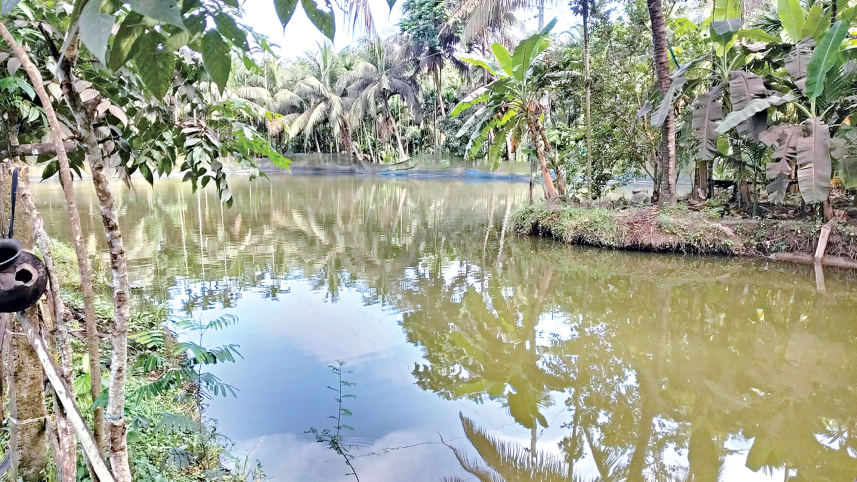
According to Raj Kumar Biswas, district fisheries officer (additional charge) of Bagerhat, there are 54,848 golda enclosures (ghers) in the district, producing about 20,345 tonnes of prawn annually.
Meanwhile, Bangladesh exported shrimp and prawns worth US$202 million during the July-April period of FY2025-26, according to Export Promotion Bureau (EPB) data.
“While the annual demand for golda fry in the district is 58 crore 77 lakh, farmers are getting only 4 to 5 crore,” Biswas said. He added that the five active hatcheries are producing fry that meets only eight percent of the total demand.
Bagerhat is renowned for producing “white gold” -- both golda and bagda (tiger shrimp). However, the growing shortage of quality golda fry has left farmers frustrated. They said securing adequate fry at the start of the season could increase production tenfold, boosting export earnings and the economy.
Deepak Chowdhury, a prawn farmer from the Maubhog area in Fakirhat upazila, said the price of fry has skyrocketed.
“Previously, the price of fry was Tk 1,500 to Tk 1,700. This year, it has jumped to Tk 3,000 to Tk 3,300. Even at this high price, we cannot find enough fry at the depots,” he said.
Chowdhury added that he has only been able to release 4,000 fry in his 10-bigha enclosure this season. “If I cannot release more fry, I will face losses of over Tk 1 lakh,” he said.
Another farmer, Ahad Sheikh, faced a similar problem. He could only release 37,000 golda fry in his 40-bigha enclosure, despite needing 1.5 lakh fry.
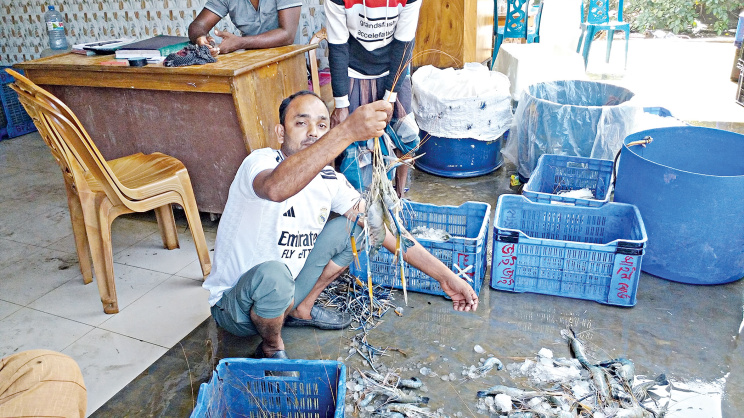
“We in the southern region depend on prawn farming for our livelihood. If we cannot release fry, there is no point in keeping these enclosures,” Sheikh said.
He noted that hatchery-produced fry are of inferior quality and meet only eight to 10 percent of the demand.
Salam Sheikh, a local depot owner, said there are about 60 fry depots in Fakirhat, but they cannot meet demand.
“Every day, farmers come to buy fry but return empty-handed,” he said.
He explained that they previously met the shortfall by sourcing fry collected from rivers and seas in Chattogram, Noakhali, Cumilla, Bhola and Patuakhali, as well as imports from India.
“However, the government’s ban on the sale and purchase of fry collected from rivers and seas, along with Indian fry, has triggered this severe crisis,” Salam added.
Stakeholders have urged the government to resolve the crisis to save the industry. In response, District Fisheries Officer Raj Kumar Biswas told The Daily Star that efforts are underway to increase the number of hatcheries and source fry from other districts.
Apart from the fry shortage, incessant rain over the past several days has also left prawn farmers anxious.
Gopal Das, a farmer from the Sangdia area of Kachua upazila, said, “Our enclosures are still safe. But if this heavy rainfall continues, we may face damage.”
 For all latest news, follow The Daily Star's Google News channel.
Comments