


BSEC sets out rules for converting closed-end mutual funds

- BSEC issues directive on mutual fund conversion
- Conversion requires 75 percent unitholder vote approval
- Trading suspended from record date during conversion
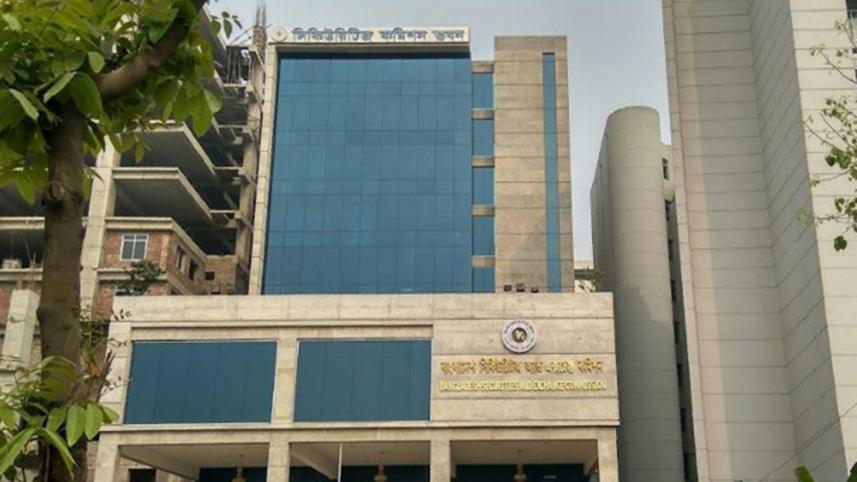
The Bangladesh Securities and Exchange Commission (BSEC) has issued a directive setting out how existing closed-end mutual funds can be converted into open-end ones.
The move follows years of debate over the future of closed-end funds. In 2018, amid heavy criticism from market analysts, the BSEC allowed several funds to extend their tenure without seeking approval from unitholders.

Closed-end mutual funds raise a fixed pool of money from investors, usually for 10 years, and invest it in shares, bonds and other assets. Their units are listed and traded on the stock exchange.
Open-end funds, by contrast, are not listed. Investors buy units directly from the fund manager at the prevailing net asset value and can redeem them at any time at a price based on that value.
After the Awami League was ousted from power in August 2024, a taskforce appointed by the interim government recommended that all closed-end funds should be redeemed at maturity and that no extensions should be permitted.
Subsequently, the BSEC amended the mutual fund rules to bar any extension of tenure for existing closed-end schemes.
Under the revised regulations, fund managers must call a special general meeting within 30 days if the six-month average market price of a fund’s units remains at least 25 percent below the six-month average net asset value.
If at least 75 percent of unitholders vote in favour, the fund will be converted into an open-end mutual fund. The amended regulations complete six months in force this week.
An analysis of Dhaka Stock Exchange data shows that most closed-end funds are already trading at a discount of more than 25 percent to their six-month average net asset value. This means many could now face a vote on conversion.
Abul Kalam, spokesperson for the BSEC, also said that under the rules, funds may face conversion or winding up.
If the decision comes in the meeting to convert them into open-ended funds, it will ensure the interest of investors as they will be able to get back their funds at NAV any time, he said.
In winding up, Kalam said there is a tax issue, and investors will get only the fund that the fund manager gets by selling their holdings.
In an order issued on May 7, the regulator outlined the conversion process.
According to the order, an asset manager may also initiate a proposal for voluntary conversion. However, the board of trustees must approve the plan after ensuring that unitholders’ interests are protected.
Trustees must take a decision on any voluntary conversion proposal at least 150 days before the fund’s maturity.
They are also required to publish notices as price-sensitive information in at least two national newspapers, one in Bangla and one in English, as well as on an online news portal and on the websites of the stock exchanges, trustees and asset managers.
The notice must include the record date, the date from which trading will be suspended, the effective date of conversion and the date of the special general meeting.
Only unitholders whose names appear in the depository or unitholders’ register on the record date will be eligible to vote in the meeting.
Under the order, trading in the units of the relevant fund will remain suspended from the record date to preserve the integrity of the voting and conversion process.
The BSEC also stipulated that any conversion proposal must be approved by at least three-quarters of unitholders, calculated on the basis of units held.
 For all latest news, follow The Daily Star's Google News channel.
 If the proposal fails, trading the fund’s units will resume on the next trading day. The trustee will hand over all assets to the custodian, while management will remain with the existing asset manager.
The order further said that if conversion is approved, the newly selected asset manager will bear the costs of holding meetings and the trustee fees related to the process. If the proposal is rejected, the existing asset manager will pay those expenses.
The commission has capped trustee fees for a single conversion scheme at Tk 10 lakh.
Comments