


Businesses seek flexibility on IPO funds for loan repayment
Top business leaders have urged the market regulator to be flexible on the use of initial public offering (IPO) funds for loan repayment, including allowing repayment of rescheduled loans amid a challenging business climate.
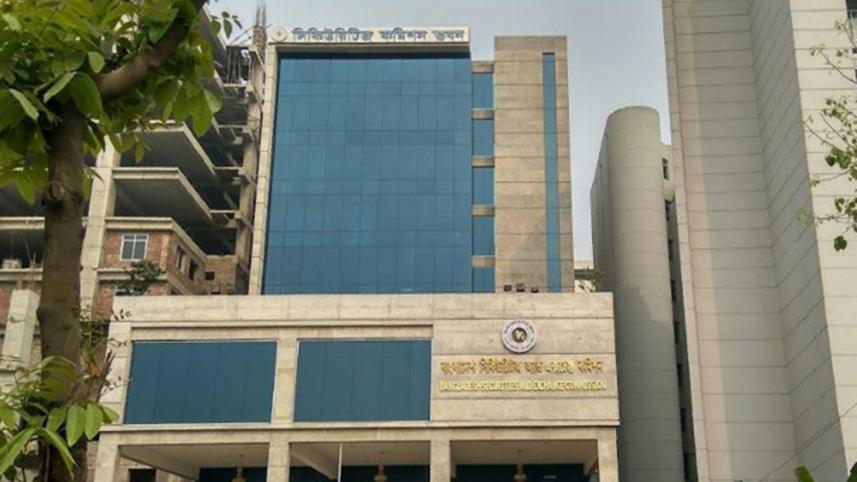
They made the request at a meeting organised by the Bangladesh Securities and Exchange Commission (BSEC) at its Dhaka office yesterday to discuss the use of IPO proceeds.
 For all latest news, follow The Daily Star's Google News channel.
 Syed Nasim Manzur, managing director of Apex Footwear Limited, said many countries, including neighbouring ones, do not impose restrictions on the use of IPO funds for loan repayment.
Considering global standards, the scope for using IPO proceeds to repay loans could be expanded, he added.
In 2025, the regulator introduced the Public Offer of Equity Securities Rules, 2025. Under the new rules, companies may use up to 30 percent of IPO proceeds for debt repayment or investment, subject to conditions.
For loan repayment, the borrowing must have been used for a company project, business, machinery, renovation or expansion, and an auditor report must confirm proper utilisation of the funds.
The loans being repaid cannot be classified or rescheduled. In other words, they must not be overdue or deferred because of repayment problems.
These provisions are stricter than those under the 2015 rules, which allowed up to one-third of IPO funds to be used for debt repayment or working capital without linking the loans to specific projects or imposing conditions on their classification status.
Riad Mahmud, president of the Bangladesh Association of Publicly Listed Companies, said even well-performing companies may incur losses because of global crises and economic challenges, and may have rescheduled loans.
It is not sufficient to follow strict policies based only on ideal situations; flexibility is also necessary considering real-world circumstances, he said.
Taking into account economic conditions and global crises, he called for allowing the repayment of rescheduled loans using IPO proceeds.
Mominul Islam, chairman of the Dhaka Stock Exchange, also spoke in favour of allowing IPO funds to be used for loan repayment.
Khondoker Rashed Maqsood, chairman of the BSEC, thanked stakeholders for their opinions and proposals. He said the regulator would evaluate their views and recommendations, adding that one of its key mandates is to protect investor interests in the capital market.
He said, “The commission will ensure overall market development while safeguarding investor interests.”
Maqsood also said efforts are ongoing to bring fundamentally strong companies to the capital market.
Tapan Chowdhury, chairman of the Central Depository Bangladesh Limited and managing director of Square Group, said regulators must assess whether IPO funds are used properly and whether they genuinely benefit the company or project.
He noted that many large and reputed groups in the country have highly ambitious projects, and merely relying on the group’s reputation should not justify using IPO proceeds to repay loans for such projects.
Abdul Hai Sarker, chairman of the Bangladesh Association of Banks, said a strong and developed capital market is an effective solution for maintaining competitiveness in the global market and ensuring economic growth.
He called for the proper development and expansion of the market.
Mashrur Arefin, chairman of the Association of Bankers Bangladesh, said companies should have an opportunity to restructure capital by repaying loans taken for productive or expansion purposes using IPO funds.
Considering the country’s economic conditions and various crises, he said loans that have not been rescheduled more than twice could be allowed under such provisions, while maintaining appropriate control mechanisms.
Kamran T Rahman, president of the Metropolitan Chamber of Commerce and Industry, Dhaka, said, “In the country, short-term deposits are being used to finance long-term investments. This practice should be discouraged, and long-term financing should be ensured through the capital market. To achieve this, policy and regulatory alignment are necessary.”
AKM Habibur Rahman, chairman of the Chittagong Stock Exchange, Saiful Islam, president of the DSE Brokers Association of Bangladesh, and senior BSEC officials also attended the meeting.
Comments