


After LDC graduation ceramic exports to face tough tariffs: Study
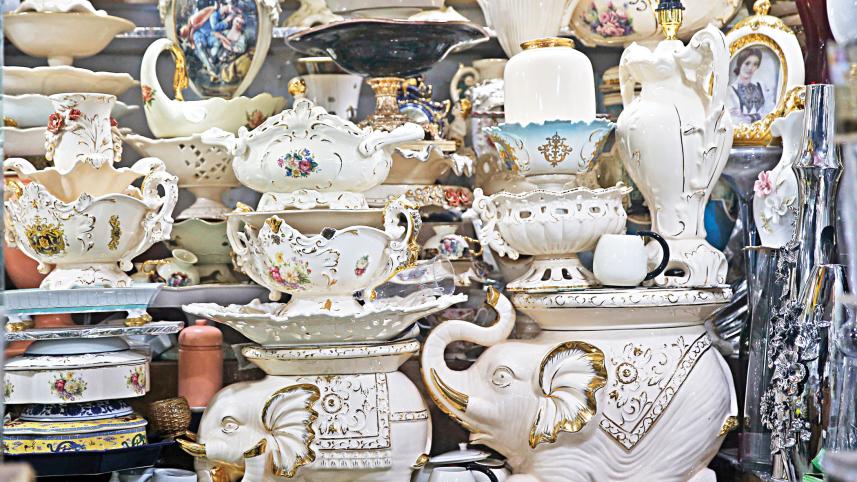
Exporters of locally made ceramics will have to endure tough competition after Bangladesh graduates from the least developed country (LDC) status in 2026 as such products will face 12.7 per cent tariff on average when entering international markets, according to a recent study.
Bangladesh's ceramic products currently enjoy 10 per cent incentives on export.
 For all latest news, follow The Daily Star's Google News channel.
 "But such subsidies must be paid after graduation and so, local ceramic products will face pressure in terms of export competition," said Khondaker Golam Moazzem, research director of the Centre for Policy Dialogue (CPD)
He was speaking at a seminar on the "Ceramic industry in view of Bangladesh's LDC graduation: prospects and challenges", organised by the Bangladesh Ceramic Manufacturers and Exporters Association (BCMEA) at Pan Pacific Sonargaon Dhaka yesterday.
Moazzem said Bangladesh would face competition from countries like India and Vietnam, which have already signed free trade agreements (FTA) with the EU and UK.
After graduation, Bangladesh will face a situation where its ceramic products will have to be exported with duty while Indian and Vietnamese goods will be exported without duty due to their FTAs.
Bangladesh is currently enjoying the benefits of the Employer Investment Fund (EIF) for the development of its technical capacity for export.
However, Moazzem said this benefit will no longer be available after graduation, and Bangladesh will have to find alternative sources to develop its export capacity.
For this reason, Bangladesh will have to address nine issues -- reducing the cost of production, adjusting with imported low-duty products, adjusting between high tariff of export and incentives of the products, increasing productivity, diversifying products, introducing variations to the export market, improving the labour market, and protecting the environment, the paper said.
Commerce Minister Tipu Munshi said ceramic products could play a role in diversifying Bangladesh's export basket.
He went on to say that advance initiatives are being taken to help Bangladesh face any challenges, and to obtain the generalised system of preferences plus benefit after graduation.
And although the local ceramic market is a large one, exports from the sector will also increase, Munshi said while suggesting exploring new markets and capacity building for the industry.
Md Jashim Uddin, president of the Federation of Bangladesh Chambers of Commerce and Industry (FBCCI), said they formed a high-powered committee among businessmen to monitor the market during Ramadan so that nobody can increase prices without reason. "I urge businesses not to make additional profit during this time," he said.
Md Sirajul Islam Mollah, president of the BCMEA, said the local ceramics sector has replaced imports and there are now 70 industries (tableware, tiles, and sanitary) set up in Bangladesh.
According to him, a total of Tk 13,500 crore has been invested in this sector, which brings in export receipts of around Tk 400 crore every year.
Investors are facing problems due to the continuous increase of gas prices.
"There is no scope to use alternative energy for this sector as it is quite gas dependent. The price of gas increased 100 per cent in the last decade," Mollah said. He urged the energy regulatory commission to not increase the price of gas for industrial connections.
Moderated by Irfan Uddin, general secretary of the BCMEA; Md Mamunur Rashid, president of the Institute of Cost and Management Accountants of Bangladesh; Md Afzal Hossain, chairman of the Bangladesh Trade and Tariff Commission; Dulal Krishna Saha, executive chairman of the National Skills Development Authority; AHM Ahsan, vice-chairman and chief executive officer of the Export Promotion Bureau, also addressed the seminar.


Comments