


EU to assess Bangladesh’s proposal for FTA

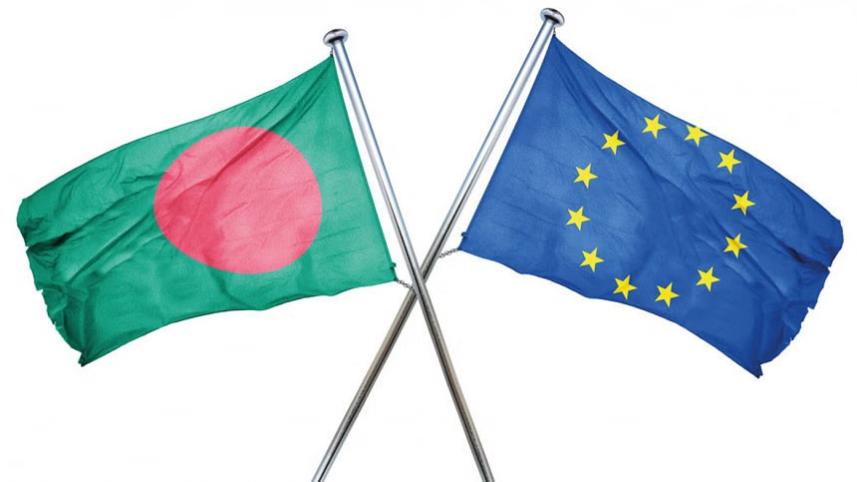
The European Union is set to begin an internal assessment of Bangladesh’s proposal for a free trade agreement (FTA) with the bloc, nearly a year after the proposal was first placed.
Md Abdur Rahim Khan, additional secretary (export) at the commerce ministry, said the EU sent a letter in this regard to the ministry in the first week of this month.

The bloc, however, did not mention a specific date to start the negotiations, he added.
At present, Bangladesh enjoys zero-duty benefits to the trade bloc but may lose the privilege after 2029 if a trade deal is not secured, and Bangladeshi exporters will face a 10 percent duty from that year.
Considering the importance of zero-duty benefits, Bangladesh sent a proposal to the EU seeking negotiations on an FTA in August last year, aiming to retain preferential market access to the EU after the country graduates from least developed country (LDC) status.
Bangladesh is scheduled to graduate from LDC status on November 24 this year if the process is not deferred.
BALANCING LDC DELAY AND EU ACCESS
Khan said Bangladesh’s immediate priority is delaying its graduation from the LDC category. The government applied to the UN Committee for Development Policy (UN CDP) in February this year seeking a three-year deferment until 2029, and the proposal is currently under review by relevant UN bodies.
At the same time, securing continued preferential market access to the EU remains equally important, he said.
The block is Bangladesh’s largest export destination, accounting for nearly 60 percent of the country’s annual exports, with annual shipments valued at over $25 billion.
Nuria Lopez, chairperson of the European Union Chamber of Commerce in Bangladesh (EuroCham Bangladesh), welcomed the ongoing communication between the two sides over a possible FTA.
Bangladesh is eager to commence these discussions, Lopez said in a WhatsApp message in reply to a question sent by The Daily Star.
She added that the prime minister had already conveyed Bangladesh’s strong interest in an FTA in a letter to the president of the European Commission and that the EU is currently assessing the proposal.
“I met EU Ambassador Michael Miller in Bangladesh on Wednesday morning, and I remain hopeful,” she said.
A private sector representative of both Bangladesh and the EU, Lopez will be in Brussels next month to advocate for the FTA.
“We are also working to demonstrate that an FTA is not only in Bangladesh’s interest, but also of strong commercial interest to the European private sector.”
WHY THE PACT MATTERS
Without an FTA or similar arrangement with the EU, Bangladeshi exporters will face a 10 percent duty from 2029 in EU. For now, the bloc has granted the country a three-year extension of zero-duty facilities.
At the same time, Bangladesh and the EU are negotiating a Partnership and Cooperation Agreement (PCA), which aims to strengthen cooperation in areas such as trade, investment, governance, human rights, climate action and sustainable development, according to the European Commission.
Bangladesh, a member of the World Trade Organization since 1995, currently enjoys duty-free, quota-free access to the EU market under the bloc’s “Everything but Arms” (EBA) scheme for LDCs. The country is currently the largest beneficiary of the EU’s EBA scheme, with €19 billion worth of exports receiving preferential access in 2024 under a 96 percent utilisation rate.
 For all latest news, follow The Daily Star's Google News channel.
 In 2025, Bangladesh was the EU’s 35th-largest trading partner, accounting for 0.5 percent of the bloc’s total goods trade. The EU, meanwhile, remained Bangladesh’s largest trading partner, making up 21.5 percent of the country’s global goods trade.
Total trade in goods between Bangladesh and the EU stood at €23.3 billion in 2025, with the EU recording a trade deficit of €19.1 billion.
Textiles accounted for nearly 94 percent of the EU’s imports from Bangladesh, while the bloc mainly exported machinery, appliances and chemical products.
Trade in services between the two sides reached €1.5 billion in 2024, while total trade in goods and services amounted to €23.8 billion.
According to the European Commission, EU foreign direct investment stock in Bangladesh stood at €2.5 billion in 2024, while Bangladesh’s FDI stock in the EU amounted to €86 million.
Comments