


Firms trim margins, shrink packs as fuel price hike bites


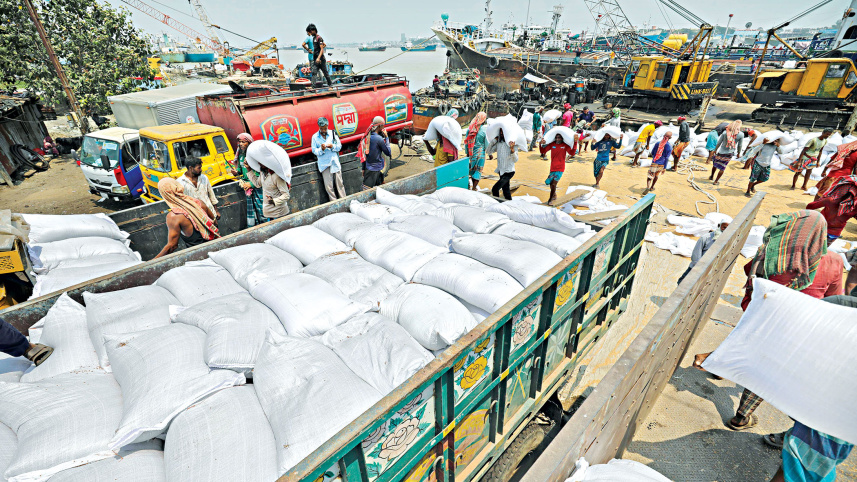
Sectors across Bangladesh are adjusting rates and restructuring costs in the wake of the government’s record fuel price hike, with freight charges from Chattogram port surging and consumer goods companies shrinking pack sizes and cutting trade margins to stay afloat.
On April 18, the government raised fuel prices to record highs -- diesel by Tk 15 per litre to Tk 115, octane by Tk 20 to Tk 140, petrol by Tk 19 to Tk 135, and kerosene by Tk 18 to Tk 130, with new rates taking effect at midnight.

The hike compounded a crisis that began in early March, when the outbreak of war in Iran pushed global energy prices higher and drove up transport costs before any official revision.
Already reeling from the supply disruptions due to the war, diesel-dependent industries, including agriculture, manufacture and transport, are now facing a double whammy. And in a highly inflated economy, the burden is likely to fall on customers soon.
FREIGHT RATES UP 30%
Transport fares between Chattogram port and destinations across the country have risen 25 to 31 percent since the April 18 hike, with rates remaining volatile for the past one and a half months.
When the Iran war began in early March, covered van fares from the port to Dhaka shot up from Tk 17,000 to a maximum of Tk 32,000. The rates later eased to around Tk 22,000 after Eid-ul-Fitr, only to climb again after the fuel hike.
On Tuesday, Ashis Chakraborty, owner of Chattogram-based clearing and forwarding agency AZ Trade International, hired five covered vans to transport imported fabrics, yarn, and chemicals for Mymensingh-based garment manufacturer PM Textile. It cost him Tk 29,000 per van.
PRAN-RFL Group, which relies on hired vehicles for around 40 percent of its cargo movement between Chattogram and its factories in Ghorashal and Habiganj, is absorbing similar increases.
Kamruzzaman Kamal, the company’s marketing director, told The Daily Star that covered vans now charge Tk 15,000 to carry export goods from Ghorashal to inland container depots in Chattogram -- Tk 3,000 above the previous rate.
Prime movers transporting import containers to the factories now cost up to Tk 42,000, compared to Tk 32,000 before the hike.
MOST MANUFACTURERS HOLD PRICES -- FOR NOW
On the manufacturing side, companies are deploying a range of measures to absorb the cost shock without immediately raising retail prices, though several have signalled that adjustments are becoming harder to avoid.
Many are resorting to shrinking the pack size. This is a classic example of “shrinkflation”-- which occurs when manufacturers shrink the package size, i.e., quantity of an item, without a corresponding price drop.
Tanveer Ahmed Mostafa, director of Meghna Group of Industries, said the severe global energy shock stemming from the Middle East conflict has directly hit the company’s costs from maritime freight to raw material procurement.
In a vertically integrated conglomerate like Meghna, such volatilities inevitably exert pressure on forward consumer outputs, he said, adding that the group is currently absorbing the pressure through internal cost-containment and supply chain optimisation.
“A price adjustment remains a possibility to ensure sustainable supply,” Mostafa said. “We are first exhausting all internal efficiencies.”
“While a price adjustment remains a possibility to ensure sustainable supply,” Mostafa said, for now they are “exhausting all internal efficiencies to keep” products affordable.
PRAN-RFL, a leading food processor and exporter, is holding the same position.
Marketing Director Kamal said, “The company is currently avoiding price increases despite rising fuel costs, as consumers are already under significant financial pressure from higher living expenses.”
 For all latest news, follow The Daily Star's Google News channel.
 Instead, PRAN is reducing trade margins and consolidating deliveries – minimising vehicle numbers, ensuring full-load shipments, and using larger vehicles where possible.
Increasing the maximum retail price, he said, “remains a last resort” and would only be considered if internal cost-control measures fail.
Unilever Bangladesh is also deferring any pricing decision, and is focusing on innovation and operational improvements to absorb costs.
Shamima Akhter, director of corporate affairs, partnerships and communications, said the company is prioritising operational efficiency and cost optimisation over immediate price increases.
Because many of its products are discretionary, she noted, price hikes risk reducing sales volumes.
She noted that global volatility, including higher fuel prices and increased raw material import costs, has already put pressure on production and distribution over the past two months.
Bombay Sweets, however, has moved more decisively. Khurshid Ahmad Farhad, the company’s general manager, said export prices have already been raised by 25 percent starting last month. In the domestic market, the company is adjusting on a product-by-product basis, either raising prices or reducing weights, but not both simultaneously.
Farhad described the April 18 hike as a second shock. Cost pressures had already been building, driven by sharp increases in raw materials, including chemical and petrochemical prices. When the latest price hike came, it pushed packaging costs up by 13 percent to 69 percent.
The company’s “Potato Crackers” product, retailed at Tk 10, has been reduced from 13 grams to 10 grams since the fuel hike. The change is already in the market. Farhad emphasized that increasing maximum retail prices further is difficult due to declining consumer purchasing power, making downsizing a necessary strategy.
“The company is currently prioritising survival over profit,” Farhad said. “Margins have already declined.”
FARMERS FACE A COSTLY HARVEST
The pressure is not limited to industry. Farmers are feeling the pinch during the Boro harvesting season. The surging diesel prices have made it costlier to rent harvesters. For instance, farmers in four haor districts of Sylhet depend on nearly 1,500 combine harvesters, which run on diesel, for bringing their crops home.
In Dingapota Haor in Mohanganj upazila, Netrokona, farmer Tofayel Khan cultivated Boro rice on 80 kathas of land this season, only for floodwater to submerge most of it before harvest.
He had to spend some Tk 660 per katha to harvest the remaining crops. Last season, the rate was Tk 550 per katha. “I am concerned about how to recover my losses.”
Comments