


Leather sector loses billions to compliance failures

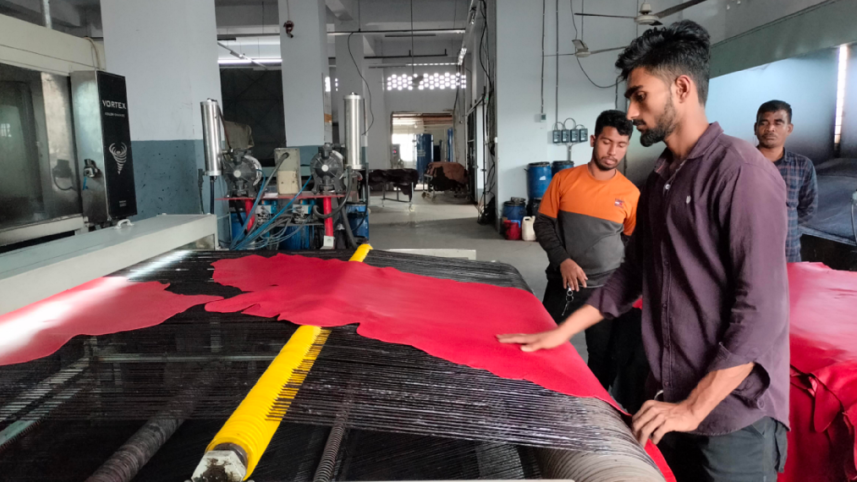
Bangladesh generates a significant share of the world’s raw leather each year, yet earns only a fraction of what the material is worth due to compliance failures and decades of neglected infrastructure, according to industry leaders.
They point to shortcomings at the Savar Tannery Industrial Estate that have kept the country locked into low-value exports and shut out of premium global markets.

Bangladesh accounts for around four percent of the world’s rawhide and skin resources and produces an estimated 350-400 million square feet of hides and skins annually, according to Md Mizanur Rahman, professor and director of the Institute of Leather Engineering and Technology at the University of Dhaka.
“The country could generate up to $10-$12 billion in export earnings from its existing raw materials alone if the sector were fully utilised,” he said.
“We are sitting on a huge resource, but we are not using it properly,” Rahman added.
He estimates that nearly 30 percent of the country’s leather is wasted due to poor preservation, inadequate processing capacity and the lack of proper utilisation of tannery by-products.
According to the professor, the leather sector offers one of the highest value-addition opportunities in Bangladesh’s manufacturing industry, with up to 90 percent value addition possible as most raw materials are sourced locally.
He noted that foreign buyers, particularly Chinese firms, often purchase Bangladeshi leather for as little as 40-50 cents per square foot and later sell processed leather in international markets for around $2 per square foot.
Much of the profit from Bangladesh’s leather ends up overseas, while local traders and producers receive low prices for rawhides, he added.
According to Rahman, much of the potential lies in by-products that currently go unused.
He noted that tannery waste can be processed into collagen, gelatin, fertiliser and animal feed – industries that, if formalised, would create new demand for hides and push up their market value. “Nothing from leather should go to waste. Every part has economic value.”
The timing of supply adds another layer of difficulty. Some 40-45 percent of the country’s annual rawhide comes to market within three days of Eid-ul-Azha, placing enormous strain on processing capacity and making efficient handling critical to securing better prices.
The DU professor said the lack of internationally compliant environmental infrastructure at the Savar Tannery Industrial Estate has further limited the sector’s ability to move up the value chain.
Md Tipu Sultan, chairman of the Bangladesh Finished Leather, Leather Goods and Footwear Exporters Association (BFLLFEA), said the country’s leather sector continues to receive lower prices in international markets mainly because many factories have yet to meet globally recognised compliance standards.
“If we can move quickly on these issues, it will make a significant difference,” he said.
The compliance gap is the central obstacle for the sector’s growth, he noted, stating that only a handful of factories currently hold the internationally recognised certifications required by buyers in the United States and European markets.
“One or two compliant factories are not enough. If at least 50 out of around 150 factories can achieve those standards, more compliance-focused buyers will source products from Bangladesh,” Sultan said.
“If we can move quickly on these issues, it will make a significant difference,” he added.
If progress continues, he said, many of the recurring problems facing the leather sector could be resolved before the next Eid-ul-Azha season.
At the factory level, the frustration runs deeper. Md Salauddin Ahmed, managing director of New Kajol Tannery Ltd and treasurer of the BFLLFEA, traces the industry’s current predicament to the forced relocation of tanneries from Hazaribagh to Savar – a move the government promised would come with full infrastructure support.
 For all latest news, follow The Daily Star's Google News channel.
 “The government shifted us to Savar with the promise of providing all necessary facilities. But many factories moved before essential infrastructure was ready,” he said.
Even years after the relocation, several tanneries still face shortages of gas and other utilities, while the central effluent treatment plant (CETP) has yet to operate at the expected standard, he added.
These shortcomings have prevented the sector from obtaining internationally recognised certifications, including approval from the Leather Working Group (LWG), a key requirement for supplying many global brands.
“As a result, major European buyers are not coming to Bangladesh. We are largely dependent on Chinese buyers, who currently dictate prices,” Ahmed said.
That dependence shows in the margins. Processed leather is selling at $0.50–0.55 per square foot, barely enough to cover costs. With most chemicals imported and the dollar strengthening, even cheap raw hides offer little relief.
“We import most of our chemicals, and costs have risen sharply due to the stronger dollar. Even when we purchase raw hides at relatively low prices, we struggle to make a profit,” he said.
According to Ahmed, the lack of buyer diversification has weakened the industry’s bargaining power and contributed to the decline in hide prices.
“If we can ensure proper environmental compliance and secure LWG certification, European and other international buyers will return. Then we can sell leather at much better prices and pay higher prices for raw hides as well,” he said.
Comments