


Low-income families, women at heart of budget plan: Khosru
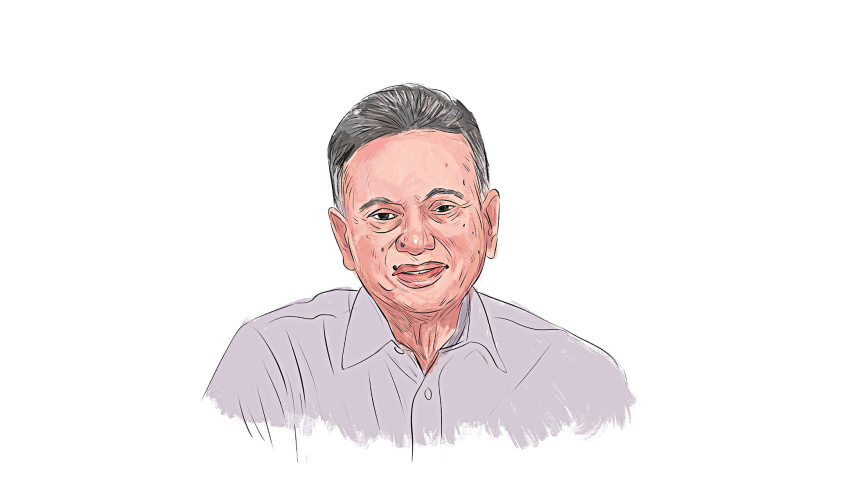
The upcoming budget for fiscal year 2026-27 will seek to widen economic participation by bringing traditionally overlooked groups into the mainstream economy, Finance and Planning Minister Amir Khosru Mahmud Chowdhury said yesterday.
Speaking at a pre-budget discussion organised by the Economic Reporters’ Forum, he said the government aims to create greater opportunities for low-income households, farmers, artisans, cultural workers and women to contribute to and benefit from economic growth.

The minister described the budget as an effort to “democratise the economy”, ensuring that the gains of development reach a broader segment of society rather than being concentrated among a few groups.
Particular emphasis has been placed on supporting women, especially homemakers, whose contributions to family welfare and the wider economy have largely remained outside formal economic structures, he added.
“The budget will also include measures aimed at strengthening livelihoods for farmers, artisans and cultural workers, while expanding opportunities for lower-income families to participate more actively in economic activities,” he said.
To reduce out-of-pocket healthcare expenses for people across the country, a groundbreaking Universal Primary Healthcare project will be implemented nationwide through a collaboration between NGOs and the private sector, he added.
For instance, he said the government’s planned Family Card and Farmers Card programmes could be managed by private firms and NGOs to minimise political influence, improve transparency and reduce leakages.
The minister acknowledged that weak implementation has long undermined the effectiveness of public spending, despite successive governments announcing large budgets and development programmes.
“Budget implementation has been a problem. That is a correct observation,” he said, adding that the government is now trying to identify where projects get stuck and who is responsible for delays.
To address the issue, the government plans to introduce digital dashboards to monitor every development project, he said. “The dashboards will be accessible to individual ministries, the finance ministry and the Prime Minister’s Office, enabling authorities to track progress in real time and identify officials responsible for missed deadlines.”
Also speaking at the event, Fahmida Khatun, executive director of the Centre for Policy Dialogue (CPD), identified revenue mobilisation as one of the biggest challenges for the upcoming budget, warning that Bangladesh has consistently failed to meet its tax collection targets over the past decade.
She spoke in favour of higher spending on education, healthcare and social protection, but noted that the real concern is whether the government can generate the revenue needed to finance its ambitions.
“Simply raising tax targets will not work without deep institutional reforms in revenue administration,” she said, adding that successive governments have relied on piecemeal measures instead of comprehensive reforms.
The policy expert also cautioned against putting greater pressure on existing taxpayers while failing to widen the tax net and tackle evasion.
She warned that excessive bank borrowing by the government could fuel inflation and crowd out private investment by pushing up lending rates.
Fahmida described inflation control as the budget’s foremost challenge, urging policymakers to focus spending on agriculture, energy, transport and logistics to ease supply constraints and boost production.
Sustainable growth, she said, will ultimately depend on better governance, stronger institutions, improved investment conditions and a stable law-and-order situation.
Azam J Chowdhury, chairman of East Coast Group, emphasised several longstanding concerns, including reforms to the Workers’ Profit Participation Fund (WPPF), removal of dividend double taxation, continuation of tax incentives for the ocean-going shipping industry, and simplification of land mutation procedures.
He called for a revision of the WPPF framework to ensure benefits reach workers as intended, while also addressing compliance challenges faced by listed companies.
Chowdhury emphasised the need for a more predictable tax regime and policy continuity to encourage private investment.
 For all latest news, follow The Daily Star's Google News channel.
 He also urged the government to go for administrative reforms, saying lengthy approval processes, particularly for land mutation and energy-sector investments, continue to deter businesses and delay new projects.
Shawkat Aziz Russel, president of the Bangladesh Textile Mills Association (BTMA), said supporting existing factories to upgrade capital machinery would yield faster and greater returns than building new facilities from scratch.
Modern equipment could raise productivity by 30-40 percent on average and, in some cases, by as much as 300 percent, while reducing gas and electricity consumption by around 30 percent, he said.
He stressed that such assistance should be implemented without delay, warning that lengthy decision-making processes have weakened the sector’s competitiveness.
The BTMA chief also criticised the interim government’s handling of the industry, saying timely policy support could have prevented the closure of hundreds of spinning mills and garment factories.
Russel further expressed concern over rising extortion and deteriorating law and order, noting that creating jobs and sustaining industrial growth remain essential to addressing such problems.
Chaired by Doulat Akhtar Mala, president of ERF, the event was moderated by Abul Kashem Khan, general secretary of ERF.



Comments