


Time to consider deep-sea LPG terminal for energy security

Bangladesh’s LPG market has expanded rapidly in response to real energy needs, and yet the infrastructure supporting this growth has not kept pace.
The country’s LPG import system remains dependent on small, pressurised vessels, typically carrying between 2,500 and 5,000 tonnes. This fragmented approach raises costs and exposes the market to delays and supply disruptions, affecting reliability.

A refrigerated LPG terminal at a deep-sea location such as Matarbari in the Moheshkhali area provides a clear way forward.
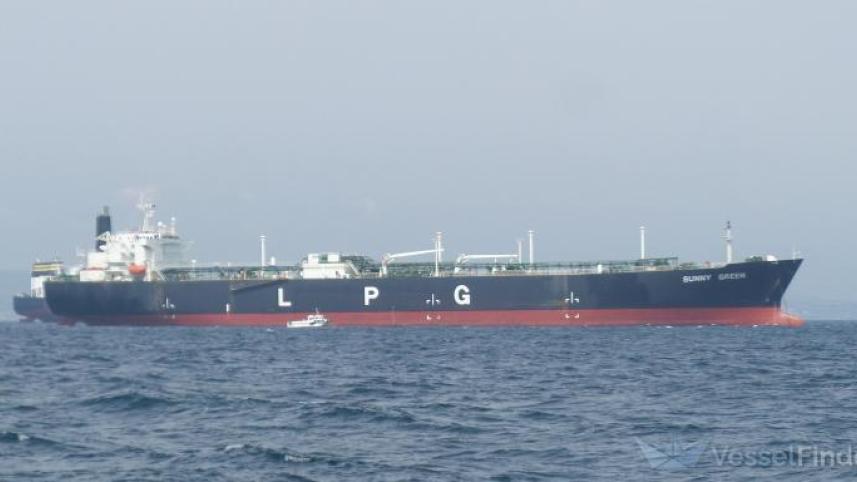
Matarbari offers the conditions required to accommodate Very Large Gas Carriers (VLGCs), which carry around 45,000 tonnes per shipment.
Such vessels require a draft of 12 to 14 metres, which existing LPG import points are not designed to handle. This makes it well-suited for large-scale, cost-efficient LPG imports.
This is a compelling bankable infrastructure opportunity for the private sector and foreign investors.
A terminal with an initial capacity of around 1.5 million tonnes per annum (MTPA) is likely to require capital investment in the range of Tk 1,800-2,300 crore, depending on configuration and marine infrastructure.
Structured under a public-private partnership (PPP) or concession model, such a project can attract long-term investment while limiting upfront public capital. Under this approach, a project developer would be responsible for the design, construction, financing and operation of the terminal over a defined concession period.
This aligns incentives around efficiency and performance, while allowing the government to retain strategic oversight.
The impact of such a terminal will depend not only on where it is built but also on how it is operated.
An open-access model, where the terminal functions as a neutral service provider rather than an LPG supplier, offers the most balanced solution.
In practice, this may take the form of a hybrid structure, where a portion of capacity is reserved for anchor users under long-term commitments to support project bankability, while the remainder is made available on an open-access basis.
Under this structure, all licensed importers can access the facility on transparent and equal terms, while continuing to source LPG independently.
An open-access terminal provides them with access to larger, more cost-efficient shipments, eliminating the need for major capital investments individually.
The structure reinforces the project’s investment appeal: revenues based on clearly defined terminal fees rather than commodity trading provide the predictability that investors and lenders require.
However, shared infrastructure raises concerns around utilisation and coordination among multiple users.
A well-defined Terminal Access Code can be a solution, ensuring transparent allocation of capacity, prioritising committed users and preventing hoarding. Operational arrangements such as coordinated cargo scheduling and inventory-sharing mechanisms can help optimise utilisation.
For established operators, the terminal frees up capital for downstream expansion. For the National Board of Revenue, increased and more efficient import volumes can translate into more predictable and higher fiscal revenues.
For Bangladesh Petroleum Corporation, it provides a reliable supply backbone that strengthens national energy security while enabling more efficient bulk procurement when needed.
For the private sector, it reduces costs, improves logistics and enables growth without duplicating infrastructure.
 For all latest news, follow The Daily Star's Google News channel.
 For investors, it offers a scalable opportunity in a high-growth market through a concession-based framework.
Over time, the terminal could support transshipment and regional trade, enhancing commercial viability and positioning Bangladesh as an efficient energy logistics hub.
With a development timeline of around three years, a terminal commissioned near 2030 would enter a market approaching 3 million tonnes per year and projected to grow to 4 to 5 million tonnes by 2036.
Turning this opportunity into a bankable project will require a clear and disciplined approach. A competitive selection process and a bankable concession structure will be essential alongside clear access rules.
Phased development will allow capacity to scale in line with demand, balancing efficiency with utilisation.
A Phase 1 capacity of 1-1.5 MTPA provides a practical starting point -- large enough to capture economies of scale, yet aligned with realistic utilisation -- while allowing for expansion as demand grows.
Any forward-looking government should seriously consider this idea, which provides an opportunity to align infrastructure, market development and long-term investment in a way that strengthens both energy security and economic resilience.
The author is a strategic consultant across technology, media and infrastructure industries and can be reached at tariq98.advisor@gmail.com
Comments