


Govt looks beyond traditional labour markets

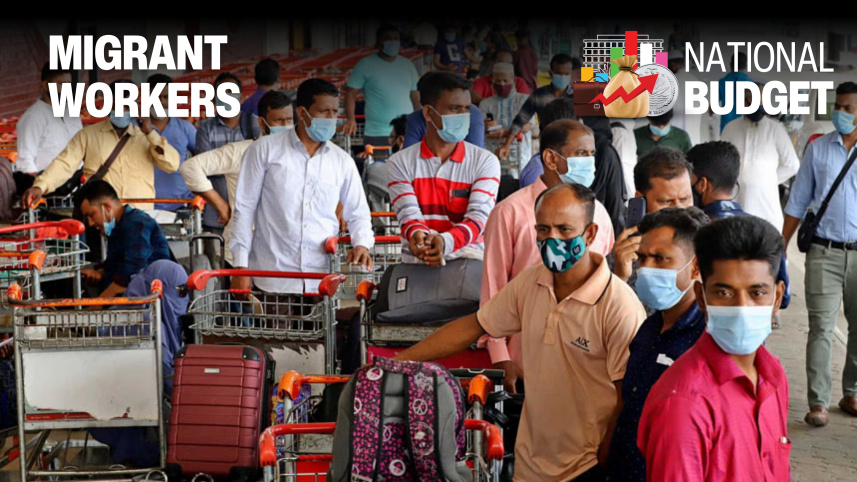
The government has initiated efforts to sign bilateral agreements with Russia, Portugal, Romania, Brazil, Greece, Serbia, and North Macedonia to send more skilled workers to these countries as alternative labour markets and increase the inflow of remittances.
After a long period of closure, the government has also restarted the process of reopening labour markets in Malaysia, Oman, the United Arab Emirates, and Kuwait, the finance minister said during his budget speech today.

Moreover, the government has initiated the introduction of government-run Employment Exchanges at every district and upazila level.
A policy of zero tolerance against any form of violence or sexual harassment towards female workers and employees in the workplace will be enforced.
Safe accommodation and transportation facilities for women will be expanded further. In addition, a "Pink Bus Service", operated and managed entirely by women, is being introduced.
Expanding overseas employment opportunities and ensuring the protection and welfare of Bangladeshi migrant workers will receive special priority from the government.
The government is introducing a special "Migrant Card" to ensure the overall welfare of expatriate workers. The card will be linked to migrant welfare services, insurance, banking facilities, and emergency assistance.
In March 2026, monthly remittance inflows sent by expatriates reached $3.75 billion, the highest ever recorded in a single month in the country's history.
"We hope this trend will continue. To sustain the growth of expatriate income, the government will continue providing a 2.5 percent cash incentive for remittances sent through legal channels," the finance minister said.
The government is undertaking extensive initiatives to enhance occupation-based skills in response to the demands of both domestic and international labour markets.
As part of these efforts, the government has begun introducing sector-specific courses and curricula for industries with strong overseas demand while strengthening market-oriented training, curriculum development, certification, accreditation, and quality assurance.
Under the Skills for Industry Competitiveness and Innovation Program (SICIP), administered by the Ministry of Finance, approximately 220,000 people will receive market-driven training in medium- to high-level skills.
At least 65 percent of those who complete the training will be guaranteed employment opportunities.
 For all latest news, follow The Daily Star's Google News channel.
Comments