


Transaction-based benchmark introduced for interbank lending
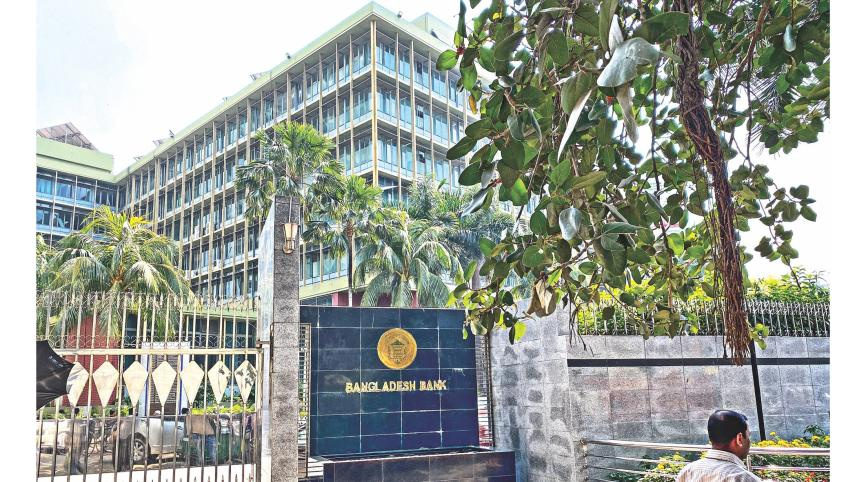
Banks will be borrowing and lending among themselves for the short-term, using a new transaction-based reference rate from Wednesday.
At a press conference at its headquarters in Dhaka yesterday, the Bangladesh Bank (BB) announced the shift away from the long-standing practice of relying on quoted rates under the Dhaka Interbank Offered Rate (DIBOR).
 For all latest news, follow The Daily Star's Google News channel.
 Instead of simply using the rates banks said they would charge, the new framework draws on actual transactions to determine borrowing costs.
The new system is meant for improving transparency and efficiency in the money market. It also brings Bangladesh into line with global benchmarks such as the Secured Overnight Financing Rate (SOFR), published daily by the New York Fed and widely used in international markets.
Similarly, the BB will publish the new reference rates regularly on its website from Wednesday.
DIBOR, introduced in 2010, was based on rates banks reported for lending to one another. Over time, however, the system showed its weaknesses. Many commercial lenders did not provide data consistently, meaning the rate often failed to reflect real market conditions.
Under the new automated system, the BB will rely on actual interbank transactions and two new benchmark rates -- the Bangladesh Overnight Financing Rate (BOFR), and the Dhaka Overnight Money Market Rate (DOMMR).
BOFR is a secured, or risk-free, rate derived from interbank repo transactions. In a repo deal, one bank sells government securities to another with an agreement to buy them back later at a slightly higher price. The securities act as collateral, reducing the risk for the lender.
DOMMR, by contrast, is based on unsecured call money transactions. In this market, banks lend to one another for very short periods without providing collateral, relying instead on mutual trust and liquidity needs.
BOFR will be available for overnight and one-week tenors. DOMMR will cover overnight, one-week, one-month and three-month tenors.
According to the central bank, these rates will be calculated using a volume-weighted mean method so that larger transactions carry greater weight in the final figure.
This means if one bank borrows Tk 100 crore and another borrows Tk 5 crore, the larger deal will have a proportionately bigger influence on the average rate.
To prevent unusual deals from skewing the outcome, the BB will apply statistical techniques to filter out outliers.
For example, an exceptionally high lending rate on a single transaction would not be allowed to distort the benchmark. Similarly, if trading is thin on a particular day, the calculation will draw on data from recent working days to ensure stability.
The central bank expects the new framework to provide a dependable benchmark for pricing loans, bonds and floating rate instruments, and to support the development of new investment products.
Officials said the rates have been tested on a trial basis since March. They added that the system will be refined through regular monitoring and annual reviews.


Comments