


US cotton plan considers Bangladesh a key market

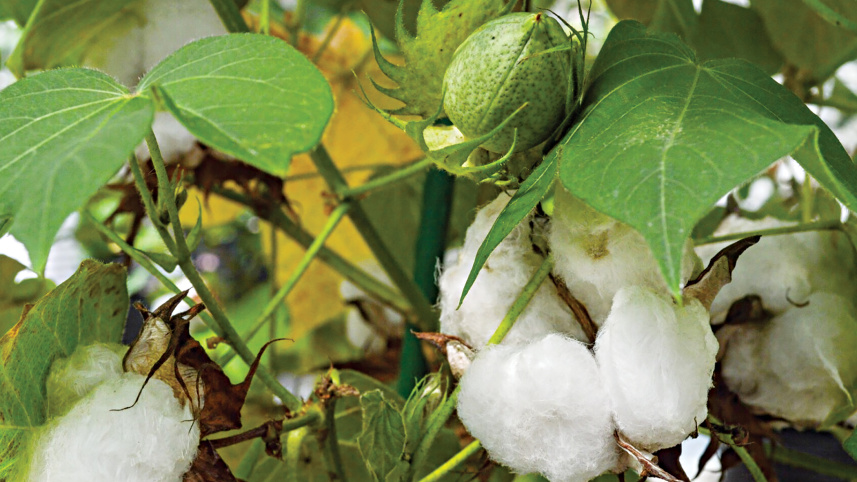
Bangladesh is expected to play a significant role in a new US initiative aimed at boosting American cotton exports, as the Trump administration links potential tariff benefits for Bangladeshi apparel exports to the use of US cotton and textile inputs.
The United States Department of Agriculture (USDA) last week launched the Great American Cotton Plan to revitalise the cotton farm economy in the US.

“USDA and USTR secured commitments from Indonesia and Bangladesh that will support future US cotton purchases and textile production using American cotton,” the plan states.
Under the plan, Bangladesh could receive tariff reductions on apparel produced using US cotton and textile inputs, alongside other tariff-related concessions.
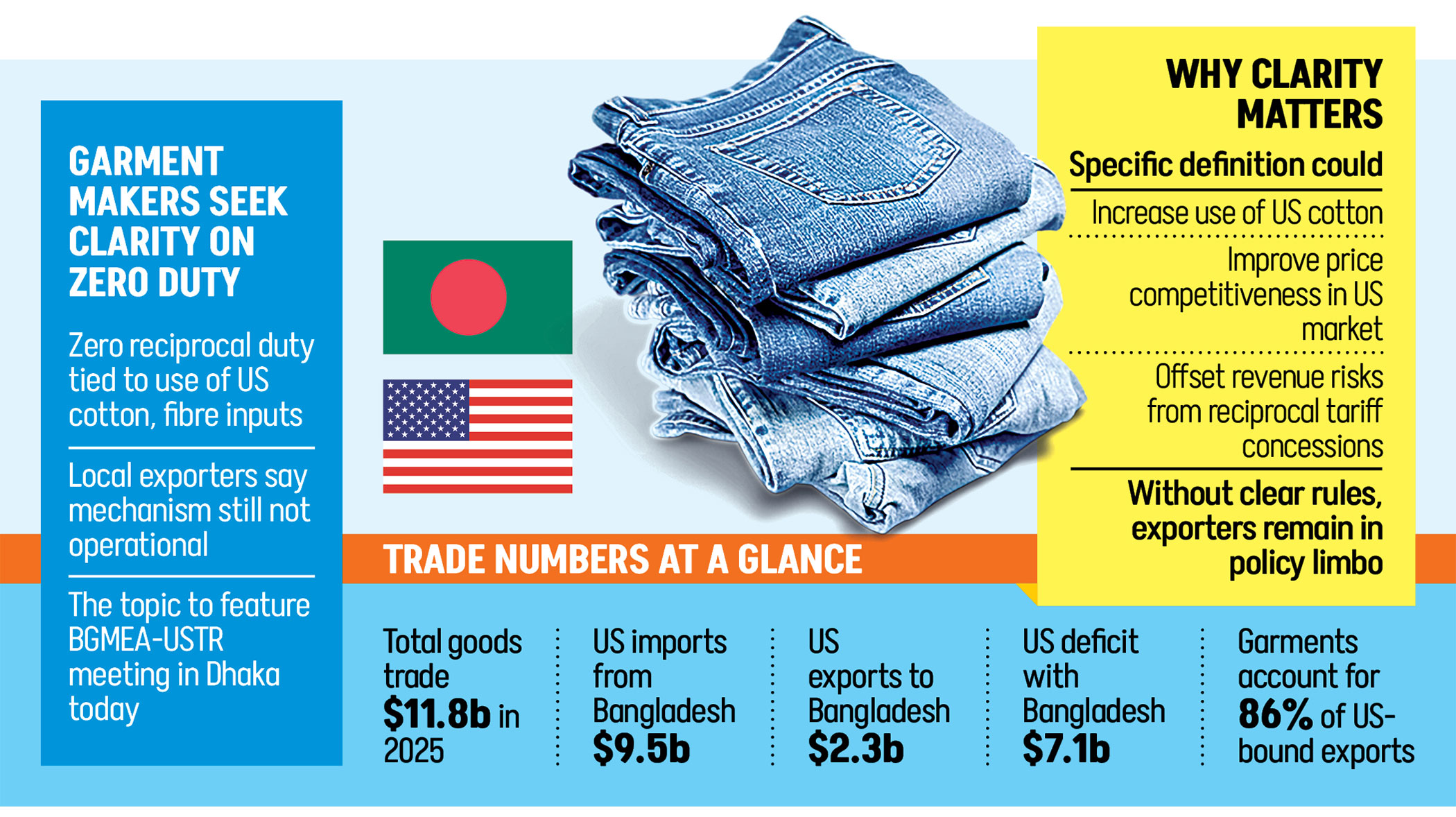
A Bangladesh-US reciprocal trade agreement signed on February 9 commits Washington to establishing a mechanism allowing certain Bangladeshi textile and apparel goods to enter the US at a zero reciprocal tariff rate.
However, the volume eligible for this benefit will be tied to Bangladesh’s imports of US-produced cotton and man-made fibre inputs. The US has yet to clarify the textile clause of the deal.
Showkat Aziz Russell, president of Bangladesh Textile Mills Association (BTMA), said American cotton’s share of Bangladesh’s nearly $4.0 billion annual cotton import bill has been growing steadily, with local spinners, millers, and traders increasingly turning to US suppliers. He has already held talks with senior US officials on the bilateral cotton trade.
Russell flagged two key obstacles to scaling up US cotton use: the Rules of Origin (RoO) requirements and the long shipping distance between the two countries.
He noted that while American cotton offers superior quality, greater clarity is needed on the tariff benefits available to Bangladeshi exporters.
During discussions with US officials, Russell sought clarification on the RoO requirements governing the use of US cotton and man-made fibre in garments eligible for tariff concessions.
Based on discussions with US officials, he said the reduced tariff facility may apply only to a specified quota rather than all exports.
Russell also stressed the need for warehouse facilities in Bangladesh to store and market US cotton. Imports from neighbouring countries require much shorter lead times, while shipments from the US can take more than 45 days, potentially affecting exporters’ competitiveness.
Faisal Samad, a director of the Bangladesh Garment Manufacturers and Exporters Association (BGMEA), said the association will meet officials from the US Embassy in Dhaka next week to discuss the RoO requirements for garments made from US cotton and man-made fibre.
BGMEA leaders had previously sought clarification on the issue during meetings with visiting US Trade Representative (USTR) officials, but were told that work on the framework was still underway.
The US currently accounts for nearly 9 percent of Bangladesh’s annual cotton imports, which are valued at nearly $4.0 billion.
US goods trade with Bangladesh totalled an estimated $11.8 billion in 2025.
American imports from Bangladesh reached $9.5 billion -- up 13.3 percent from 2024 -- while US exports to Bangladesh were $2.3 billion.
The resulting trade deficit stood at $7.1 billion, a 17.9 percent increase from the previous year. Garments account for 86 percent of Bangladesh’s exports to the US.
 For all latest news, follow The Daily Star's Google News channel.
Comments