


What it means for rice production and prices

This year’s Boro paddy harvest in the haor region had raised hopes of a strong yield, with farmers racing against time to harvest, thresh, and dry their crops. But from late April, extreme weather has left farmers struggling to save their crops.
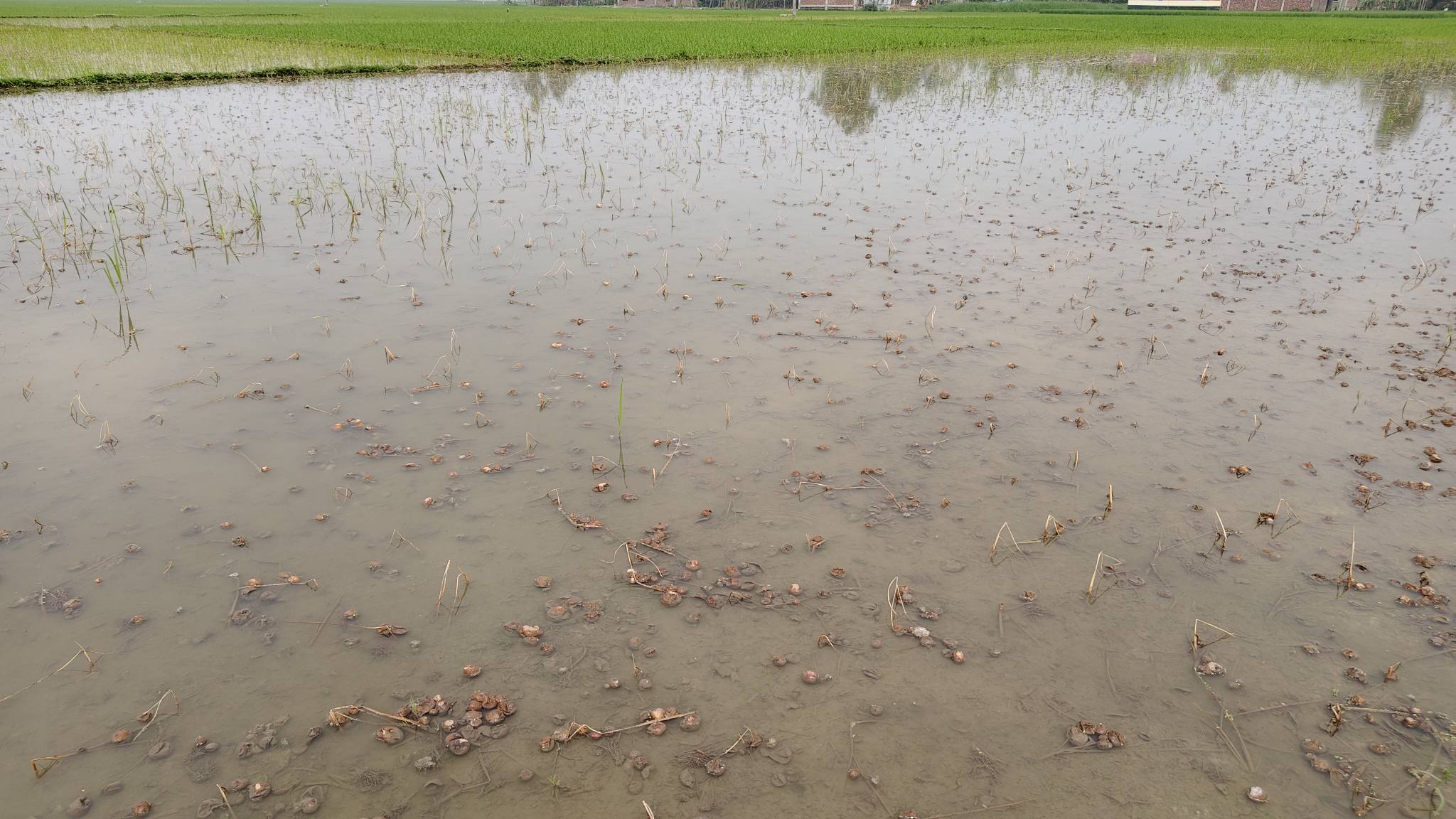
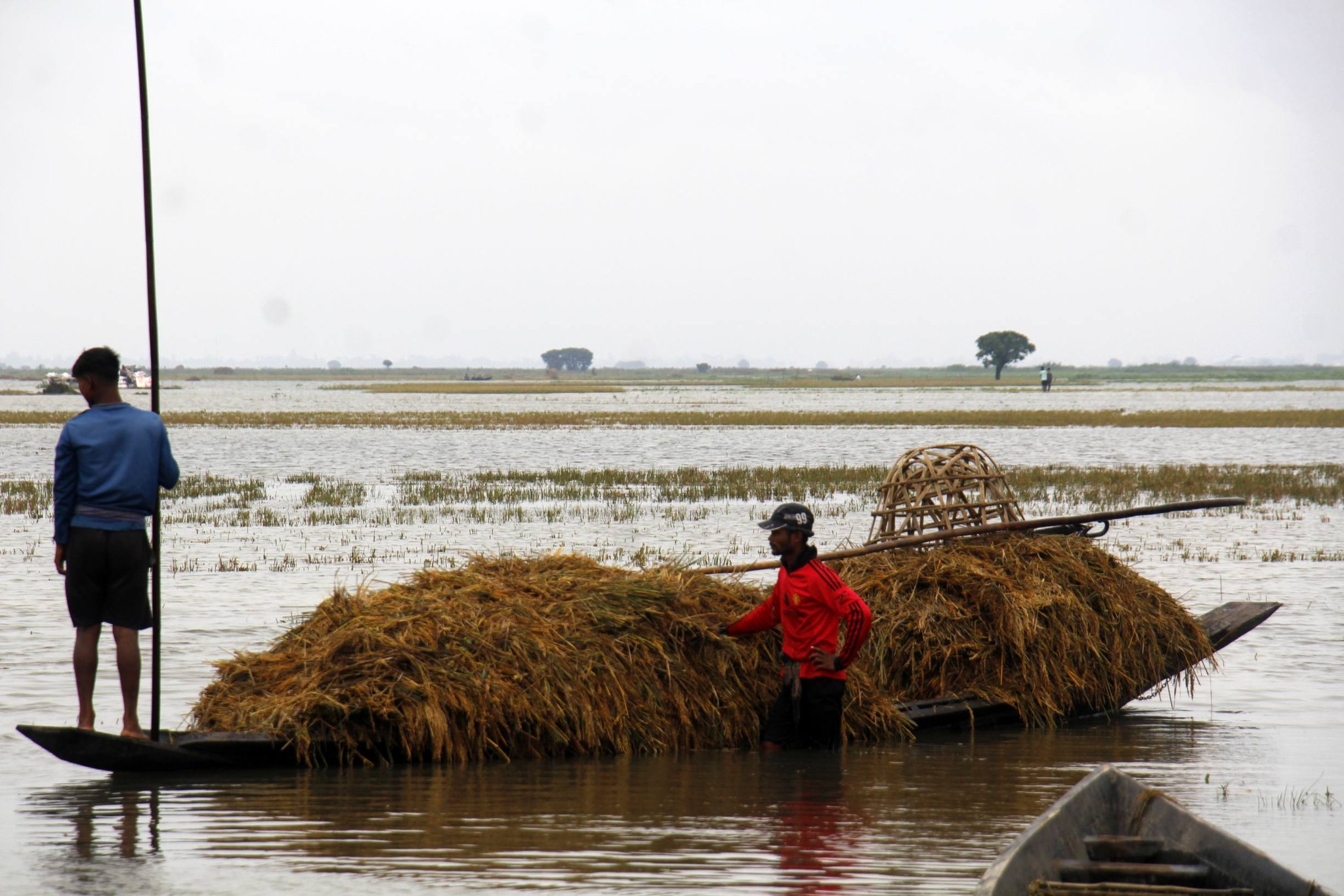
Torrential pre-monsoon rainfall, rising river levels, and upstream inflows from India have submerged fields across the haor region at the peak of the harvest season, threatening rice production, food security and prices.

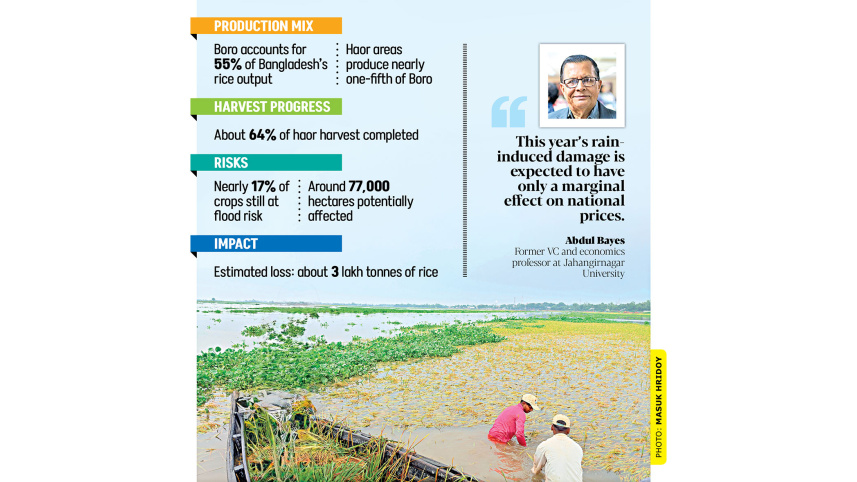
Boro is the dry season irrigated rice crop planted from December to early February and harvested between April and June. The season accounts for over half of all rice production in the country. Seven haor districts alone contributed nearly one fifth of last season’s national output.
For Bangladesh, world’s third largest rice producer, a major disruption to the season’s production could bring disaster for food security.
Analysts, however, say the full market impact will not be clear for another two weeks. Data from government and ground sources reveal a crop under mounting pressure, with losses likely to grow before the harvest window closes.
PRODUCTION IMPACT
According to the Department of Agricultural Extension (DAE), about 17 percent of standing Boro paddy in seven haor districts remained at risk of flooding as of yesterday.
This year, Boro paddy was cultivated on 9.63 lakh hectares across the seven haor districts – Sylhet, Sunamganj, Moulvibazar, Habiganj, Netrokona, Kishoreganj, and Brahmanbaria – with nearly half the acreage lying within haor basins. That puts over 77,000 hectares in danger of inundation.
Based on the average yield of over four tonnes per hectare recorded in the previous Boro season, more than three lakh tonnes of rice are at risk. That is about 1.4 percent of last season’s total Boro production of 2.13 crore tonnes, DAE data shows.
Farmers had harvested 63.91 percent of haor paddy as of April 29, said Md Jamal Uddin, additional director for monitoring and implementation at DAE’s Field Services Wing.
The situation is unlikely to improve before mid-week at the earliest.
A seven-day forecast issued by the Flood Forecasting and Warning Centre (FFWC) yesterday projects all major rivers serving the haor basin -- the Surma-Kushiyara, Dhanu-Baulai, and Vuigai-Kangs -- will simultaneously breach pre-monsoon danger levels by May 3.
Flood conditions are expected across Sylhet, Sunamganj, Moulvibazar, Habiganj, and Netrokona. Cumulative rainfall of 150 to 350 millimetres is projected over the seven-day period.
Conditions are only expected to ease from May 5 onwards.
The floods are hitting a crop already under strain. A recent United States Department of Agriculture report projected national rice production would fall 0.7 percent this season.
It attributed lower Boro yields partly to disrupted irrigation and fertiliser use, caused by fuel and fertiliser shortages linked to the Middle East conflict.
Agricultural economist Jahangir Alam Khan estimated that Boro production could decline by as much as 20 percent in haor regions and 10 percent nationally, citing fertiliser shortages, rainfall, and upstream flooding.
PRICE OUTLOOK
 For all latest news, follow The Daily Star's Google News channel.
 Whether production losses will translate into broader price increases remains an open question.
Major producing regions — Naogaon, Rajshahi, Natore, Bogra, and Joypurhat — have only recently started harvesting.
A clearer picture will emerge in the next 10 to 15 days, said Nirod Baran Saha, president of the Paddy and Rice Stockists and Wholesalers’ Association in Naogaon.
“If the crop performs well in these northern regions, it could offset the losses in the Haor area and have a stabilising effect on the overall market,” he said. “It will be possible to understand the real market impact only after the harvest is largely completed. At this stage, it is not appropriate to draw conclusions.”
DAE’s director of field services Md Obaidur Rahman Mondol said that two or three days of dry conditions would be enough to keep remaining crops out of danger.
Md Moniruzzaman, director of procurement at the Directorate General of Food, also said he does not expect damage to be very high or to have a significant market impact.
Abdul Bayes, former vice-chancellor and economics professor at Jahangirnagar University, noted that this year’s rain-induced damage is expected to have only a marginal effect on national prices.
The government’s existing stock of about 13 lakh tonnes should help prevent major market fluctuations, he added.
He also noted that the pressure will be felt most acutely in the haor districts themselves, where Boro is the sole crop.
The professor explained that affected farmers may have to turn to the market for their own rice needs – creating localised demand pressure even if the national picture holds.
The government has begun responding. On April 29, a high-level meeting chaired by Food Secretary Abu Taher Md Masud Rana decided to allow farmers to use private rice mills and government warehouses to dry their paddy with departmental support.
The Directorate General of Food will procure the dried paddy directly, Moniruzzaman said. Millers are also being encouraged to quickly purchase paddy so the government can maximise procurement while sustaining mill operations, he said.
Prof Bayes said compensating farmers through a fixed procurement price is necessary.
Ensuring farmers can sell their grain without corruption, harassment, or insecurity should be a priority, he added.
Comments