


Debt in a warm climate: coronavirus and carbon set scene for default
Where Covid-19 has precipitated unprecedented debt, the climate crisis could trigger defaults across a planet that a UN panel says is dangerously close to runaway warming.
To avert disaster, countries are committing to cut carbon emissions. However, these will be costly and will most likely add to a global debt pile that asset manager Janus Henderson estimates ballooned to $62.5 trillion (R924.99 trillion) by the end of last year.

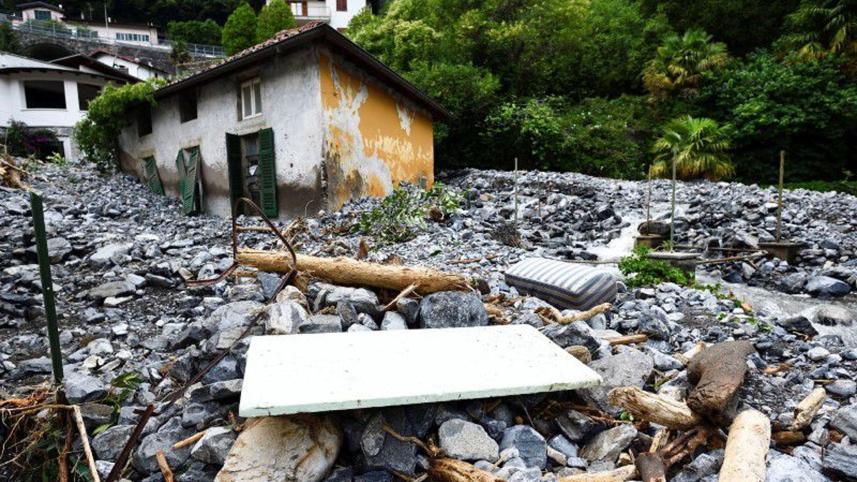
With floods and wildfires wreaking havoc across the globe, estimates vary on how much damage the crisis will inflict on economies.
A report earlier this year from the Bank of America put it at $54 trillion to $69 trillion by 2100, which compares with a valuation of the entire global economy at about $80 trillion.
The financial repercussions could manifest themselves in less than 10 years, warns a study by index provider FTSE Russell.
The first climate-linked credit rating downgrades are set to hit countries soon, adds the report's co-author and FTSE Russell's senior sustainable investment manager, Julien Moussavi.
In a worst-case "hothouse world" scenario, developing countries such as Malaysia, South Africa and Mexico, and even wealthier economies like Italy could default on debt by 2050.
In another, where governments are initially slow to react, countries including Australia, Poland, Japan and Israel would be at risk of default and rating downgrades too, notes the study.
While developing countries are inherently more vulnerable to rising sea levels and drought, richer ones will not escape the climate crisis fallout, such studies show.
"You can talk about climate change and its impact and it won't be long before someone talks about Barbados, Fiji or the Maldives," says Moritz Kraemer, chief economist at Countryrisk.io and former head of sovereign ratings at S&P Global.
"What was a surprise to me was the impact on higher-rated, richer countries," he adds.
Another study by a group of universities, including Cambridge in the UK, concludes that 63 countries – roughly half the number rated by S&P Global, Moody's Investors Service and Fitch Ratings – could see credit ratings cut by 2030.
China, Chile, Malaysia and Mexico would be the hardest hit, with six notches of downgrades by the end of the century, it said, while the US, Germany, Canada, Australia, India and Peru could see about four. The corresponding increase in borrowing costs would add $137 billion to $205 billion to countries' combined annual debt service payments by 2100, the study estimates.
Ratings downgrades typically raise borrowing costs, especially if they cause countries to be ejected from bond indexes tracked by funds managing trillions of dollars.
Developed countries are increasing spending to temper climate damage, with Germany creating a €30 billion (R522.22 billion) recovery fund after recent floods, and Singapore budgeting the equivalent of $72 billion to protect against rising sea levels in the next century.
For emerging economies already scarred by Covid-19, the climate crisis will create even more pressure.
The International Monetary Fund warns that a 10 percentage point rise in climate change vulnerability, as measured by the Notre Dame Global Adaptation Initiative index, is associated with an increase of more than 150 basis points in long-term government bond spreads for developing nations. The average rise across all countries was 30 basis points.
The UN environmental programme estimates that in developing countries, annual adaptation costs will be as much as $300 billion in 2030, rising to $500 billion by 2050.
As a percentage of GDP, sovereign debt is still about 60 per cent in emerging economies, according to data from the Institute of International Finance, versus 100 per cent or so in the US and the UK, and 200 per cent in Japan.
The rise from pre-pandemic levels of about 52 per cent is of particular concern. European, US and Japanese central banks are essentially underwriting state borrowing, but this is not possible in poor countries, which must ultimately repay debt.
 For all latest news, follow The Daily Star's Google News channel.
 "How do you enable the sort of funding that's required, given the high debt levels and the importance of the ratings frameworks?" asks Sonja Gibbs, director for global capital markets at the institute.


Comments