


Bangladesh, US all set to sign reciprocal tariff deal tonight

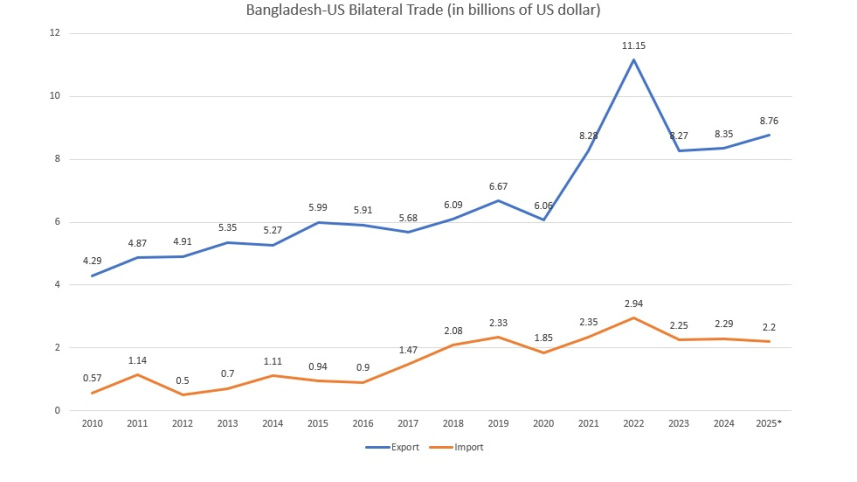
Bangladesh and the United States are set to sign a reciprocal tariff agreement tonight at 10pm (Bangladesh time) in Washington, aimed at reducing tariffs on Bangladeshi exports to the US market.
Under the agreement, the tariff rate on Bangladeshi products may fall to 18 percent from the current 20 percent, a commerce ministry official said.

The US has agreed to offer zero duty or reduced duty on about 2,500 Bangladeshi products, Commerce Secretary Mahbubur Rahman said over the phone today.
Pharmaceutical products from Bangladesh will enjoy zero-duty access to the US market. Other items, including fish and paperboard, will also receive zero-duty treatment, he said.
In the garment sector, zero-duty access will apply to apparel made in Bangladesh using cotton imported from the US, Rahman added.
The signing ceremony will be held on a hybrid platform. Some Bangladeshi officials are already in Washington, while Commerce Adviser Sk Bashir Uddin and the commerce secretary will join online.
At a press conference yesterday, Bashir Uddin said the government is also moving to sign a deal with Boeing to purchase 14 aircraft for Biman Bangladesh Airlines, valued at between Tk 30,000 crore and Tk 35,000 crore, as part of efforts to narrow the trade gap with the US.
He said a techno-financial analysis had been completed based on proposals from Airbus and Boeing, and a negotiation team led by Adviser Wahiduddin Mahmud negotiated prices with Boeing. The negotiation is still ongoing.
According to sources, Biman plans to buy eight 787-10s, two 787-9s and four 737 MAX 8 aircraft from Boeing.
The payment period may extend up to 20 years, with annual payments estimated at Tk 1,500 crore to Tk 2,000 crore.
Bangladesh has pledged to increase imports of US goods, including aircraft, cotton, soybeans and liquefied petroleum gas.
It has also signed an agreement to import 3.5 million tonnes of wheat from the US over five years, with about 660,000 tonnes already purchased.
 For all latest news, follow The Daily Star's Google News channel.
Comments