


Bangladesh’s bourse is the only one in the world in recess

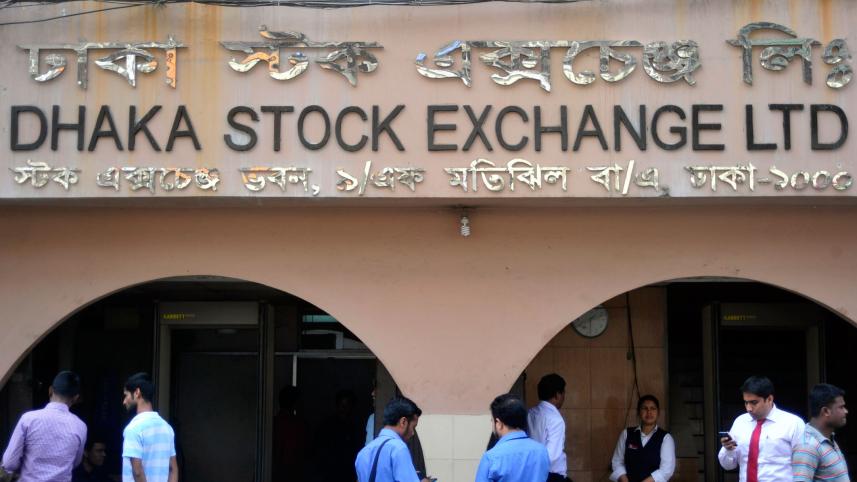
Bangladesh is the only country in the world where stock trading has remained closed because of the coronavirus pandemic.
Until this week, Bangladesh, Sri Lanka and Jordan were the three countries where stock markets had been shut.
 For all latest news, follow The Daily Star's Google News channel.
 Sri Lanka started the trading yesterday and witnessed a huge sale pressure.
The Colombo stock market's index of the most liquid shares, S&P SL 20, plunged more than 10 per cent on the first day of the trading since March 20.
Jordan, where trading had been suspended since March 16, also experienced the same when it reopened on Sunday. The Amman Stock Exchange's ASE Index dropped more than 15 per cent.
The Dhaka Stock Exchange (DSE) and the Chittagong Stock Exchange (CSE) have been closed since March 26 in line with the government's general holiday aimed at stopping the spread of the virus. zThe longest closure of the stock market since the Liberation War would hurt the image of the markets, according to analysts.
"The impact of the shutdown would be clear in the long-run," said Mohammed Rahmat Pasha, chief executive officer of UCB Capital Management.
"The setting of the floor price turned the markets into illiquid ones and it would be costlier to regain the image internationally."
Before the shutdown, the stock market regulator fixed the floor price of all stocks by calculating the previous five days' average prices in order to prevent fall.
But after the floor price was fixed, most of the stocks did not find buyers. The shutdown further means that none can sell shares even if they need to.
"Many foreign investors are preparing to sell shares in large volume once the market reopens," said a top official of a stock brokerage house that deals foreign portfolios.
The stock market has been suffering because of the COVID-19 all over the world, but they would bounce back strongly when the economy makes a turnaround. However, there is no such hope in Bangladesh and it will suffer more due to the wrong policy, he said.
The main blow would come if the country's capital market is kicked out of the MSCI Index.
The index captures mid- and large caps across more than two dozen emerging markets. It is a float-adjusted market capitalisation index. The MSCI Bangladesh Index was launched on Dec 1, 2009.
If the shutdown continues, it may be kicked out of the index in the next rearrangement, said a broker.
If Bangladesh is removed from the index, a huge sell pressure would occur naturally, as many foreign index fund managers invest by looking at the index, said an institutional investor.
The ongoing market closure is the longest since the last shutdown in 1969 when the mass upsurge took place. The market resumed in 1976.
Trading was closed for four days at a stretch in 2004 due to massive floods. Apart from these, the market was largely closed because of technical glitches.
"When all the stock markets are open all over the world, the closure of our market would give a negative signal to investors," said a merchant banker.
"The market should resume operations as early as possible," Pasha said.
A share trading has two parts: one is share transfer and another is transferring money. Central Depository Bangladesh Ltd (CDBL) carries out share transfer and a department of the DSE transfers the money.
"We carry out the share transfer through online and it is possible to continue trading with our limited presence in the office," said Shuvra Kanti Choudhury, managing director of CDBL.
The money transfer system of the bourse is still manual, so DSE officials need to go office and brokers also need to reopen, said an official of the bourse.
Recently, the Dhaka bourse sought permission from the regulator to open the market.
However, there is little possibility for getting the consent as two commissioners left the Bangladesh Securities and Exchange Commission recently and the tenure of the chairman is also going to expire this month, said an official of the commission.


Comments