


Islami Bank unrest now a political issue, bankers fear wider fallout: ABB chairman
Growing unrest at Islami Bank Bangladesh has taken on a political dimension, raising serious concerns among bankers about its potential impact on the wider financial sector.
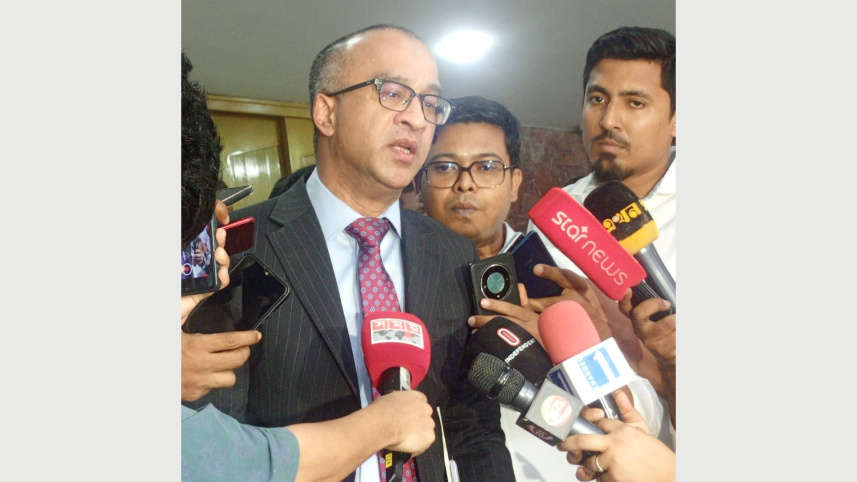
Mashrur Arefin, chairman of the Association of Bankers, Bangladesh (ABB), warned that the situation is eroding confidence in the banking industry and could pose risks to overall financial stability.

"We are very concerned because what is happening at Islami Bank is having a significant negative impact on the entire banking industry," said Arefin, who is also the managing director and CEO of City Bank.
Speaking to reporters today after a meeting between bank executives and Bangladesh Bank Governor Md Mostaqur Rahman at the central bank headquarters in Dhaka, Arefin said the situation at Islami Bank was among the key issues discussed.
Bankers urged authorities to facilitate a quick settlement between the opposing parties so stability could be restored at the country's largest Shariah-based lender, he said.
The governor assured us that efforts would be made so that both sides can reach an understanding and the problem can be resolved quickly, Arefin said.
He warned that Islami Bank, with its substantial international exposure, risks damaging Bangladesh's banking reputation at home and abroad if the crisis drags on.
Noting a recent surge in deposit withdrawals, Arefin said the dispute had moved beyond a purely banking matter and taken on a political dimension. The unrest was triggered by protests over the appointment of the bank's chairman.
The meeting also covered digital payments, with ABB member banks set to launch a coordinated promotional campaign from July 1 through billboards, social media, and QR codes at merchant outlets.
Bankers called on Bangladesh Bank to enable a TakaPay credit card — alongside the existing debit card — to cut reliance on international card schemes and lower transaction costs.
Other agenda items included the accuracy of trade data submitted by banks, import pricing inconsistencies such as overpricing and under-invoicing, and a Tk 60,000 crore refinancing package targeting small, micro, and medium enterprises.
Bankers expressed support for the package and said they were awaiting implementation guidance from Bangladesh Bank.
 For all latest news, follow The Daily Star's Google News channel.
Comments