


The flower trail behind our celebrations

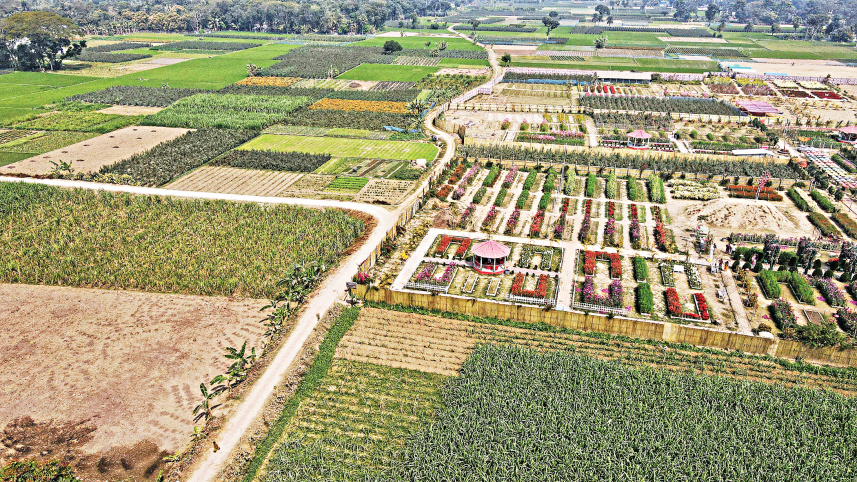
Winter in Bangladesh is a festival season. From November to February, weddings, office galas and national observances follow one another in quick succession.
December closes the corporate year with award nights and conferences. January spills into neighbourhood wedding feasts.

February unfolds in layers: Pahela Falgun, the first day of spring in the Bengali month of Falgun, dressed in yellow; Valentine’s Day in red; and International Mother Language Day in solemn black and white.
On February 21, the Central Shaheed Minar draws the lenses. The scenes are familiar: wreaths stacked high, petals blanketing intricate Alpona (graffiti), barefoot processions at dawn honouring the language heroes.
All of these occasions need flowers. Not a few bouquets. Tonnes. Most travel along a roughly 200km route first carved out 43 years ago by a handful of farmers.
The trail mostly begins at Godkhali union in Jashore and runs to Dhaka before branching across the country. What started as a small farming experiment in the 80s has now grown into a nationwide supply line.
Among its pioneers was Md Shar Ali Sardar, widely regarded as the country’s first commercial flower cultivator.
His story carries a certain mystique. His father, Abdur Rahman Sardar, used to run a nursery that produced fruit and timber saplings. Shar Ali grew up working beside him. Flowers were not yet the family trade.
One afternoon in 1982, while Shar Ali was at the nursery, a passerby stopped to ask for water. In his hand were a few stalks of tuberose. The man introduced himself as Nur Islam from Jashore Sadar. In the course of their conversation, Shar Ali’s curiosity was stirred. Through Nur Islam, he later collected 100 kg of tuberose bulbs and planted them on less than a bigha of land.
The results changed farming in the area. Ali’s success spread quickly and drew others into floriculture.
Shar Ali expanded production and began sending flowers to Shahbagh and Bailey Road in Dhaka. Malancha, the first dedicated flower shop in Shahbagh, depended largely on growers like him.
Former US ambassador to Bangladesh Dan W Mozena once visited his nursery at Godkhali and said, “Shar Ali’s flowers are world-class.”
Over time, flower cultivation spread to about 3,500 hectares across 24 districts all over the country, as per government estimates. Around 7 lakh people now earn their livelihoods directly or indirectly from growing, transporting and selling flowers.
Rising demand has driven much of that growth. As urban middle-class incomes increased, so did the appetite for flowers for weddings, corporate events and public commemorations alike.
On the supply side, higher returns per hectare, new varieties and improved farming methods strengthened the change. Together, rising demand and profits turned a small experiment at Godkhali into a national flower corridor that underpins the country’s most prominent celebrations.
After establishing Godkhali as the heart of flower cultivation, much of the harvest now makes its way to Dhaka, where markets like Shahbagh, Bailey Road, Agargaon and Gabtoli handle the city’s busiest trade.
A MARKET THAT NEVER SLEEPS
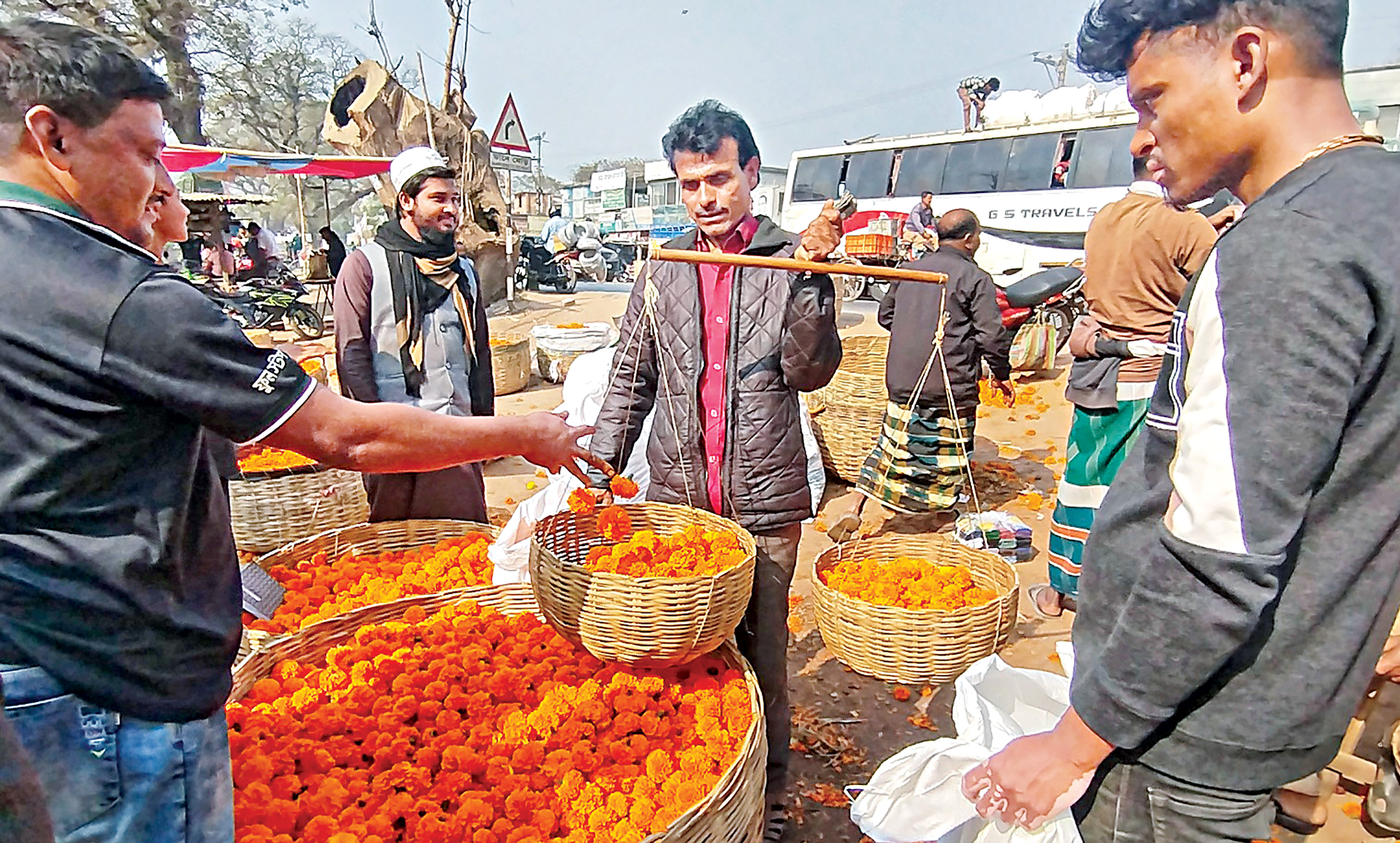
Of Dhaka’s flower markets, Shahbagh is probably the oldest and most iconic. More than 50 permanent shops and countless makeshift stalls cluster around the busy intersection. The unmistakable scent of blooms drifts over the burnt octane of traffic, making Shahbagh a unique sensory experience.
 For all latest news, follow The Daily Star's Google News channel.
 At the market, stalls spill into the street like living canvases. Garlands of marigolds hang in chains, roses blush in buckets, and gladioli stand tall like painted spears. The display is unapologetically exuberant.
The shops stay open round the clock. Here, reds demand attention, yellows glow with warmth, whites hint at purity, and pinks soften the edges of the chaos.
Mohammad Abul Kalam Azad, 55, proprietor of Anika Pushpa Bitan and president of the Shahbagh Bottola Small Flower Traders Cooperative, has spent nearly four decades at the market.
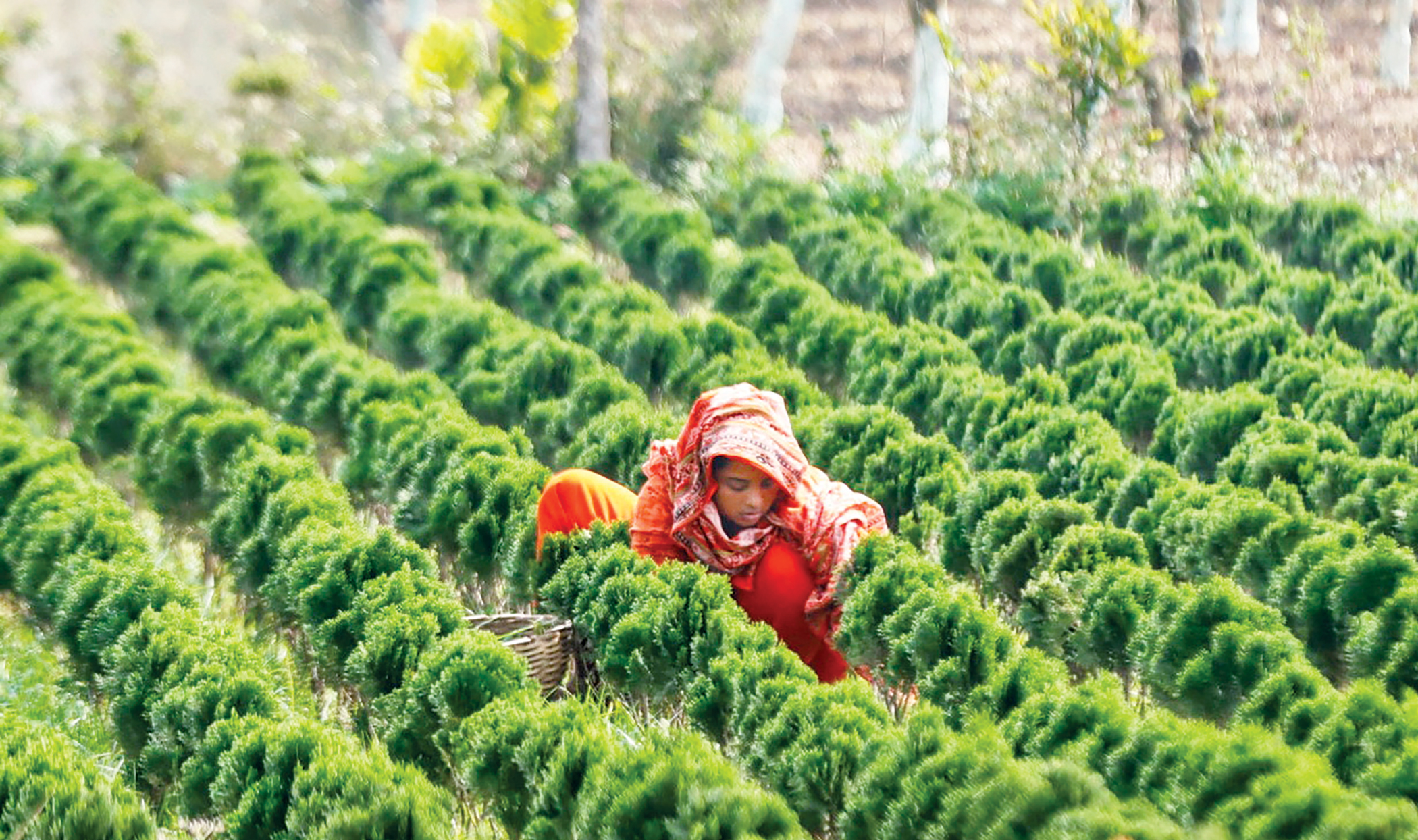
He arrived in Dhaka after river erosion swallowed his family home at Shibchar of Madaripur, and an uncle who used to sell flowers at Shahbagh introduced him to the trade.
“When I started, people wanted maricha, kathgolap, baganbilash,” said Azad. “Now the demand is for orchid, gerbera, lily, carnation, gladiolus and China rose. Well-off customers prefer gerbera, lily and China rose out of these.”
His supply chain is improvised. Flowers arrive mostly on passenger buses, sometimes on pickup vans. He buys from districts across the country, with weddings, corporate events and political programmes accounting for most of his sales.
Azad said the recent national elections and political situation have hit business this season. The timing of the polls cut into peak sales around Valentine’s Day and Pahela Falgun. Pre-election rallies and protests also hurt trade.
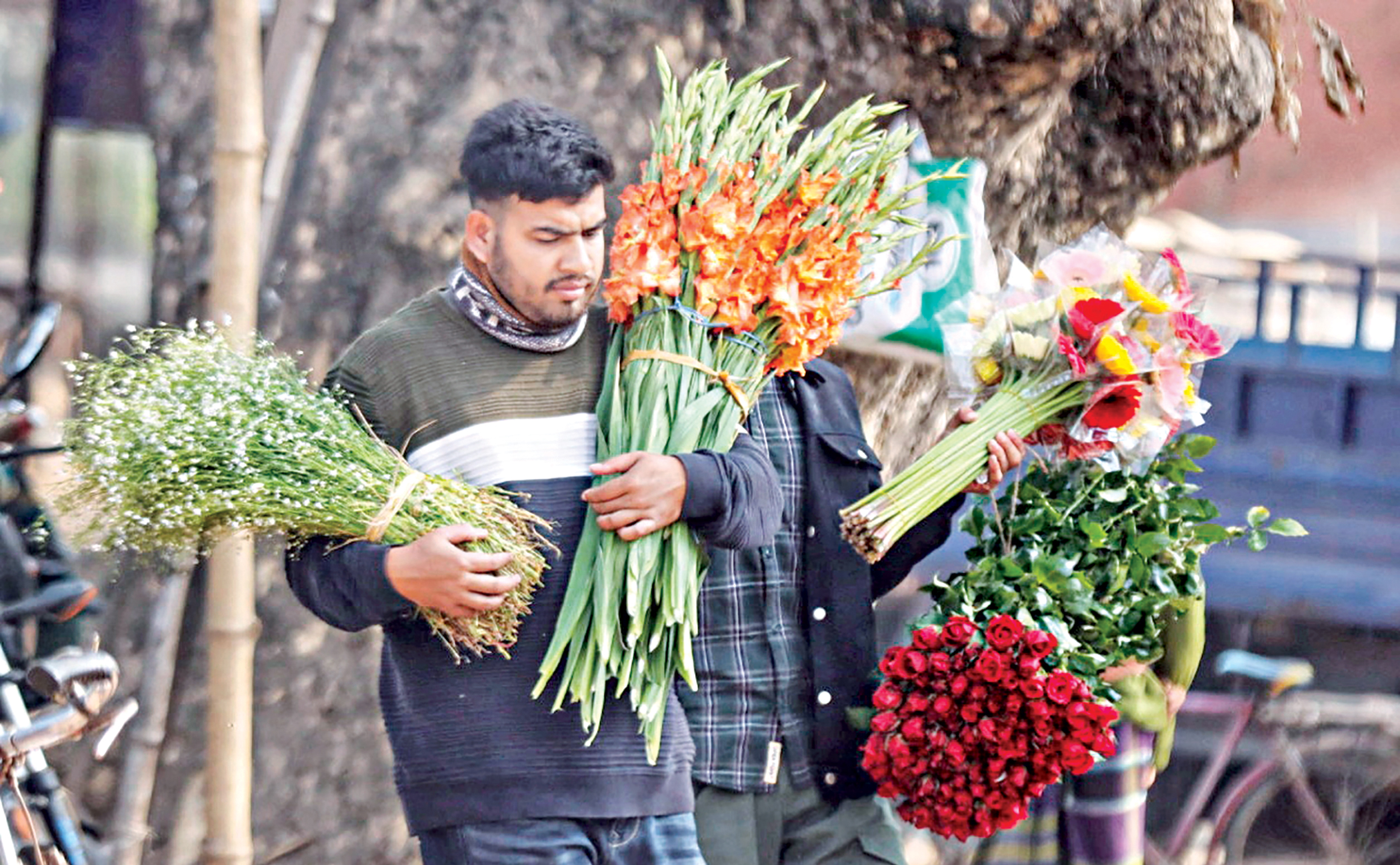
But he added that business was improving ahead of Ekushey February.
While talking about the sales this season, Azad said the margin of the flower business is thin, and risks are immediate. “Whatever we source does not always sell. Unsold flowers cannot wait. If they spoil, we have to throw them away. Then we bear the loss and try to cover it later.”
Retail prices in Shahbagh often double or triple wholesale rates in Jashore. Yet that margin hides wastage, rent, transport costs and multiple layers of commission. After deductions, a rose that sells for Tk 15 in Dhaka may leave the farmer with about half that amount.
During peak winter, several hundred tonnes of flowers move into Dhaka each week, according to traders. Demand spikes sharply before February 14, February 21, and again around Pahela Baishakh.
By contrast, the monsoon brings slow sales and price drops that can halve farmgate returns.
Much of what fills Shahbagh’s stalls comes from gardens hundreds of kilometres away in Godkhali. That journey, however, is far from easy and hides risks that rarely meet the eye.
THE CORRIDOR COLOURING OUR CALENDAR
The trip from field to footpath is the weakest link in the flower supply chain. Flowers from Godkhali travel overnight to Dhaka. Many are stacked on bus rooftops, wrapped in paper and plastic sacks.
Farmers and traders estimate that up to 20 percent of flowers perish between harvest and retail. Dust, heat, or a delayed bus can dull petals within hours. Losses can rise sharply in summer and during the rainy season.
Transport operators charge Tk 100 to Tk 200 per bundle. Commission agents take their cut at wholesale markets. Retailers add another margin to cover shop rent and labour. Each layer pushes up the final price while squeezing what reaches the grower.
However, mobile phones have improved price discovery recently. Farmers now check Dhaka wholesale rates on mobile phones before fixing deals at Godkhali.
But information alone cannot solve a structural problem. There is still no nationwide cold chain for flowers, no standard grading system, no uniform packaging protocol.
Still, the domestic flower market reached roughly Tk 1,500 to Tk 1,600 crore in FY 2021-22, according to Abdur Rahim, president of the Bangladesh Flower Society.
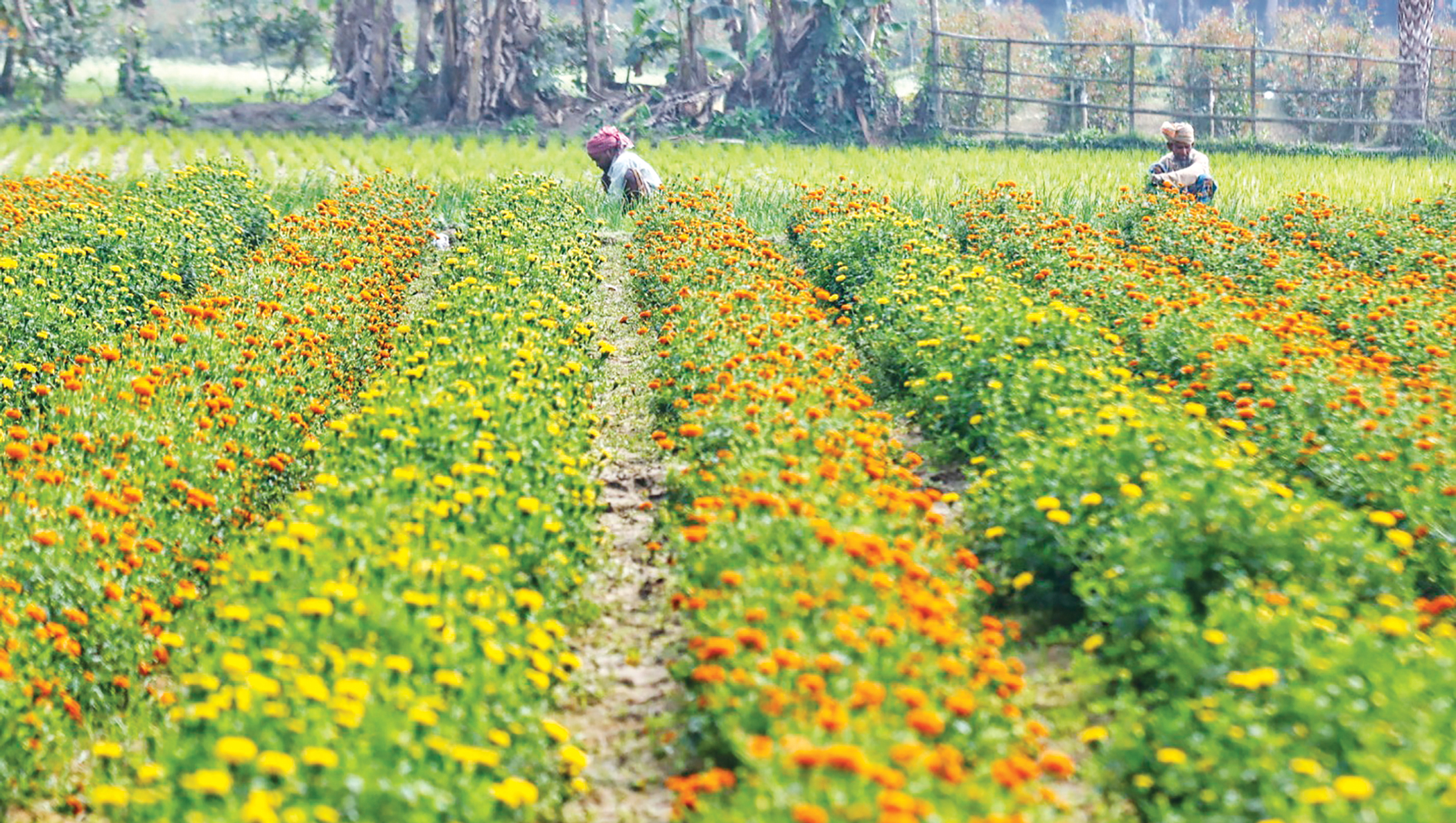
He said local growers currently produce 11 commercially viable cut-flower varieties. Tuberose, rose, and marigold remain dominant, while gerbera, lilium, chrysanthemum, gladiolus and China rose have broadened the mix. Gladiolus, rose and tuberose account for a large share of output.
The bottom line is, the supply chain survives largely on improvisation.
TRACING THE ROOTS
Commercial floriculture began in the early 90’s at Godkhali union of Jhikargachha upazila in Jashore. Nearby Panishara union was also among the early centres of cultivation.
At Godkhali bazar, trading starts before sunrise. Bicycles and rickshaw vans roll in with freshly cut roses, tuberose, marigolds, and gladioli. Buyers from Dhaka and other cities crowd beneath old rain trees to bargain.
Mohammad Saiful Islam, now in his late fifties, was among the few farmers alongside Shar Ali who first experimented with commercial floriculture.
He began in 1983 with six katha of tuberose while still at school. His father gave him a small plot. In the first year, he earned Tk 8,000. By class 9, he was making around Tk 100 a day.
He used to keep his earnings in a geometry box. His father knew nothing of the business until one day he discovered Tk 800 inside. Surprised, he joined his son in expanding the land under cultivation.
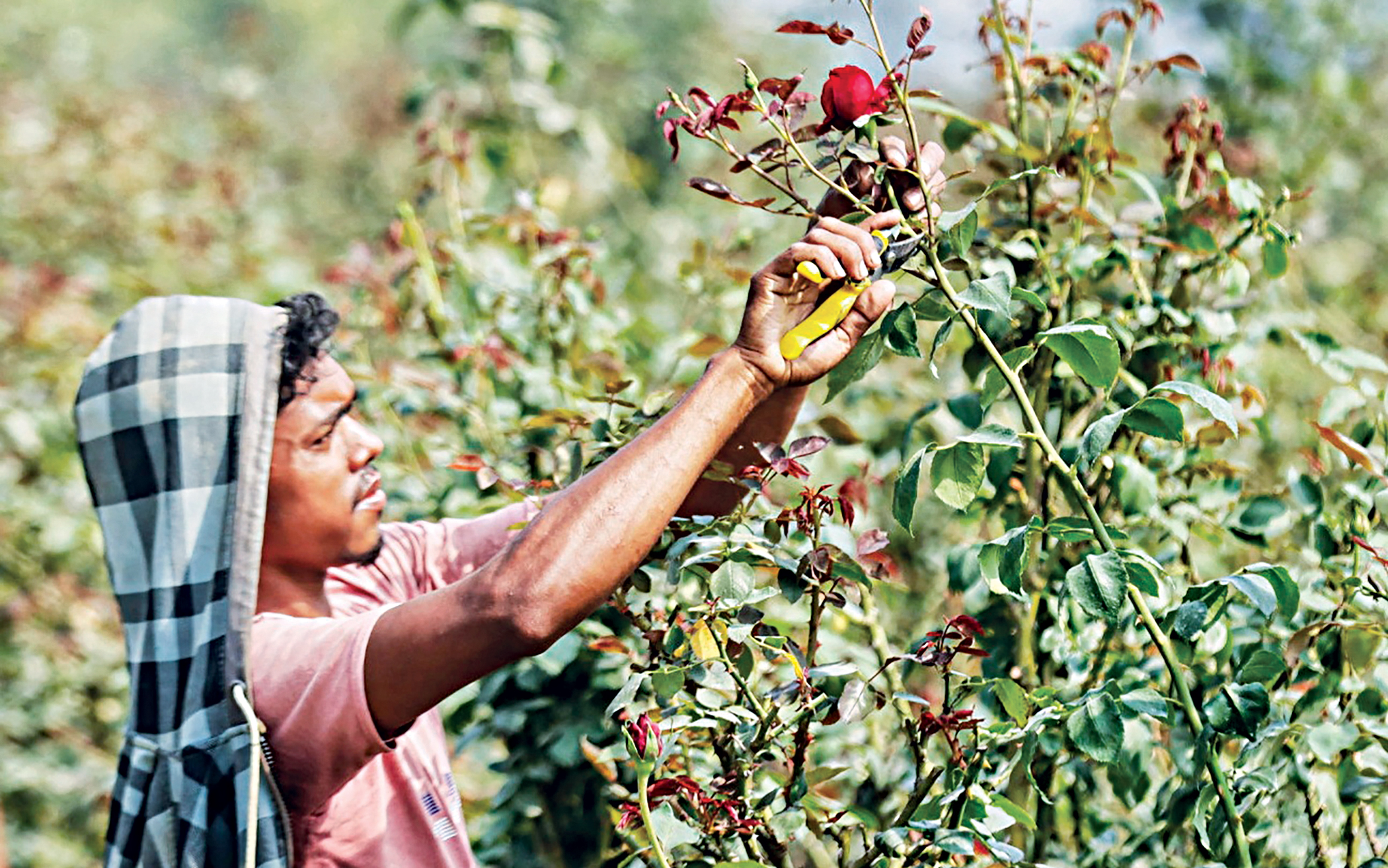
Like Shar Ali, Islam supplied Shahbagh, including Malancha. Today he grows tuberose, rose, chrysanthemum and sunflower on about four bighas. High-quality tissue culture saplings arrive from Pune in India.
Pointing to the layers of commission, Islam said, “If a flower sells for Tk 15, the farmer may receive only Tk 8.”
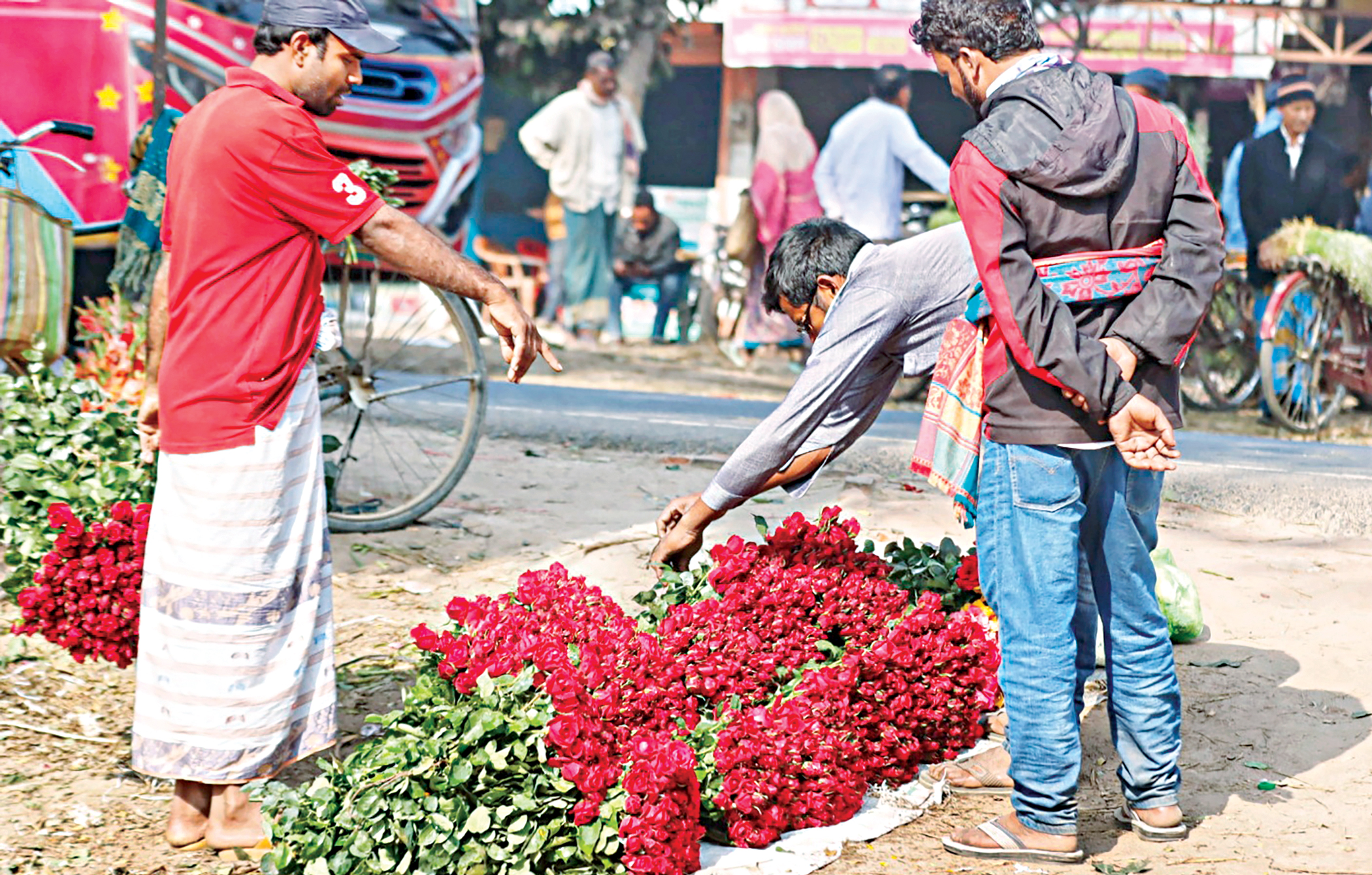
He said that farmers handle steady cash during peak months, but profits shrink once fertiliser, labour and transport costs are deducted.
At Shampur village in Savar, known as “Golap Gram” and closer to the capital, Abdul Khalek, 53, has been growing flowers for 27 years.
He cultivates three types of roses and plans to expand to seven. Flower farming lifted him from an earthen home to a four-room tin-roofed house and financed his sons’ education. “Financial strength and social status have grown considerably,” he said.
Khalek also spoke of a personal affection for flowers. “On Valentine’s, my wife often says she does not need me gifting her roses, because we already live in a house surrounded by blooming flowers.”
Apart from business prospects, the story of Shar Ali also reflects a similar and mystique affection for flowers. He died last year at 75, in February, the busiest month of the floral calendar.
Shar Ali travelled to more than 20 countries, yet never sold flower seeds for profit. “I have never sold flower seeds in my life. I distributed as much as I could,” he once said.
Comments