


US to lower tariff for Bangladesh from 20% to 19%

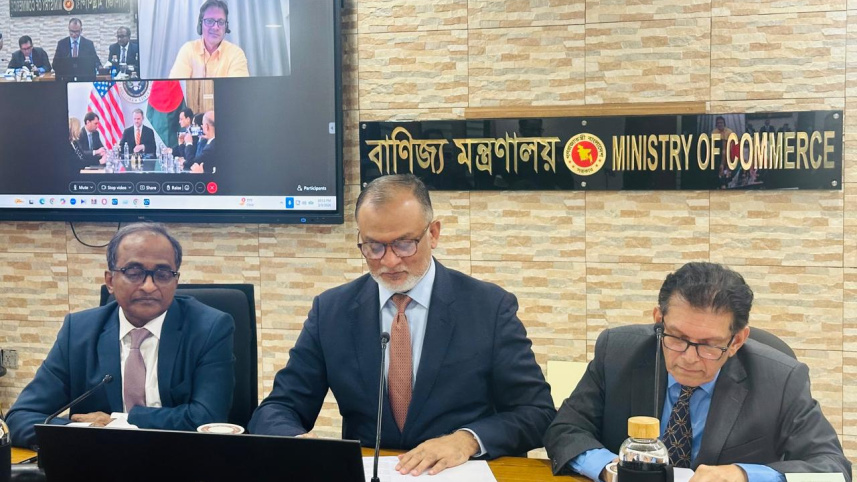
The reciprocal tariff for Bangladesh to the USA has been fixed at 19 percent, down from the existing 20 percent, as Bangladesh and the USA tonight signed a trade agreement, Commerce Secretary Mahbubur Rahman told The Daily Star after the signing.
The USA has granted duty-free or lower duty access to 2,500 Bangladeshi products, while Bangladesh allowed 4,400 American products either duty-free or at lower duty, the commerce secretary also said.

Garment items made from imported American cotton are allowed zero duty on export to the USA, Rahman added.
Pharmaceutical products, fisheries, particle board, and all kinds of food items will also enjoy duty-free access to the US market.
On the Bangladesh side, the signatories were Commerce Adviser Sheikh Bashir Uddin and National Security Adviser Khalilur Rahman, while on the US side Ambassador Jamieson Greer, US Trade Representative, signed the agreement, according to a statement released by the Chief Adviser’s Office.
Negotiations on the agreement spanned nine months since April last year, the statement read.
Ambassador Greer lauded Chief Adviser Muhammad Yunus for his overarching leadership of the negotiation process and praised the Bangladesh negotiating team for its "incredible efforts.”
“This agreement will fit Bangladesh into US trade policy,” he said.
After the signing, the commerce adviser, who led the Bangladesh side in negotiations, said: “The agreement marked a historically new level in our bilateral economic and trade relations. It will provide substantially enhanced access for Bangladesh and the US to each other's respective markets.”
The US will further reduce the reciprocal tariff to 19%, which was originally set at 37% and later reduced to 20% in August last year.
In addition, the US committed to establishing a mechanism for certain textile and apparel goods from Bangladesh using US-produced cotton and man-made fiber to receive zero reciprocal tariff in the US market.
“The reduction of reciprocal tariff will grant further advantage to our exporters, while zero reciprocal tariff on specific textile and apparel exports from Bangladesh using US inputs will give substantial added impetus to our garments sector,” said National Security Adviser Rahman, who was Bangladesh's chief negotiator.
The agreement was approved by the Council of Advisers and will be operational once notifications are issued by the two sides.
Present during the signing were the commerce secretary of Bangladesh and Assistant US Trade Representative Brendan Lynch.
 For all latest news, follow The Daily Star's Google News channel.
Comments