


Australian student visa rejections hit record high, alarming Bangladeshi applicants
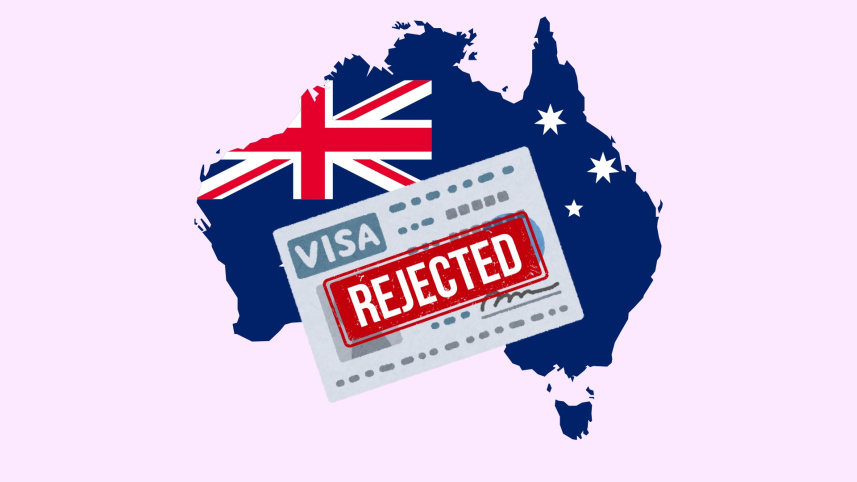
Australia has recorded its lowest student visa approval rate in over two decades, raising concerns for prospective Bangladeshi students planning to study abroad.
New data released on April 6, 2026, by the Department of Home Affairs of Australia shows that only 67.6 percent of higher-education student visa applications lodged offshore in February were approved. This is the lowest monthly approval rate in at least 21 years. The previous low was 68.1 percent in September 2023.

The figures, published by Times Higher Education, show that rejection rates have increased sharply for several countries. Bangladesh is among the worst affected. In February, 51 percent of Bangladeshi applicants were refused visas. This means more than half of the students who applied were unable to secure entry.
Other countries also saw high rejection rates. These included 36 percent for Bhutan, 38 percent for Sri Lanka, 40 percent for India, and 65 percent for Nepal.
Officials in Australia are becoming more cautious about whether applicants are “genuine students”, which is believed to be one reason behind the rising number of refusals.
At the same time, more students are applying from South Asian countries. Compared to February last year, applications increased by 36 percent from India, 51 percent from Bangladesh, and 91 percent from Nepal. In contrast, applications from China dropped by 39 percent and reached their lowest level in 12 years.
These changes are also affecting universities. Visa rejection rates play a role in determining an institution’s “risk rating”, which can influence how many students it attracts and how closely applications are checked.
Education groups in Australia have raised concerns about the situation. The International Education Association of Australia has called for a pause on changes to these risk ratings, saying the rise in visa rejections is too large to ignore.
Reference
1. Times Higher Education (April 6, 2026). Record visa rejections hit Australian higher education.
 For all latest news, follow The Daily Star's Google News channel.
Comments