


Photographic Mishaps
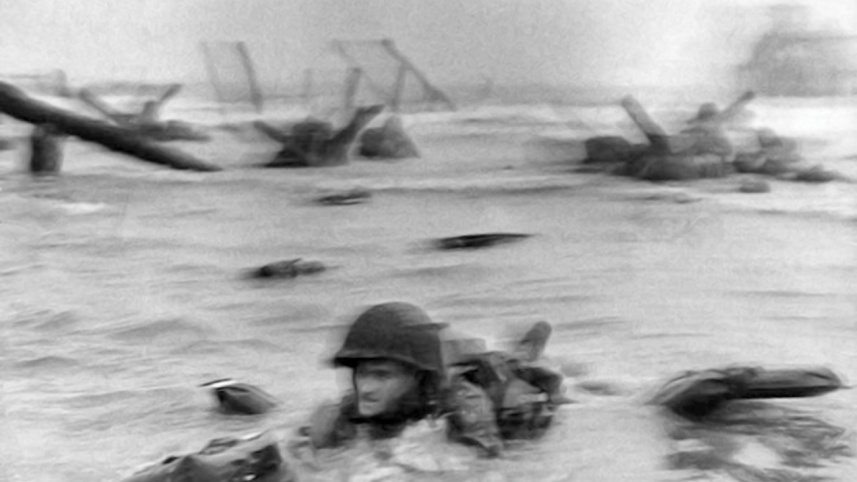
Robert Capa was one of the greatest war photographers ever. He took many memorable conflict photographs including that of a Spanish soldier at the instant of death in the Spanish Civil War. During the Second World War, while working for Life magazine, he landed at Normandy with the Allied forces on D-Day. He took tremendous risks taking photographs of that decisive day in the war.
Capa immediately sent the film to the photographic laboratories of Life in New York. In the darkroom, the technician made a processing mistake resulting in grainy and blurred photographs. The magazine published the photographs but instead of confessing their mistake they blamed the poor quality on the photographer. Capa had taken the photographs "slightly out of focus," the magazine claimed.

Capa was not to be outdone. When he wrote his autobiography he called it Slightly out of Focus.
Compared to digital photography, there were many more opportunities for mishaps in film photography. The most common was forgetting to load film in the camera. Sometimes the camera back was opened inadvertently with film inside. Leica (film) cameras were notorious for the difficulty in spooling the film properly – you had to watch the film counter carefully to ensure correct loading. In many film cameras, if you forgot to set the shutter speed at 1/60 when shooting with flash, part of each photograph would come out black.
You would think that in today's digital world and foolproof cameras, photographic mishaps would become extinct. Alas, they have simply changed guise. My most common mistake is forgetting to charge the battery. The missing memory card is a close second. I am yet to accidentally erase a card full of precious photographs, but I am sure that day will come.
Instant display of the photograph is certainly the biggest advantage of digital over film. Yet it can also mislead photographers. First, we are always tempted to examine the screen in the middle of shooting. This becomes a habit for many. However, by doing so, we interrupt the flow of the picture-taking and may miss an important moment. Second, the small screen can give us a false sense of security that the picture is good. It does not show small focusing errors which become evident when the image is displayed on a larger screen or enlarged as a photographic print. However, the screen does warn us instantly about egregious errors.
Digital cameras – particularly the more advanced ones – have numerous "settings" from colour balance to focusing spot to file size. If you, like me, like fine-tuning these controls for optimal results, you must remember to change those settings when the situation you are photographing changes. Otherwise you run the risk of taking a bad picture of the perfect moment.
My most serious brush with photographic disaster came when I was on a boat in the haor with an expensive telephoto lens attached to my camera with an extender. When we reached shore, I inadvertently unlocked the lens extender from the camera. Getting up to disembark, I lifted the camera by the lens. The camera body suddenly separated, fell on the boat, bounced, fell into the ground, bounced again and fell into the water. As I stared in stunned disbelief, the boatman dived and snatched the camera from the water's surface before it sank. The boatman's alacrity saved the day.
www.facebook.com/tangents.ikabir
 For all latest news, follow The Daily Star's Google News channel.
Comments