


Solitude
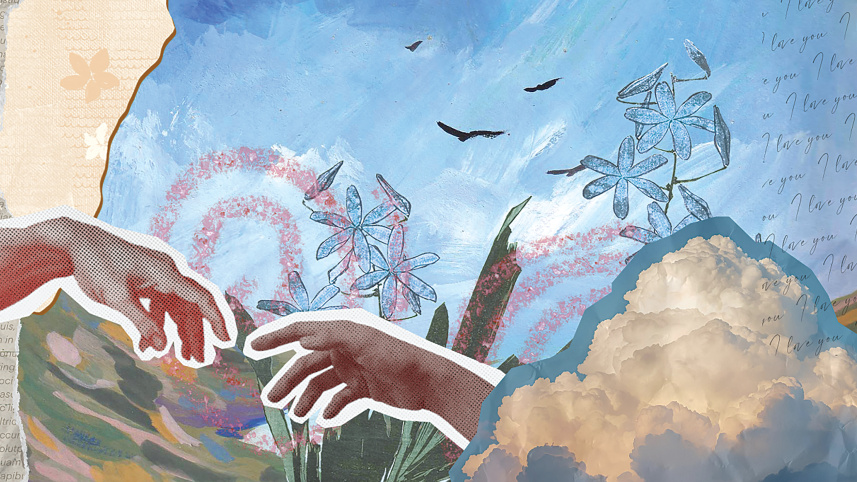
When Muniza stands on the moss-covered railing and leaps onto the roof of the adjacent house, the hem of her kamiz puffs up like a parachute. As the balloon of wind deflates, I see her standing on another moss-covered carpet-roof of the neighboring house. Looking at me, she says, “What’s wrong? Why are you sticking your tongue out like Goddess Kali? Jump!”
In a voice that is almost trembling, I say, “I can’t, Mun!”

“What a coward you are! It’s so difficult to get around with you.”
In wounded pride, I feel like saying, then you don’t have to walk with me. But I compose myself; I do not want to lose her company. In fact, I wouldn’t even grow tired of wandering with Muniza day and night. Besides, I am engaged in a noble task at the request of my dearest friend, Deepro. I have to set Muniza up with Deepro. In the neighborhood slang of those days, it was called “making a line”; in simple terms, I had to fix them up. Stuck at a cigarette shop on a pouring rainy evening, smoking one cigarette after another, I had given Deepro my word that I would fix them up.
Looking at Muniza’s annoyed face standing on the green carpet-roof, I think once more: let’s give it a try! Taking a few steps forward, just as I lean over the railing at the edge of the roof, I see a narrow strip of flat ground visible between the two three-story buildings. Way down below. It rained a short while ago, and everything is muddy and slushy. When I grab the railing, my hand gets wet as it rests on the clumps of moss. Is Muniza crazy? Looking at the narrow void between the two buildings makes my head spin. If my feet miss the other roof, I go straight down. After that, it will take at least 15 minutes just to drag my body out. As these ominous thoughts cross my mind, I suddenly remember—why should I jump? Am I the District Commissioner’s daughter like Muniza? Do I have a desperate need to escape without telling anyone? I can just take the stairs down and walk right past Muniza’s driver. This is my own house; I can leave and enter a thousand times. I don’t need to take such a massive risk with my life just to slip away to the banks of the Kanchan River while leaving a car parked in front to show that I entered this house and am still here! Looking at Muniza, I make a face at her and run toward the stairs. In this area of Maldahpatti, there are eight to 10 houses of the same height lined up one after another; thick walls plastered with moss.
Descending to the street, I whistle. Muniza’s driver and peon look up, drawn by the sound of the whistle. Their eyes narrow, perhaps wondering if they have ever seen me with Muniza on the college field. Ignoring them, I try to weave a complex tune into my whistle and look ahead, watching to see which house Muniza will emerge from. A little later, Muniza comes out through the side door of the fourth house. Looking back, I see the burly peon and the driver sitting with the car doors open. It is muggy and humid after the rain; I give Muniza’s damp hand a sudden, sharp tug so they won’t catch us if they abruptly turn around. Then, we board a rickshaw and head toward the old railway bridge.
Deepro is sitting in pocket number 2 of the old rail bridge over the Kanchan River. This was prearranged. Yesterday, Deepro handed me half a packet of cigarettes and extracted a promise that I would bring Muniza there. That’s why I used my younger sister to bring Muniza to our house and went through all this trouble. We sit with our legs dangling into the bridge’s pocket. Beneath our three pairs of feet rushes the turbulent mountain current. Amidst the gurgling sound of the water, we exchange small talk. Muniza had been talking to me like a sparkler until now, but for some reason, the moment Deepro arrived, she became distracted. Her attention is focused on the white foam beneath our feet rather than on the conversation. I grew restless; after all, Muniza was brought here so she could get close to Deepro. I feel as though I almost blurt out, Hey Mun, say something! My half-packet of cigarettes won’t be halal otherwise. How did the Punarbhaba River get named the Kanchan River? Is it because of the glittering golden sandbanks all around? Muniza doesn’t even participate in our curious conversation about the naming of the Kanchan River.
Who knows how many days will pass like this? Sometimes I take Muniza to the Hemayet Ali Library next to the Town Hall. Deepro sits there, pretending to read a heavy book. Having seated Muniza, I say, “I have a bit of work,” and stand waiting outside. When I return, I find them like statues. Why is there no conversation? When I gesture to them, Muniza gestures back, pointing to a notice: “Silence is requested here.” Sometimes I take Muniza to Jamal’s tea stall. She likes thick, milk-heavy tea with a layer of cream on top. So do I. Only Deepro sits between us, drinking red tea infused with ginger and cloves. Jamal pours the tea liquor from a height of three feet into the dense milk. The cup froths up. Seeing this, both Muniza’s and my mouth water. It makes no difference to Deepro. Deepro steals glances at Muniza, nothing more than that.
One day, Deepro says, “Whatever I want to say to her, I can’t say a single thing when she’s right in front of me. What do I do, tell me?”
Scratching my head, I say, “Write a letter.”
He says, “I’m even too shy to write a letter!”
“Oh come on, you’re hopeless. Forget it then...” I feel annoyed.
Deepro grabs me tightly, “Buddy, please do something. Save me.”
I say gravely, “Alright, I’ll write the letter myself. You’ll see, she’ll come running.”
Then, over three nights, I write a long letter. I write about so many days, so many memories... Muniza, you looked so beautiful that day, I couldn't tell you. Muniza, I wanted to tell you so many things that day, but what can I do? My heart misses a beat whenever I see you; who knows, if I try to say something, it might stop altogether... You know, all these clouds that collide with the Himalayas and bring rain over this city, this continuous rain for three days... Don’t you ever feel like standing under the rain with me? Don’t you ever wish to hold my hand and walk along the banks of the Kanchan toward the river's source?
As I keep writing, I discover that it is I who am saying these words to Muniza. It is I who am speaking, not Deepro. Not by any means. In the sentences and words of the letter, I see Muniza in every possible way. Muniza laughs, waves her hand, tilts her head and smiles. Her curly hair bounces and sways. Muniza takes my hand, pulls me, and makes me stand in the middle of the rain. She presses a folded, wet letter into my hand. The blue ink stains on it are washed away—what did you write, Mun? I grow impatient. Does anyone soak a letter after writing it? Astonishing!
I startle. It feels as though a wet letter is truly in my hand. I open my fist to check. Anywhere between Muniza and myself, I cannot find Deepro. Correcting myself, I shake off the feeling. I am bound by a promise to my friend. I am writing a letter for him. I remind myself: who knows how many times in this life Deepro had said he wouldn't survive without Muniza.
The next day, my younger sister delivers the letter. She returns and reports that Muniza apparently said, "Deepro! I meet him so often, why a letter again?" My sister supposedly smiled slyly then. Hearing this, I get angry, "Why did you smile? A letter is a serious matter." At that, she bursts into a giggle.
"You're laughing again?"
She says, "Listen, the envelope is made of thin paper. The handwriting inside is yours. Do you take me for a fool?"
Never in my life have I been this embarrassed. I don’t know where to hide my shame. I can't look at my sister. Somehow, I manage to say, "Look, the writing is mine, but the words belong to Deepro."
 For all latest news, follow The Daily Star's Google News channel.
 "Did he tell you that?!"
My sister doesn't embarrass me further about this. She walks away. Two days later, she brings an unfamiliar envelope. What a long letter it is! It holds answers to everything. Only, there is no name at the top, and at the end, it is written: "Shuddho, I recognize your handwriting. Why have you written Deepro's name at the bottom?" I begin writing my reply by answering the very question with which the letter ended. I keep writing. And for some reason, I no longer go to fetch Muniza. It is she who comes sometimes; the driver and peon remain waiting with the car in front. She no longer leaps across roofs. Somehow, she remains immersed in a tiny world of her own. It is as if the two of us have found a hidden treasure trove. We don't tell anyone; we just enjoy its beauty ourselves. We gaze at each other, sometimes even in the midst of other family members.
Whatever I wrote in the letters the previous week stays written in our eyes. A mute, silent conversation goes on. Who knew so much could be said without writing, without speaking! As we keep speaking this way, an even deeper silence envelops us. Sometimes, when handing over a letter, the brush of our hands feels superfluous, yet it sends a jolt of electricity racing through the entire body. We no longer escape to the banks of the Kanchan; at most, we go to the roof. The pocket of the Kanchan bridge weeps for us; the banyan tree by the distant village on the horizon weeps. We are no longer lonely, yet we don’t need to go anywhere to dispel loneliness either—we are always together. The letters' characters keep us fulfilled.
All of this came back to me today, after all these years, due to a trivial incident. Standing in front of my son's school, I see that Deepro’s daughter studies in the same school. Waiting in front of the school, many memories were polished anew after a long time. Only the mention of Muniza remained unspoken. I couldn't give any answer to Deepro’s words: "Buddy, where did you disappear to? Why didn't you keep in touch?" I have actually avoided Deepro for a long time. Then, at one point, he too stopped trying to contact me, and I felt relieved. I could never tell him: it wasn't for you, I actually wrote those letters to Muniza for myself; I spoke only of my own feelings in them. And after that, Muniza became mine. Was that a betrayal? Who knows.
Deepro gave his phone number and took mine too. For some reason, he hesitated. Did he want to ask about Muniza? After Muniza's father was transferred to another town, my contact with her lasted for six months at most. Then, perhaps both of us were defeated by the new transitions of life. That was a long time ago. Even if Deepro wants to know, I probably won't be able to tell him cohesively.
But all these years, I have never felt this guilty within myself! Did I steal Muniza away without letting Deepro know?
Seeing a close friend from so long ago should have filled my heart with joy. Instead, how terribly small I felt inside, as if I had secretly stolen something very dear to Deepro, and yet couldn't keep hold of it myself either. Deepro says repeatedly, "My house is right near the school. Do come over with your wife." I nod my head up and down like a machine. But deep down inside, I know that if I can avoid facing Deepro, I will be saved.
Then, over three nights, I write a long letter. I write about so many days, so many memories... Muniza, you looked so beautiful that day, I couldn't tell you. Muniza, I wanted to tell you so many things that day, but what can I do? My heart misses a beat whenever I see you; who knows, if I try to say something, it might stop altogether... You know, all these clouds that collide with the Himalayas and bring rain over this city, this continuous rain for three days... Don’t you ever feel like standing under the rain with me? Don’t you ever wish to hold my hand and walk along the banks of the Kanchan toward the river's source?
As I keep writing, I discover that it is I who am saying these words to Muniza. It is I who am speaking, not Deepro. Not by any means. In the sentences and words of the letter, I see Muniza in every possible way. Muniza laughs, waves her hand, tilts her head and smiles. Her curly hair bounces and sways. Muniza takes my hand, pulls me, and makes me stand in the middle of the rain. She presses a folded, wet letter into my hand. The blue ink stains on it are washed away—what did you write, Mun? I grow impatient. Does anyone soak a letter after writing it? Astonishing!
I startle. It feels as though a wet letter is truly in my hand. I open my fist to check. Anywhere between Muniza and myself, I cannot find Deepro. Correcting myself, I shake off the feeling. I am bound by a promise to my friend. I am writing a letter for him. I remind myself: who knows how many times in this life Deepro had said he wouldn't survive without Muniza.
The next day, my younger sister delivers the letter. She returns and reports that Muniza apparently said, "Deepro! I meet him so often, why a letter again?" My sister supposedly smiled slyly then. Hearing this, I get angry, "Why did you smile? A letter is a serious matter." At that, she bursts into a giggle.
"You're laughing again?"
She says, "Listen, the envelope is made of thin paper. The handwriting inside is yours. Do you take me for a fool?"
Never in my life have I been this embarrassed. I don’t know where to hide my shame. I can't look at my sister. Somehow, I manage to say, "Look, the writing is mine, but the words belong to Deepro."
"Did he tell you that?!"
My sister doesn't embarrass me further about this. She walks away. Two days later, she brings an unfamiliar envelope. What a long letter it is! It holds answers to everything. Only, there is no name at the top, and at the end, it is written: "Shuddho, I recognize your handwriting. Why have you written Deepro's name at the bottom?" I begin writing my reply by answering the very question with which the letter ended. I keep writing. And for some reason, I no longer go to fetch Muniza. It is she who comes sometimes; the driver and peon remain waiting with the car in front. She no longer leaps across roofs. Somehow, she remains immersed in a tiny world of her own. It is as if the two of us have found a hidden treasure trove. We don't tell anyone; we just enjoy its beauty ourselves. We gaze at each other, sometimes even in the midst of other family members.
Whatever I wrote in the letters the previous week stays written in our eyes. A mute, silent conversation goes on. Who knew so much could be said without writing, without speaking! As we keep speaking this way, an even deeper silence envelops us. Sometimes, when handing over a letter, the brush of our hands feels superfluous, yet it sends a jolt of electricity racing through the entire body. We no longer escape to the banks of the Kanchan; at most, we go to the roof. The pocket of the Kanchan bridge weeps for us; the banyan tree by the distant village on the horizon weeps. We are no longer lonely, yet we don’t need to go anywhere to dispel loneliness either—we are always together. The letters' characters keep us fulfilled.
All of this came back to me today, after all these years, due to a trivial incident. Standing in front of my son's school, I see that Deepro’s daughter studies in the same school. Waiting in front of the school, many memories were polished anew after a long time. Only the mention of Muniza remained unspoken. I couldn't give any answer to Deepro’s words: "Buddy, where did you disappear to? Why didn't you keep in touch?" I have actually avoided Deepro for a long time. Then, at one point, he too stopped trying to contact me, and I felt relieved. I could never tell him: it wasn't for you, I actually wrote those letters to Muniza for myself; I spoke only of my own feelings in them. And after that, Muniza became mine. Was that a betrayal? Who knows.
Deepro gave his phone number and took mine too. For some reason, he hesitated. Did he want to ask about Muniza? After Muniza's father was transferred to another town, my contact with her lasted for six months at most. Then, perhaps both of us were defeated by the new transitions of life. That was a long time ago. Even if Deepro wants to know, I probably won't be able to tell him cohesively.
But all these years, I have never felt this guilty within myself! Did I steal Muniza away without letting Deepro know?
Seeing a close friend from so long ago should have filled my heart with joy. Instead, how terribly small I felt inside, as if I had secretly stolen something very dear to Deepro, and yet couldn't keep hold of it myself either. Deepro says repeatedly, "My house is right near the school. Do come over with your wife." I nod my head up and down like a machine. But deep down inside, I know that if I can avoid facing Deepro, I will be saved.
*Translated from Bangla by Alamgir Mohammad. The original story first appeared on Prothom Alo.
Alamgir Mohammad teaches literature and Translation Studies at the tertiary level. He has published 25 titles in translation.
Comments