


Melbourne: Where weather performs live
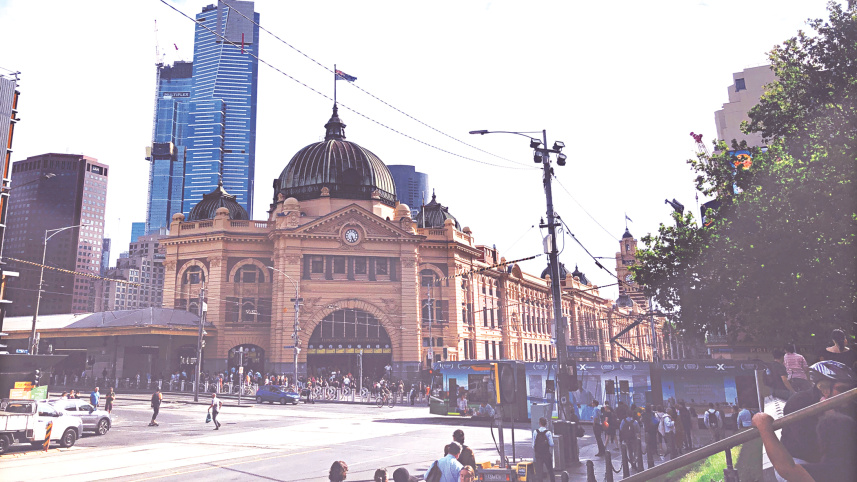
When I first landed in Melbourne in January, the heat greeted me like a shockwave. 45 degrees Celsius, feeling like 48. The air pressed against my skin: dry, bright, unyielding. For a brief, disoriented moment, I wondered if I’d taken the wrong flight and ended up somewhere near the Sahel. I had no idea Melbourne could be this hot.
Australia’s weather can be explained on paper: reversed seasons in the Southern Hemisphere; an ocean-ringed continent with a vast, dry interior; the driest inhabited landmass; and the powerful push and pull of El Niño and La Niña. But what science captures in maps and diagrams, Melbourne delivers through sensation. Across the continent, climate shifts are like pages in a book: the tropical north breathing through its wet and dry seasons, the arid interior stretching into heat and silence, the temperate south cooling into winter and even offering snow in the alpine spine. The coastline softens some edges, sharpens others. Heatwaves, bushfires, floods, and cyclones thread themselves into everyday language. And what the atlas shows as neat climatic zones, Melbourne performs live—sometimes all in a single day.

Before I left, my Aussie (informal nickname for Australians) supervisor in Bangladesh—practical, quietly wise—offered one piece of advice: “Always keep an umbrella and a sweater in your bag.” At the time it sounded like courtesy. Later I understood it was practically a Bible instruction. The light in Melbourne does not simply shine; it asserts itself. My cheeks, hands, and feet learned this quickly by tanning. Coming from Bangladesh, where skincare is woven into daily life and still affordable, I suddenly realised how costly self-protection could be here. Standing beneath that white, unblinking sky, I thought: This heat alone could send me home.
And yet, I stayed.
What I learned more slowly was that this sun asks for awareness. In Australia, sunlight is treated with a kind of respect—spoken about openly, planned around, taught early in schools as it comes with consequences. The brightness that bleaches the sky also carries a risk people speak about plainly: skin cancer. Colleagues reminded me, gently but firmly, that this is not vanity or overcaution; it is care. The 1980s “Slip (on a shirt), Slop (on sunscreen), Slap (on a hat)” is not a slogan here; it is a public health memory. I began to see the sun not only as warmth, but as something to enjoy mindfully, with small acts of preparation that help you stay safe while still appreciating its brightness.
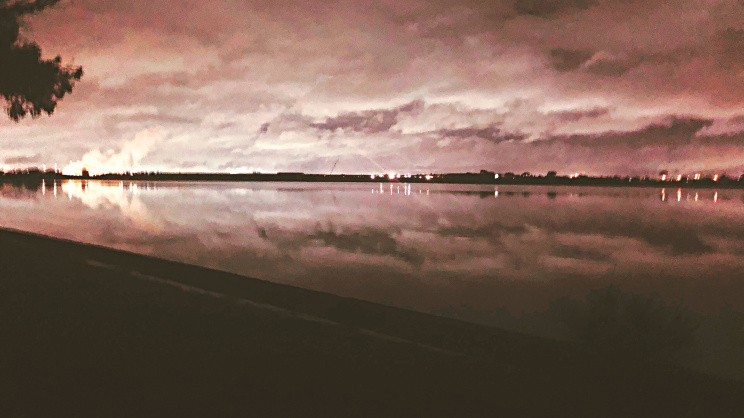
Melbourne sits by the ocean and seems to borrow its temperament. One moment the day burns white and blinding; the next, a cool change sweeps in, quick and insistent. Clouds gather, rain needles down, and then, without apology, the sun returns. Calm follows disruption, and light follows storms.
“Four seasons in one day” is not a saying here. It’s routine.
Australians have tried for generations to name this restlessness of land and sky. Dorothea Mackellar reached for it in the poem “My Country” (1885–1968), calling Australia a “sunburnt country… of droughts and flooding rains”, a line held almost like collective memory—recited in classrooms, quoted by grandparents, whispered whenever the weather grew dramatic. Henry Lawson, in contrast, wrote with a bush-worn honesty, capturing a land where wind, dust, and distance shape the rhythm of living. In his poems, the wind is never merely weather; it is a companion with a temper, a wandering voice that keeps its own counsel. That spirit still feels alive. Some days the wind in Melbourne moves exactly as those poets described—restless, insistent, unwilling to stay still for long. The sky changes its mind the way a storyteller shifts scenes. Clouds gather, leave, return, and then vanish again before you’ve finished a cup of tea.
I often joke that Melbourne’s weather has no parents—it behaves like a spoiled child that never learned any manners. And I smile because some days that feels exactly right. The theatrics, the sudden sulks and sudden warmth, the grand entrances and messy exits—they all echo the long tradition of poets trying, and failing, and trying again to capture this place in words.
So I leave home carrying both an umbrella and a sweater, or a jumper, as Australians insist on calling it—no matter what the morning promises. In Melbourne, you don’t check the weather app; you watch the weather. The sky performs live, revising itself constantly. Here, weather is not something you observe from a safe distance. It’s something you negotiate with.
This is an excerpt. Read the full article on The Daily Star and Star Books and Literature’s websites.
Dr Farhana Sultana is a postdoctoral fellow at the School of Public Health at the University of Queensland, Australia. She is based in Melbourne and can be contacted at farhana_ju@yahoo.com.
 For all latest news, follow The Daily Star's Google News channel.
Comments