


Why 'exemplary punishment' will not end the rape epidemic


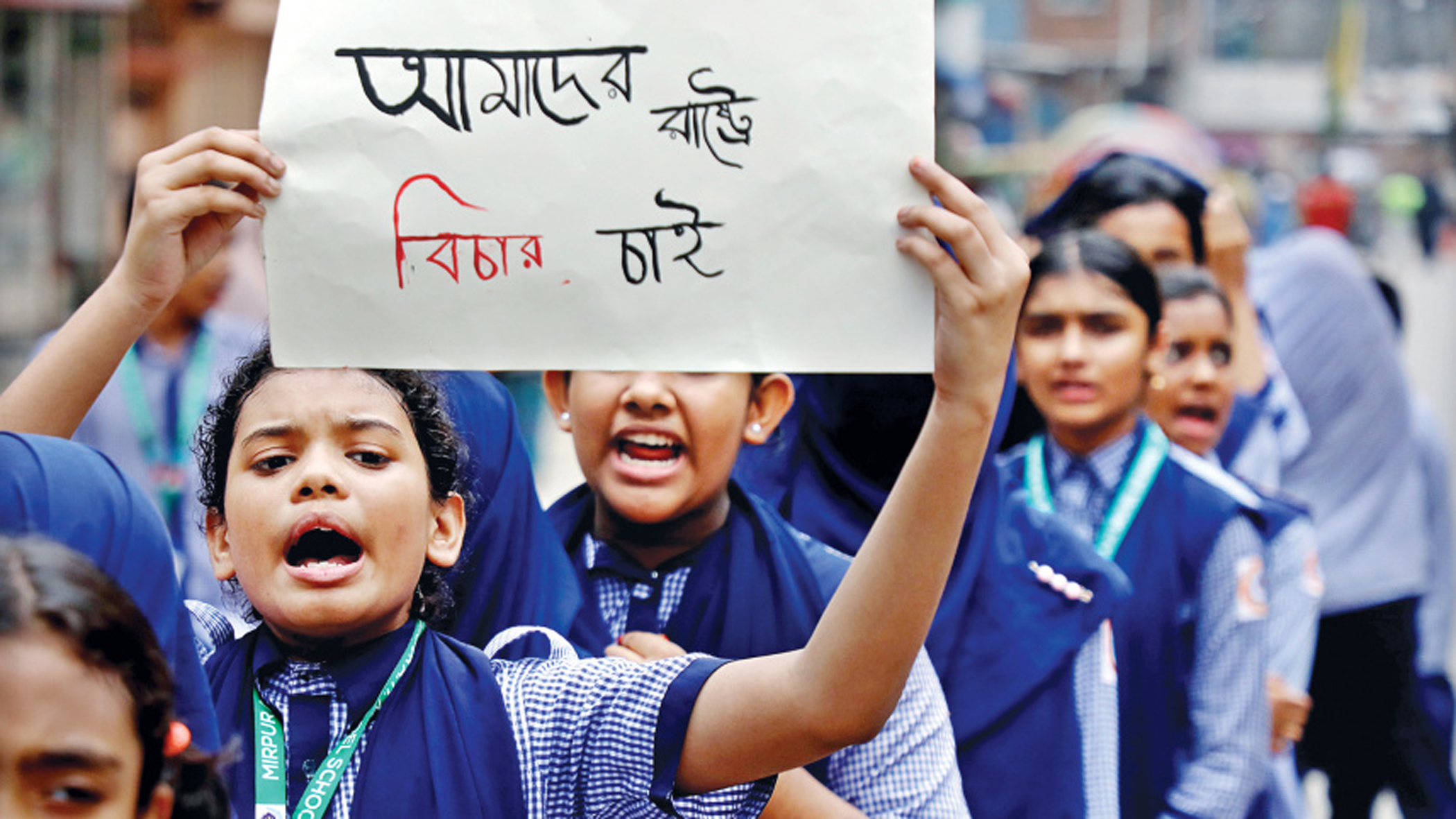
The media is, once again, saturated with graphic details of the horrific rape and murder of an eight-year-old child. Personal details about the victim and her family were almost immediately revealed, and her photos were splashed across our screens. Different outlets are now in fierce competition to churn out fresh details for a morbidly fascinated audience. Without a doubt, the crime that has been committed is beyond gruesome. The smiling face of that innocent child is bound to haunt anyone with a drop of humanity, and already, agitated crowds have staged protests in Pallabi and other parts of Dhaka. Social media has also been flooded with calls for exemplary punishment.
But there is a dark side to this kind of exposure, and we are already starting to see it. A cursory scroll through Facebook comments reveals misogynistic and even downright criminal comments. There are certain groups that are already going down the oft-trodden route of victim-blaming, despite her age, and blaming her family for failing to protect her as well.

It’s not just the paedophiles and perverts we should be worried about (and why/how we have normalised the sexualisation of minors as a society is a separate conversation). When it comes to rape victims, especially ones who are killed violently, we have fallen into a pattern of sensationalist and voyeuristic journalism inflaming a thirst for vengeance in the public, replacing demands for justice, accountability, and institutional reform with calls for exemplary punishment.
One could argue that in a country where the law has failed rape victims for so long, perhaps public outrage is the only way to ensure this doesn’t just become another case lost in the legal labyrinth. But how long can outrage last? And how much has it helped in the past?
In 2020, we saw widespread protests against rape—once after a Dhaka University student was raped after getting off at the wrong bus stop, and again after a video of a gang-rape of a woman went viral on social media. One of the major demands of protesters was capital punishment, similar to what we are seeing now, which led to the then-government amending the law to introduce the death penalty for rapists. This move was popular at the time, and the rapists involved in these high-profile cases eventually got life sentences.
But there was hardly any change in rape statistics in the following years. Data from other South Asian countries also suggests a similar impact—not only did the death penalty not reduce rape, it created fear that rapists might become more likely to kill their victims because there is no additional penalty for murder, especially as it would also eliminate the main witness, thus reducing their chances of being caught. In cultures that tie women’s “honour” with rape, calls for retribution tend to have more to do with restoration of said honour than justice for victims/survivors.
It is human nature to identify with individual victims and to feel grief and empathy for their suffering. But when we continuously highlight individual cases, we run the risk of ignoring the structural issues that have turned rape into an epidemic in Bangladesh. Take, for example, the eight-year-old girl from Magura who was raped by her sister’s father-in-law while visiting them for Eid in March last year. The child died. The protests after her rape led to a conviction within record time.
Yet, in that same period, child rape cases went up by nearly 75 percent compared to 2024. Did the other 305 children who were raped also receive speedy justice? Or did they experience hostile law enforcement officials, severe investigation delays, pressure from local arbitrators, huge trial backlogs, and misogyny and shaming at almost every step of the justice process, as most rape victims and survivors usually do? Conviction rates for rape continue to be less than three percent, and that too with huge levels of underreporting. When our social norms and structures continue to deprive women and girls of their rights and agency every day, exemplary punishment in a handful of highly publicised cases do very little to protect them against the daily threats they face. To this day, we have no proper legal definitions of consent, and the horrific practice of forcing victims to marry their rapists to preserve their “honour” continues to persist.
When we see the faces of such young victims, wanting justice is the most normal reaction. But there is nothing normal about people calling for televised executions and public hangings, or about asking the government to skip the investigation and trial process entirely, and go straight to penalty. And there is certainly nothing normal about children coming out onto the streets to declare, in front of rolling cameras, their intent to take the law into their own hands if the rapist is handed over to them.

Clearly, there has been a breakdown in public trust when it comes to the law. For too long, law enforcement and the courts have worked for the powerful few and not the ordinary people, and these are not issues that can be solved overnight. But that doesn’t mean we should allow public vengeance to become the driving force of the justice system. The home minister’s comments against public punishment might have seemed abrasive, but given the levels of disinformation-fuelled mob violence in recent times, he is right to encourage restraint.
Exercising restraint, however, is not enough. We have come to accept sexual violence as an everyday reality rather than a systemic failure. It has become so normalised, and the victims so dehumanised, that we are only shocked out of our apathy by the most gruesome cases. And even then, our focus on vengeance shifts the conversation away from due process, legal reforms, durable support structures for survivors, and tackling the misogyny that has permeated every section of our society and ultimately leads to this violence.
There are no stop-gap solutions to the epidemic of sexual violence in Bangladesh, and there’s no denying that public pressure can oftentimes ensure speedy justice. But if we truly want an end to child rapes and murders, we have to channel our anger towards advocating for durable change. The media has a responsibility here to shift the narrative away from rape as isolated incidents of violence that we react to only after the worst has happened, and view it instead as a human rights issue that requires long-term policy interventions and structural change. Let’s start with respecting the anonymity of victims which, according to the Women and Children Repression Prevention Act (Section 14), is already a legal requirement. We have to be able to ask for justice without exploiting the trauma of victims’ families, and without hyper-focusing on individual victims who have gone through the most pain.
Shuprova Tasneem is a journalist and researcher.
Views expressed in this article are the author's own.
Follow The Daily Star Opinion on Facebook for the latest opinions, commentaries, and analyses by experts and professionals. To contribute your article or letter to The Daily Star Opinion, see our guidelines for submission.
 For all latest news, follow The Daily Star's Google News channel.
Comments