


‘Roid’: The forbidden fruit and the transcendence of art

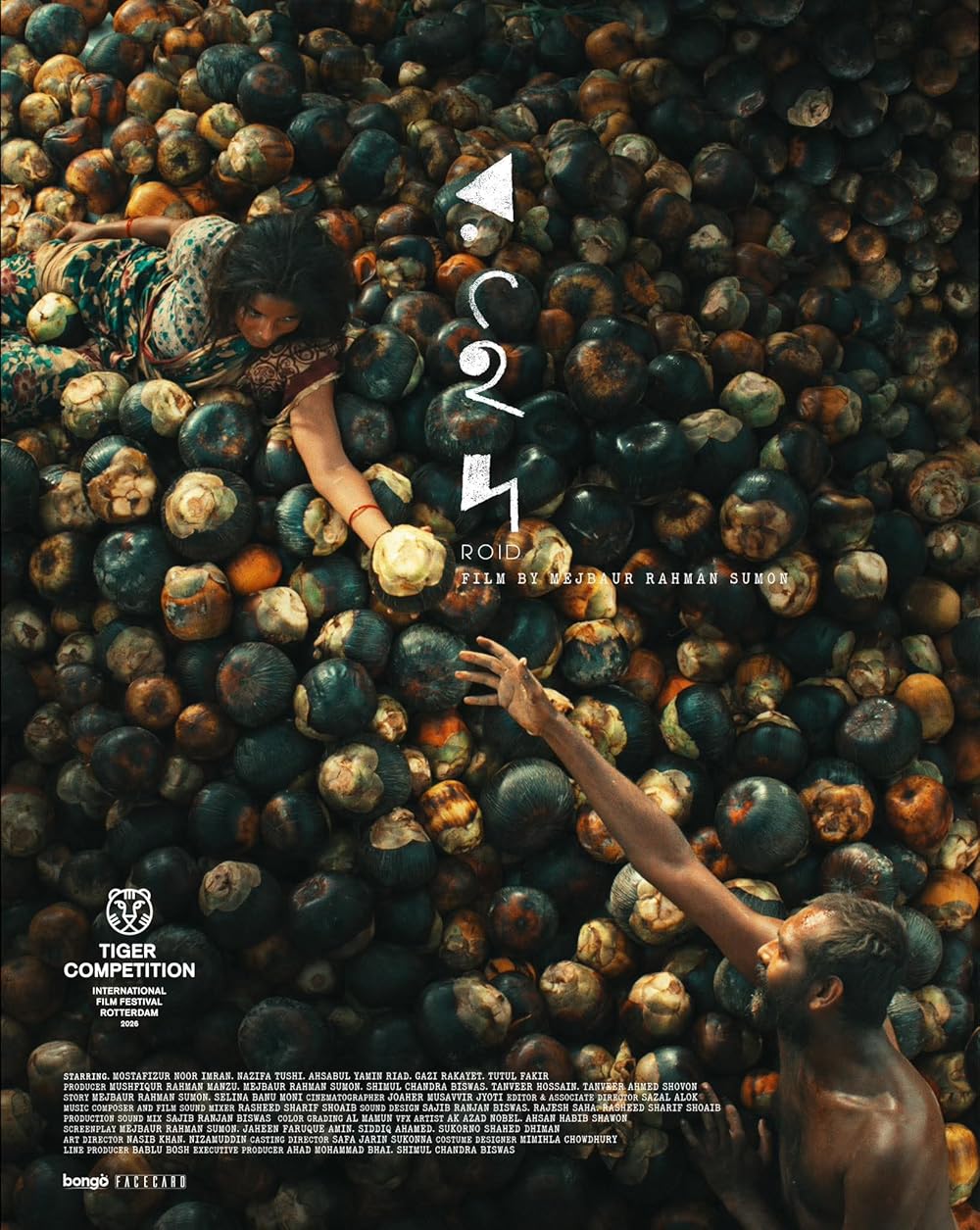
According to Islamic, Christian, and Jewish religious mythologies, the first crime committed after the creation of humankind was Adam and Eve eating the forbidden fruit in the Garden of Eden. But what exactly was this forbidden fruit? There is no specific mention of it anywhere. While the Bible and the Quran refer to a forbidden tree, English literature often interprets the forbidden fruit as a grape, apple, fig, or pomegranate. Ultimately, it remains an open-ended question.

According to some historians, it was not a fruit at all, but rather the first instance of physical intimacy between Adam and Eve. Thus, we can also perceive the forbidden fruit without objectifying it.

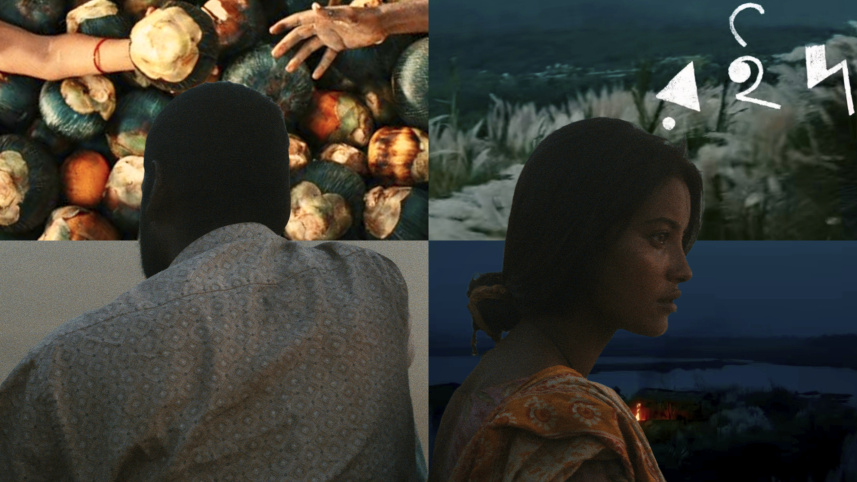
In Mejbaur Rahman Sumon’s “Roid”, when the village saint asks about eating the forbidden fruit, it introduces an open-ended resolution to the story. Shadhu admits he has eaten it. But what is this forbidden fruit? Why did he have to eat it? Is it a physical object or something abstract? By addressing these questions, the film becomes a reflection of living art, where Sumon leaves the audience with a mental frame much larger than the film's actual visuals. Magical realism ultimately becomes a grander reality than any definitive conclusion.
The story of “Roid”, co-written by Mejbaur Rahman Sumon and Selina Banu Moni, is a simple, fluent, and lean narrative of life. Shadhu, a village shepherd, lives a purposeless existence until one monsoon—during the time of Durga Puja—he marries and brings home a wife. The film opens with their married life. As they explore the village, they mirror Adam and Eve first stepping into the world. Shadhu’s wife has no name; if she does, it remains unknown. Instead of bringing comfort to Shadhu's life, this mentally unstable wife becomes a source of constant trouble.
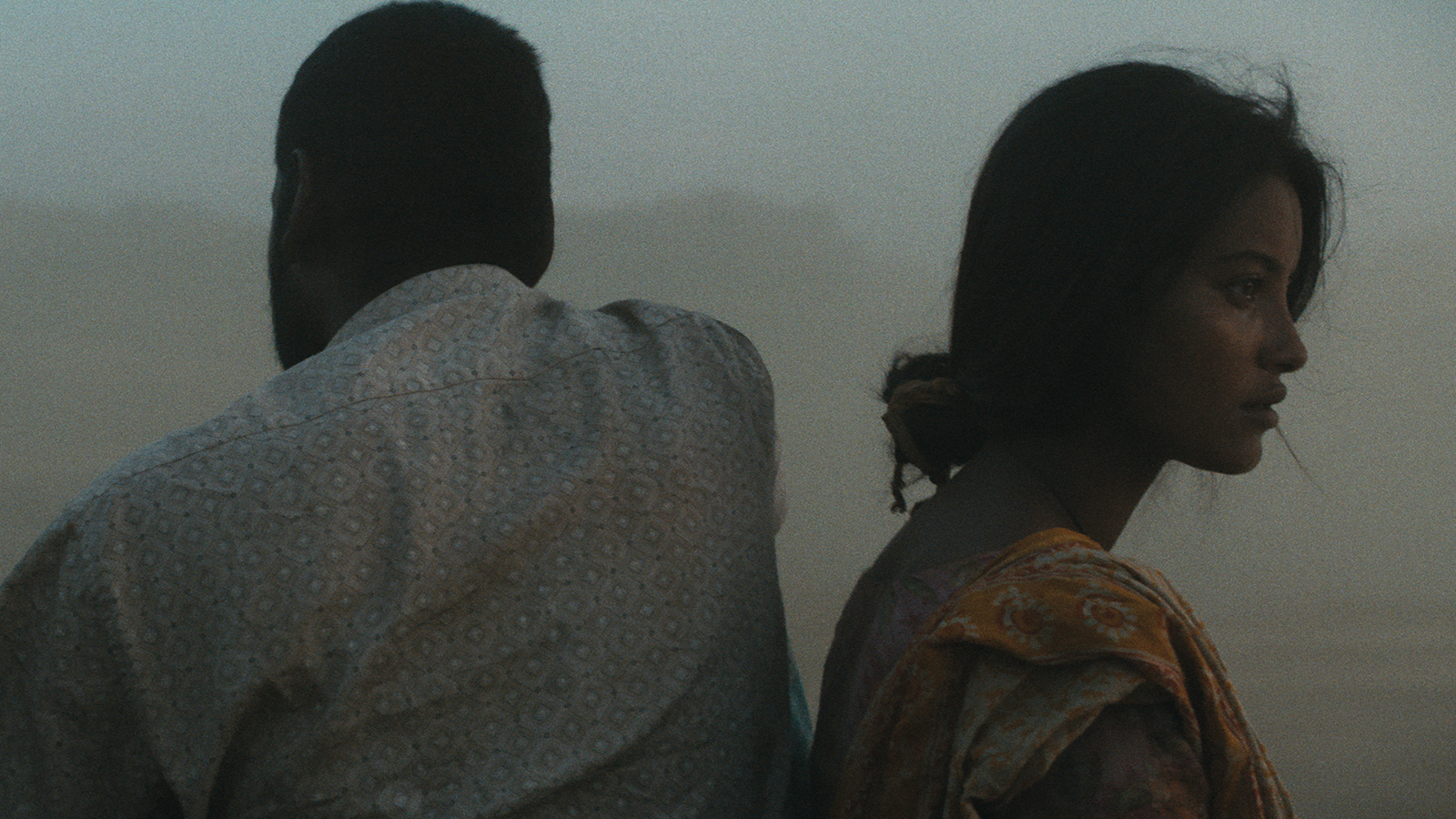
The screenplay of “Roid” is extraordinary precisely because it lacks excess. The ambience of the village, the sound of flowing water, and the authentic simplicity of rural visuals deepen the narrative rather than overpowering it. Sumon, Jaheen Faruque Amin, and their team ensure the characters speak like ordinary people instead of philosophical mouthpieces. Free from dramatic exaggeration, life simply moves forward in its own way. Consequently, the dialogue remains deeply grounded in everyday life. We hear Shadhu asking his wife, “You remember nothing, you forget everything—then why do you keep coming back to my doorstep?” There is nothing formal or forced about it. Even when Panna asks, “Whose child is this?”, no one reacts with theatrical discomfort. However, although the film is set in Sunamganj, the characters speak in a southern or Khulna dialect, which feels misplaced and is occasionally difficult to digest.
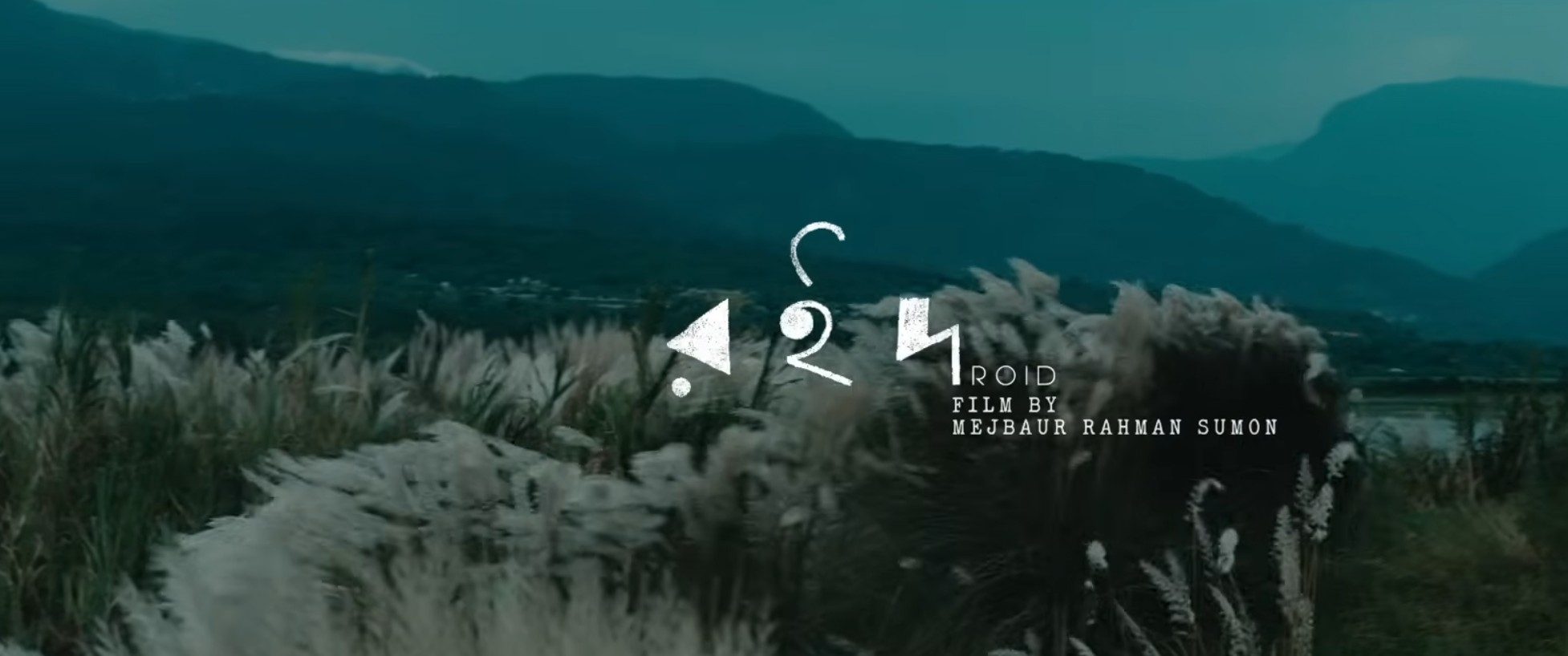
The cinematic presentation of “Roid” goes beyond mere storytelling; it is an elevated art form. Its strongest and most dazzling attribute is its cinematography. Such powerful visual storytelling has arguably never been seen before in Bangladeshi cinema. The blend of magical realism, mythology, and metaphorical elements from Abrahamic, Indic, pagan, and monistic religions elevates the film to unique heights. Sumon does not just feed us the forbidden fruit and leave us trapped in a time loop; he repeatedly introduces symbolic presences like Moses’ frogs and Noah’s ark. He uses cattle as sexual symbols and juxtaposes Durga in parallel motion. Yet, rising above all these metaphors is the multilayered portrayal of the mad woman as Shadhu’s wife.
The director gives this character a profound depth. She is mad, yet her madness demands celebration. From within her instability rises the essence of motherhood itself; she tells a doubtful Shadhu, “The child is mine, Allah gave it.” This moment evokes the imagery of Mary and Jesus Christ—the greatest historical religious example where a child’s identity is defined entirely by the mother. Sumon leaves us beautifully uncertain whether her pregnancy is miraculous or merely reality.
In this role, Nazifa Tushi delivers the finest performance of her career. As Shadhu, Mostafizur Noor Imran completely merges with the screen, his performance perfectly intertwined with the visual movements the filmmaker sought to explore. Meanwhile, Ahsabul Yamin Riyad performs wonderfully as Panna despite the character being under-explored, and Gazi Rakayet remains entirely natural as Mia Bhai.
Ultimately, “Roid” is the triumph of integrated art. Joaher Musabbir’s cinematography is the film’s greatest strength, sustaining this linear, lean story for 127 minutes purely through its framing. Visually, Sumon seems to pay tribute to iconic filmmakers like Stanley Kubrick, Jean-Luc Godard, and Kim Ki-duk. The handheld and tracking shots make the audience feel as though they are experiencing the story through someone else's eyes.
Sajib Ranjan Biswas’s sound design creates an immersive sensation, making us feel as though we are hearing the scenes through an observer's ears. The rhythmic beats of paddy threshing, cow fights, and muffled conversations pull the viewer deep into the world. Editor Sazol Alok crafts seamless transitions through simple frame-to-frame cuts and authentic location sound. The dark, gritty tone of the visuals creates a sense of discomfort—but a deeply enjoyable one. Music director Emon Chowdhury further traps the audience within an altered sense of time. The cruel sequence where Shadhu’s wife is fed dhutura flowers mixed with pineapple, followed by Shadhu’s chilling smile at the village fair while Kanai Das Baul’s “Mon chara ki moner manush roy, roy go?” plays in the background, instantly cements itself as a cult classic moment in Bangla cinema.
Yet, even through this spiritual journey, flaws persist. The film never clearly explains the catalyst behind the mob lynching of Shadhu, leaving the audience somewhat bewildered, and the visual execution of certain violent scenes feels incomplete. However, these shortcomings cannot overshadow Sumon’s success in transforming soil, water, air, clouds, climate, and agriculture into subtle characters of their own.
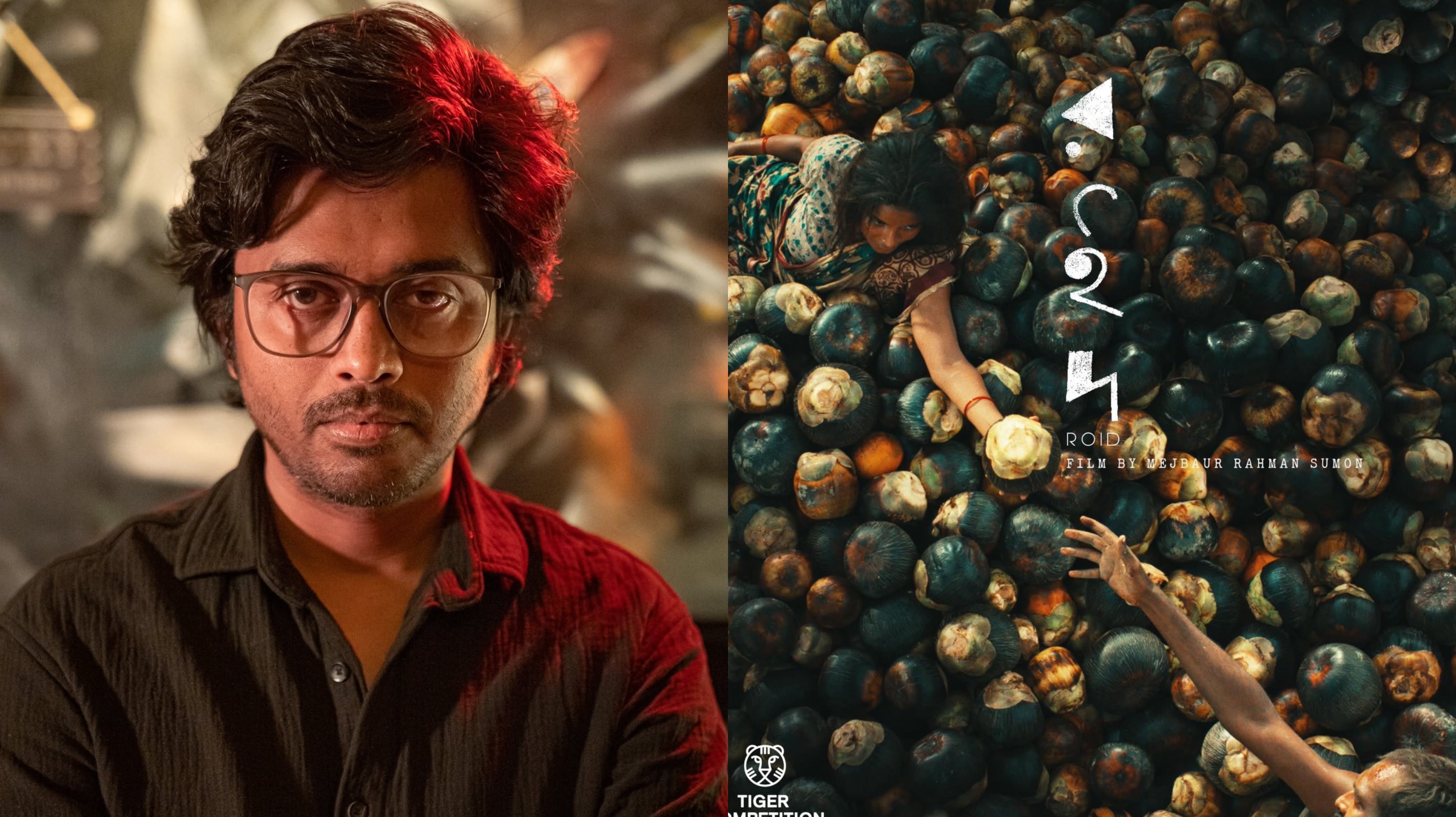
The most unsettling element remains the forbidden fruit. Just as history never allows us to definitively discover what the forbidden fruit was, Sumon refuses to give a clear answer. Is it the injustice inflicted upon his wife? Is it the goat, Kulsum? Or is it the wife herself? The film leaves it unanswered. It only reminds us in its final frame that the punishment for tasting the forbidden fruit is an endless loop from which we can never escape. Leaving behind comfort and sparking endless curiosity, “Roid” concludes as a true work of art.
 For all latest news, follow The Daily Star's Google News channel.
Comments