


Sabrina Islam’s photography exhibition blends travel, memory and legacy

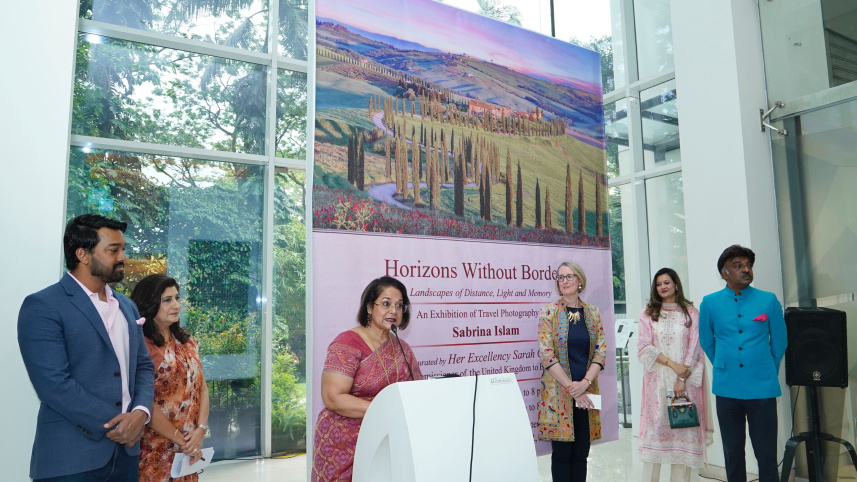
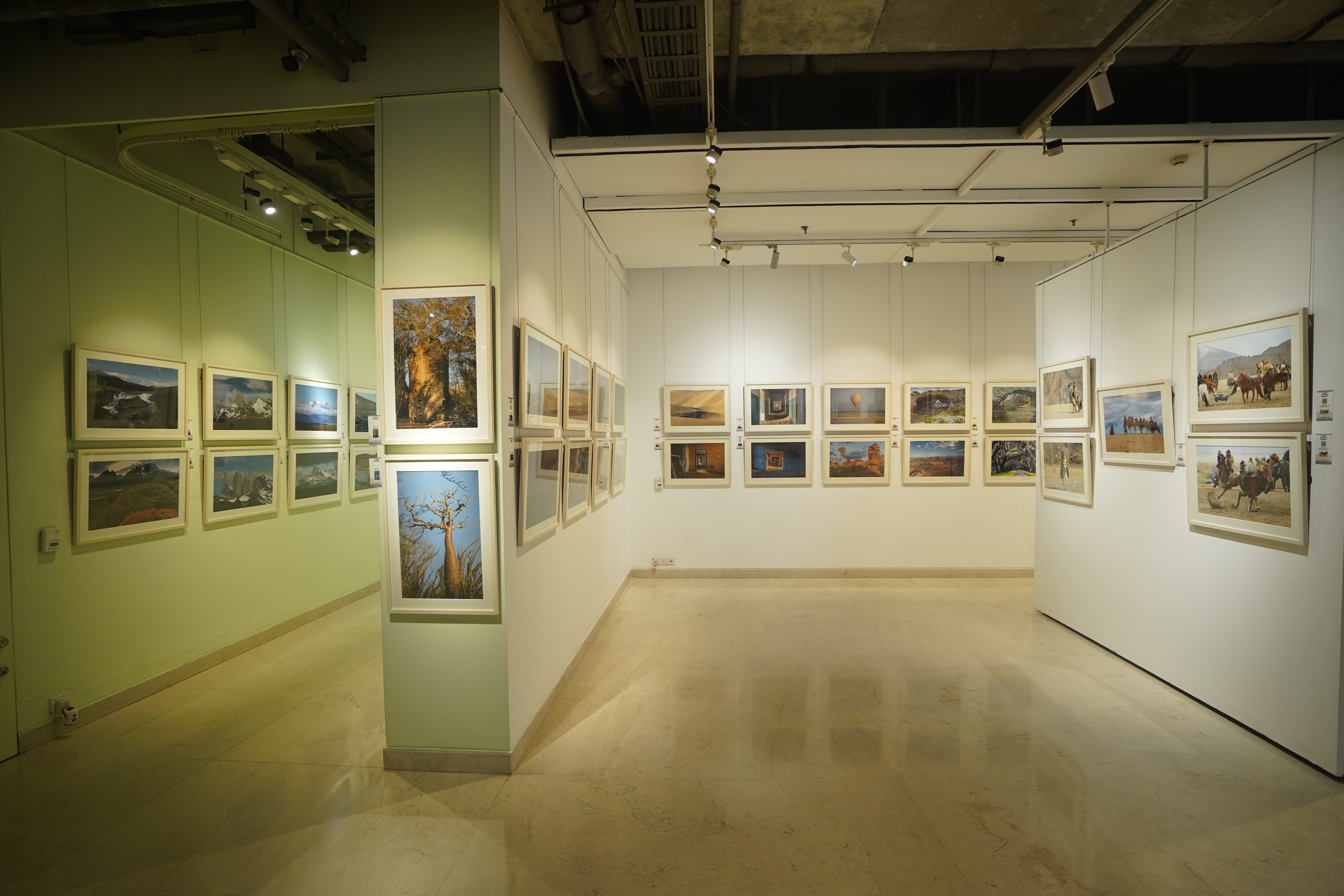
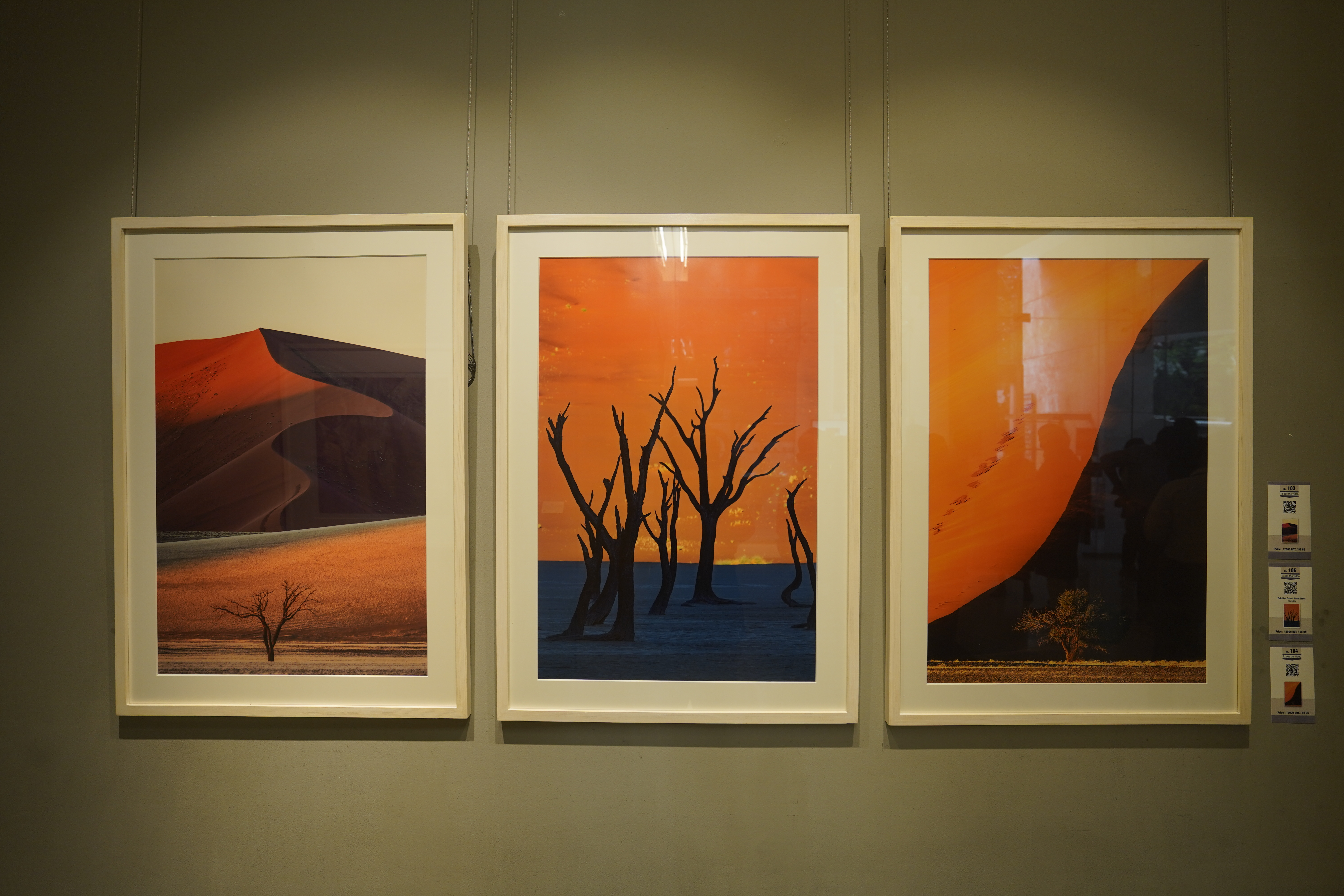
From the golden glow of sunrise over Mount Fitz Roy to the quiet romance of cypress-lined roads stretching across Tuscany, the Edge Gallery at Bay’s Edgewater Tower unfolded as a window to the world—each frame opening onto a different horizon on Friday, April 10.
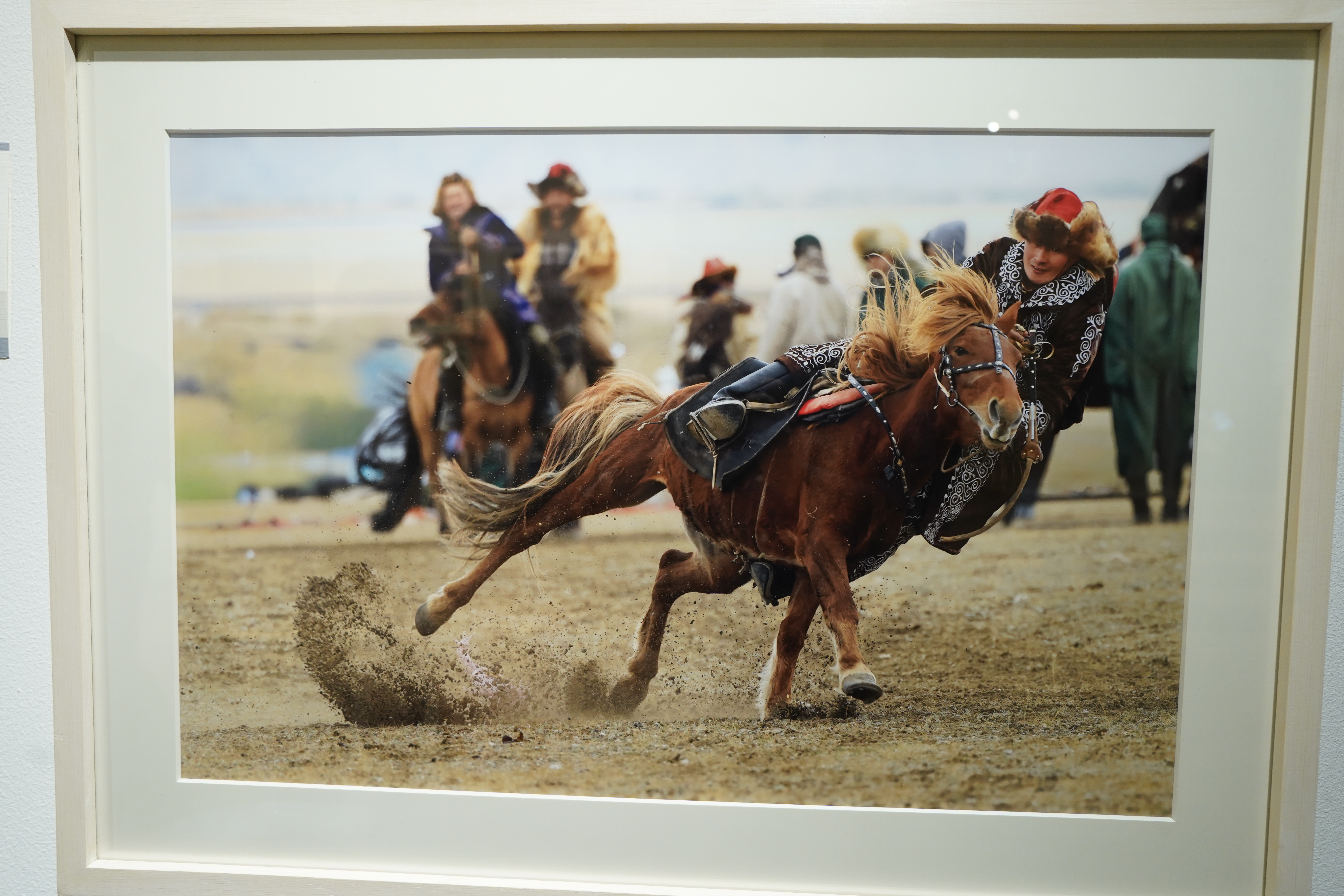
Curated by entrepreneur and photographer Sabrina Islam, the exhibition brought together a striking body of work captured across continents. Her lens travelled from the vast plains of Mongolia to the vibrant streets of Manila, weaving a visual narrative that balances grandeur with intimacy, distance with detail.

More than a photography showcase, the event carried a deeply personal resonance, coinciding with the launch of her father, Golam Ahmed Khan’s book “The Tartar Pipe”, creating a rare dialogue between image, memory, and text.
The exhibition was inaugurated by Sarah Cooke, High Commissioner of the United Kingdom to Bangladesh. Inside the intimate gallery, anticipation lingered as art enthusiasts, family members, friends, and members of the media gathered closely, eager to experience the stories behind each frame.
Speaking at the event, Cooke reflected on how the exhibition reaches beyond geography and aesthetics into shared human memory.
Recalling her time in Tanzania, she said the images on display stirred personal recollections, noting that photography allows viewers to reconnect with places “through emotion as much as sight.” She described photography as a medium that “has the ability to cross borders… transcending the language barrier,” adding that it fosters “genuine connections between people and countries” by capturing fleeting human experiences and preserving them in time.
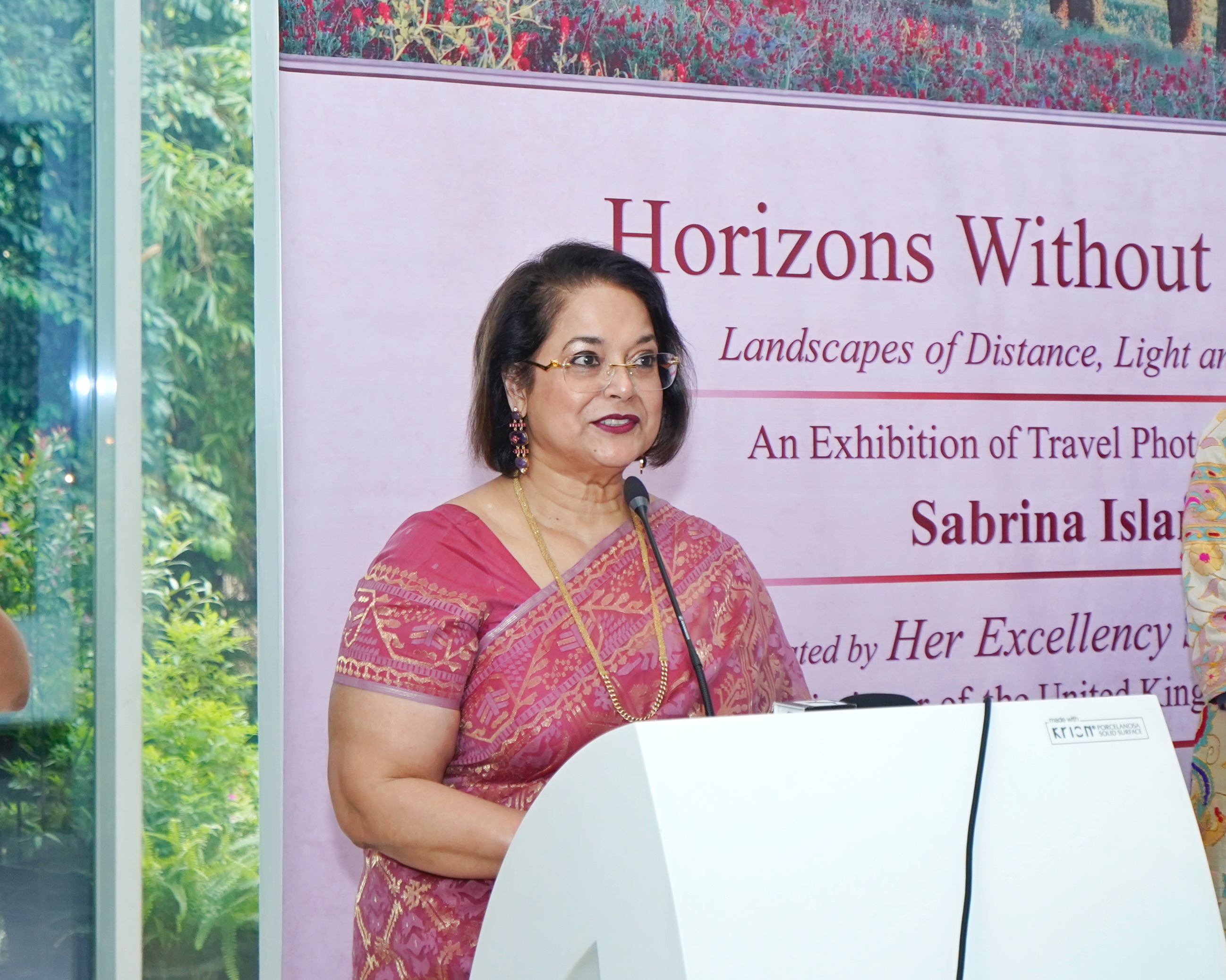
At the heart of the exhibition, Sabrina Islam offered a deeply personal reflection on her practice and emotional grounding. “This exhibition enunciates distance, light, and memory,” she said, framing the showcase as both an artistic journey and an act of remembrance. She noted that its timing in April carries profound significance, marking both her father’s birth anniversary and a moment of remembrance.
She spoke of her father’s literary imagination, recalling how he wrote “The Tartar Pipe” in 1944 while studying at Dhaka University. Though he had not travelled beyond Calcutta at the time, she reflected, his writing revealed a mind that moved freely across geographies and ideas.
“He had not travelled beyond Calcutta,” she said, “but how he thought of all these names and places in the play is just amazing.”
Tracing the journey of the text, she added that it had long been her father’s wish to see the work published as a book. “Today, I am honoured to launch this coffee table book,” she said, describing it as an effort to create “a quiet dialogue between words and images, between one generation and the next.”
Reflecting on her own artistic path, she shared that she has been travelling since her teens, gradually shaping photography into a lifelong engagement with landscapes — “mountains, waterfalls, deserts, coastlines, and vast night skies.”
Her journeys have taken her from the immense skies of Mongolia to the glaciers of Mount Fitz Roy, and across distant deserts, shores, and mountain waters. Each landscape offers its own balance of scale and stillness—each horizon carrying its own light.
Beyond the photographs themselves, the exhibition extended into an immersive experience. Several works featured QR codes that allowed visitors to access short video moments from Sabrina Islam’s travels.
Watching the Golden Eagle Festival riders of Sagsai Village in Mongolia unfold on screen, it felt as though the scene was coming alive in real time. Yet it was the image of Cascada Paine that lingered most strongly for me, leaving a lasting impression long after stepping away from the frame.
Alongside the exhibition and the launch of “The Tartar Pipe”, Sabrina Islam also introduced a range of souvenirs, giving visitors the chance to take home a small part of the experience. The collection included fridge magnets, mugs, water bottles, and phone covers featuring her travel imagery.
 For all latest news, follow The Daily Star's Google News channel.
Comments