


BNSS marks 100 years of ‘Kandari Hushiar’ with musical tributes

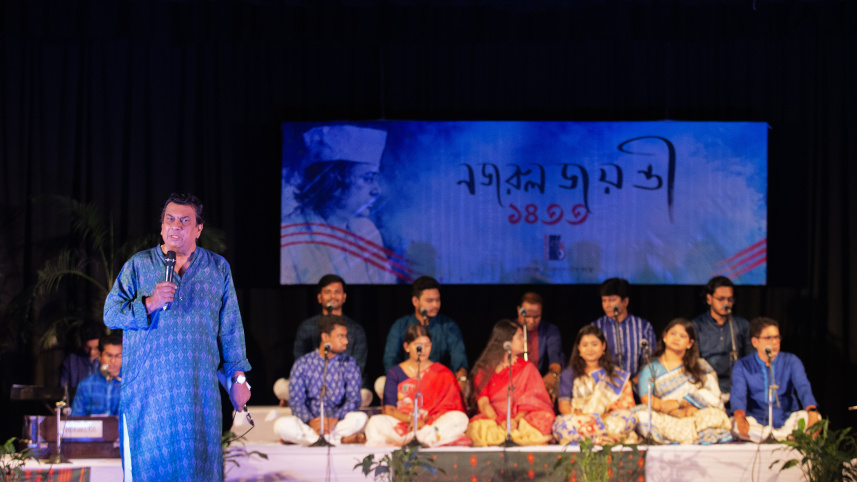
“Durgom Giri Kantar Moru” by our beloved Kazi Nazrul Islam, the national poet of Bangladesh, is a song that is etched in our souls and runs through our veins.
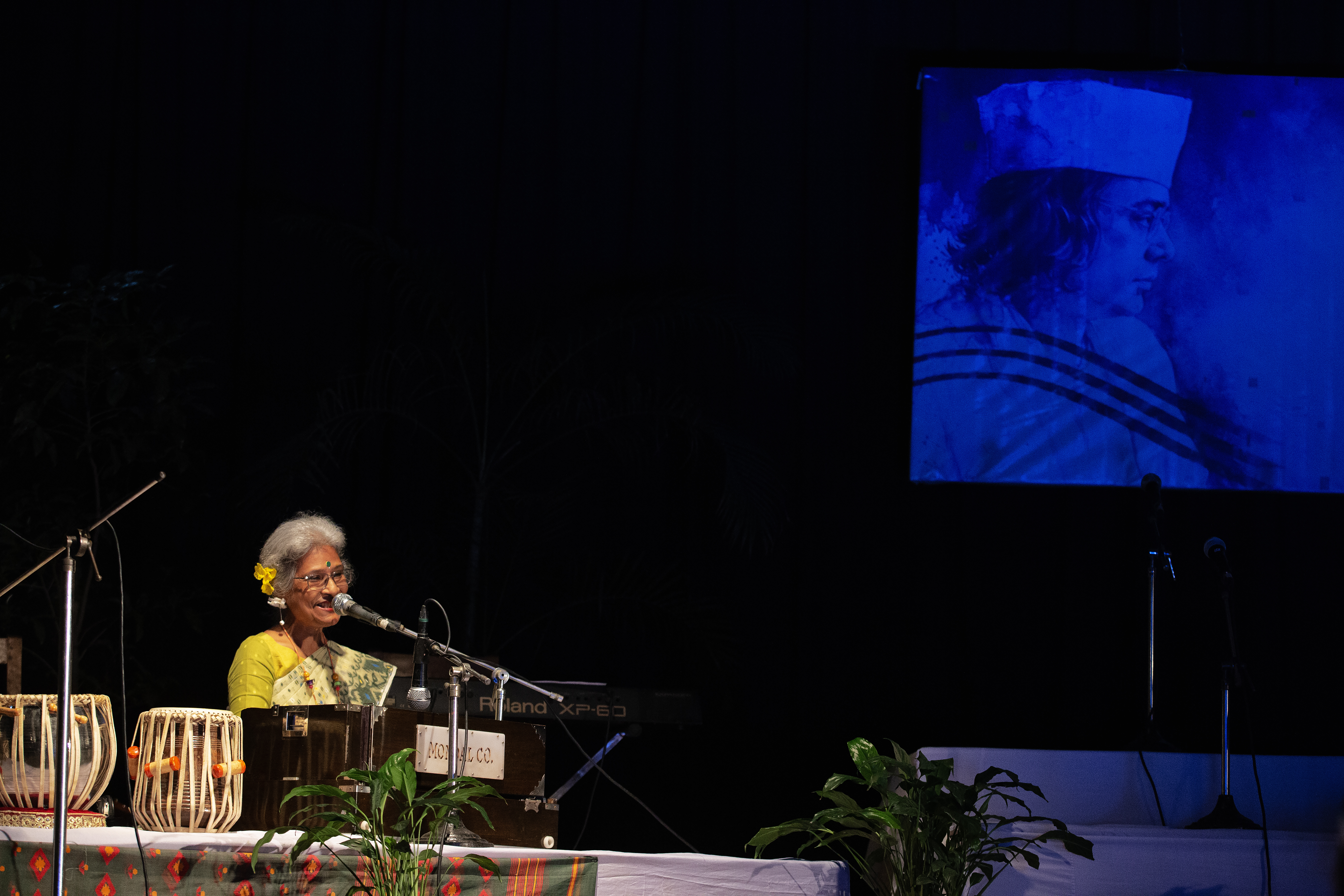
This timeless poem, titled “Kandari Hushiar”, completed its 100th year on May 22, a few days after the poet’s 127th birth anniversary. To celebrate this milestone, along with the poet’s 127th year, Bangladesh Nazrul Sangeet Songstha (BNSS) held an immersive programme, “Nazrul Jayanti 1433”, in the auditorium of Chhayanaut Sanskriti Bhaban on June 19.

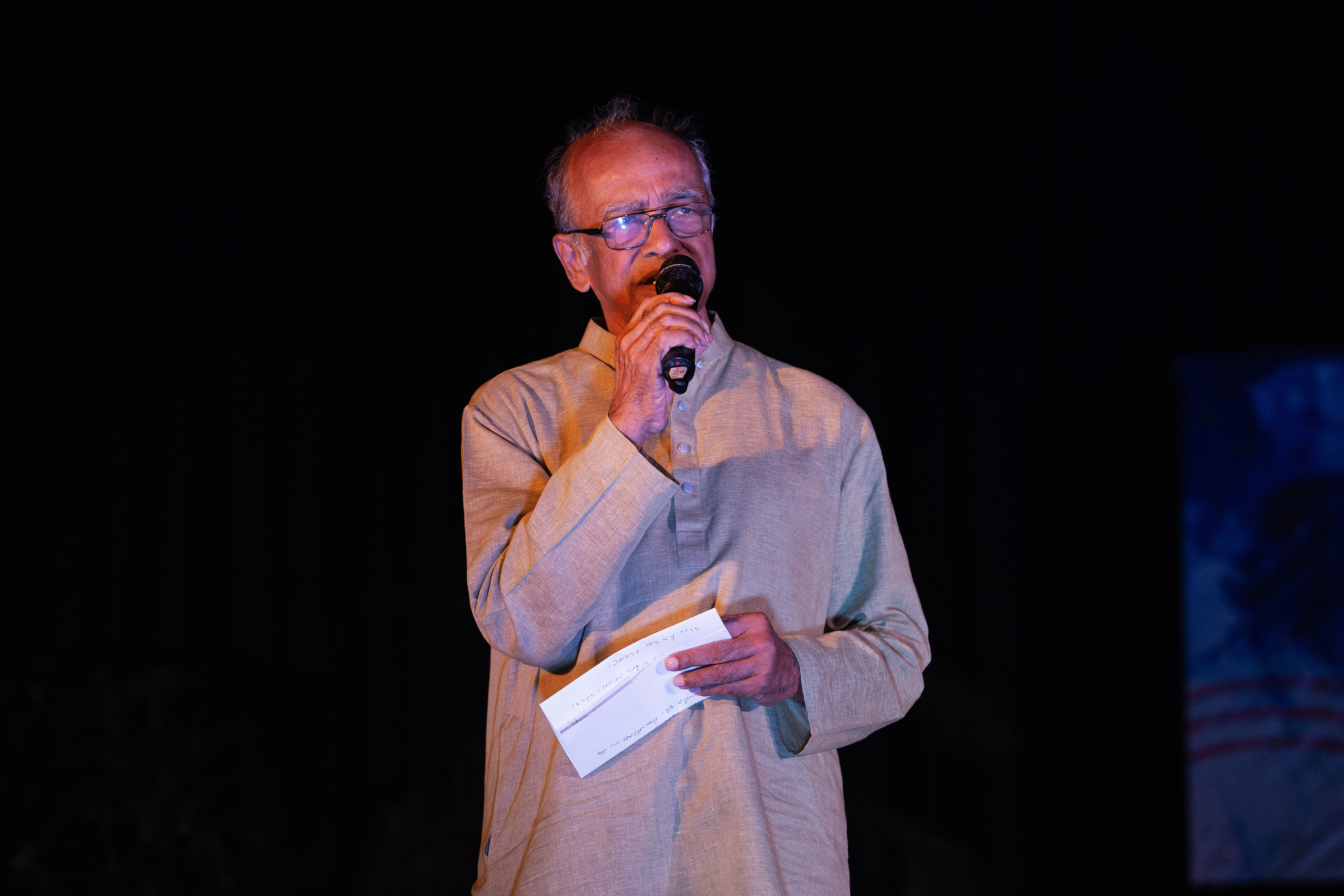
The programme started with a short speech by the General Secretary of BNSS, Khairul Anam Shakil. He spoke about the importance of Nazrul’s work and philosophy being passed on to future generations. He emphasised the importance of the younger generation understanding Nazrul as part of our cultural identity.
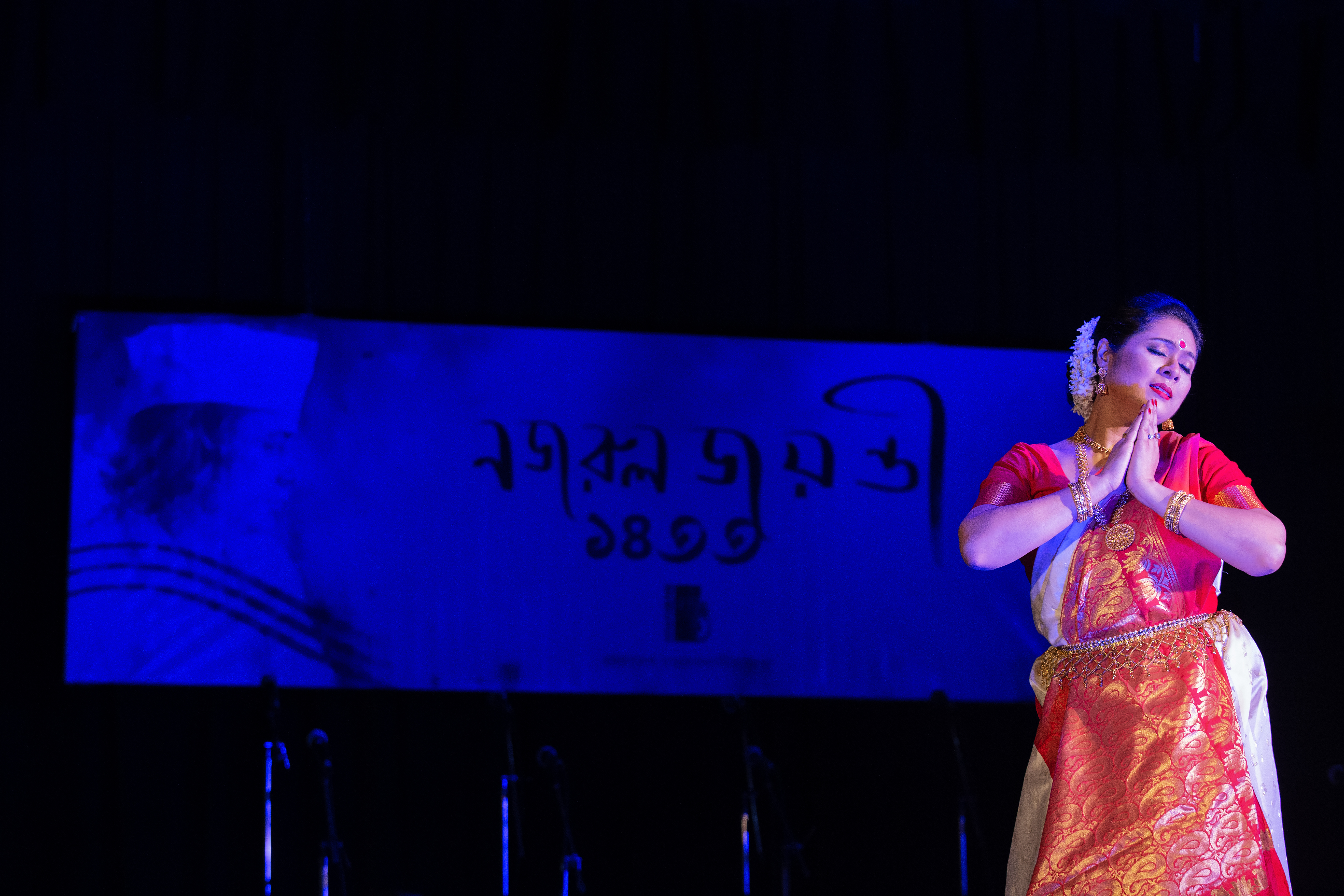
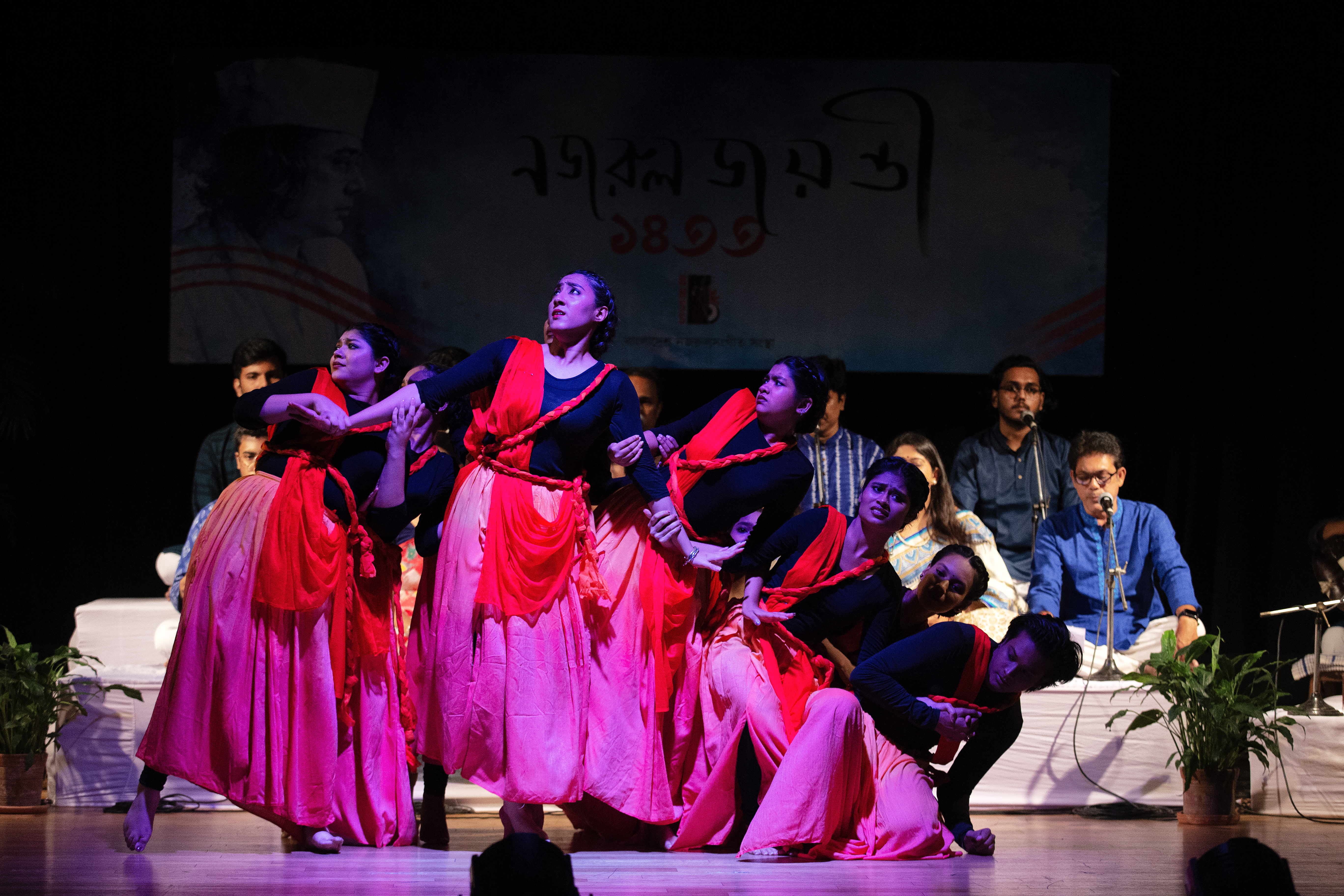
After an electrifying performance consisting of a choral rendition of “Durgom Giri Kantar Moru” accompanied by a group dance by Nrityanandan, choreographed by Sharmila Banerjee, Mofidul Haque delivered a speech on the centenary lyrical narrative of this song.
Born in Asansol, Bardhaman, Kazi Nazrul Islam lost his father at the age of nine. He could not attend school regularly, but he travelled with Leto singers. He joined the British Army in his youth, but when he returned from the war in 1922, he went to Kolkata as a different person—he chose his pen as his weapon against the British.
He was imprisoned by the British in 1923 but was released after a year. During his imprisonment, poet Rabindranath Tagore dedicated his Writunatya (seasonal play) “Basanta” to Nazrul. In 1926, on May 22 in Krishnanagar, he sang “Durgom Giri Kantar Moru” before a huge crowd. He also published an anti-colonial half-weekly magazine, Dhumketu, in which Tagore’s blessing was printed on the first page of every issue. To encourage Nazrul and his fellow rebels, Tagore wrote: “Come, Comet. Build a fire-bridge in the dark, raise the flag of your victory on the spire of the fort of these awful times.”
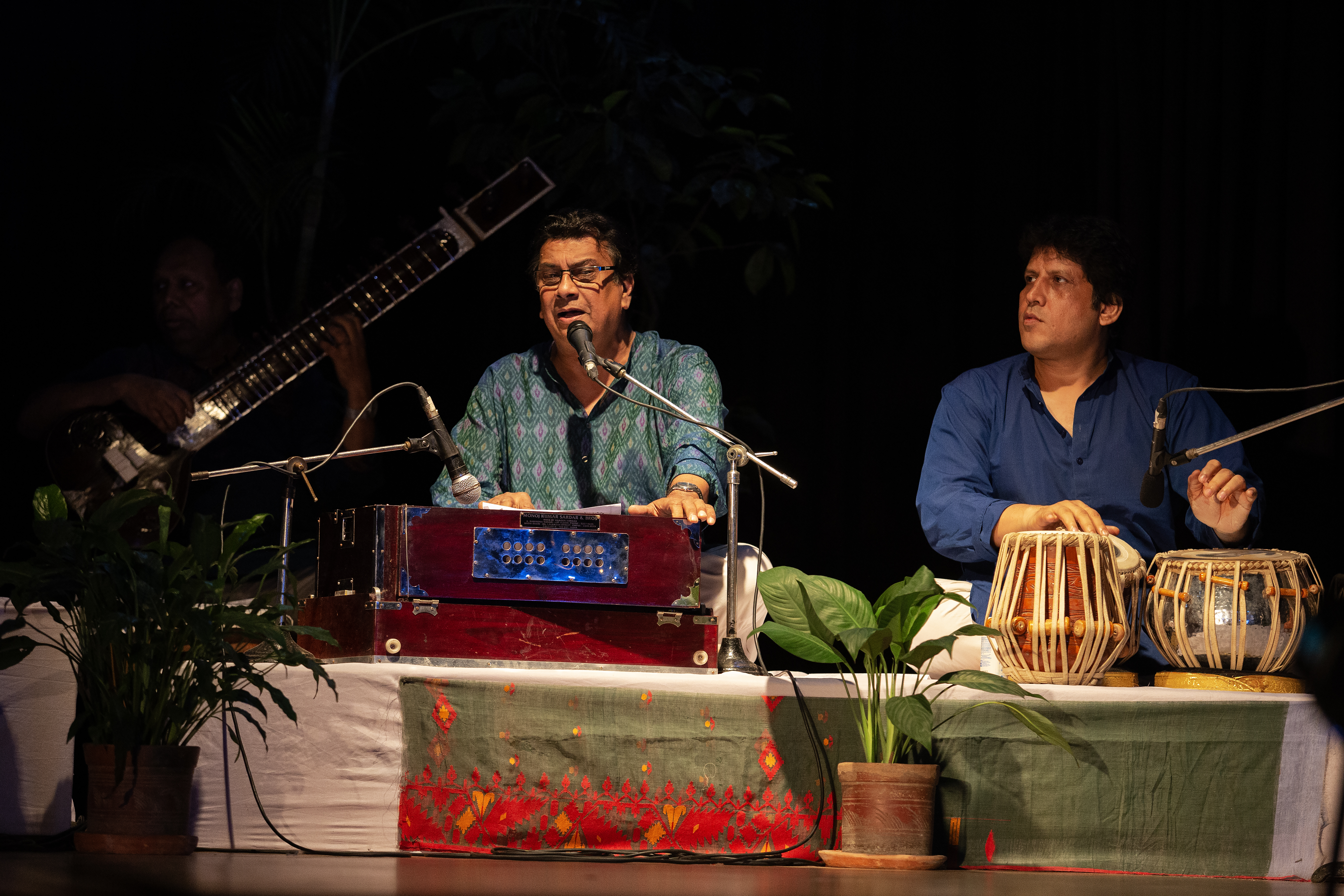
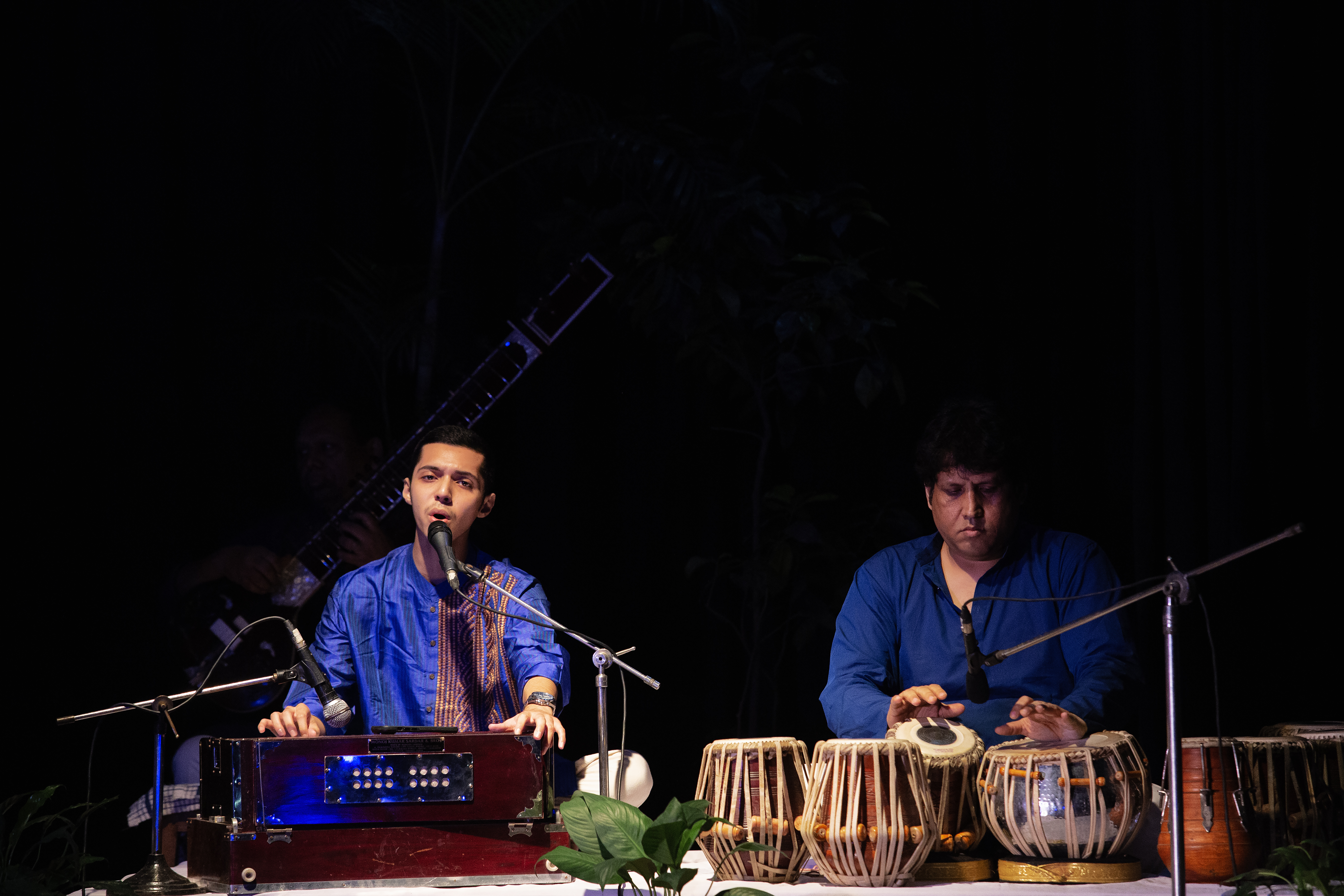
The programme continued with Mita Mostofa’s graceful anchoring. Shantonu Talukdar performed the first solo of the night with Nazrul’s Kabyageeti, “Tomarei Ami Chahiyachhi Priyo”. Then an Esraj-Sarengi recital by Sukla Halder and Shounak Debnath Wreek on the song “Nishi Nijhum” in Raga Bihag, with tabla accompaniment by Kumar Protibimbo, enchanted the audience, followed by Samudra Shuvam singing “Nishi Nijhum Ghum Nahi Aashe”.
Mridula Samadder sang a lovely Kajri song before the veteran artiste Karim Hasan Khan took the stage with a Bhaktigeeti, “Tumi Je Mor Moner Thakur”. After that, Moitrayee Ghosh sang a Ghazal, “Keno Kade Poran”, followed by a Thumri performance by Pinak Saha. Syeda Sanjida Beethika sang a Bhaktigeeti, and then Rudro Das performed a Kheyal Anga song by the poet.
A recitation by Dalia Ahmed of the poem “Baba Nazrul” by Mili Chowdhury changed the atmosphere of the programme for a while. Samina Husain Prema performed an elegant solo dance. After this, one by one, Sanjoy Halder and Anushka Chakraborty Dia took the stage. Mehfuj Al Fahad performed an Islamic song, “Tomar Naame”, followed by Shrabanti Dhar’s solo. The Chairperson of BNSS, Yeakub Ali Khan, sang “Abar Srabon Elo Phire”. After him, Laisa Binte Kamal took the stage.
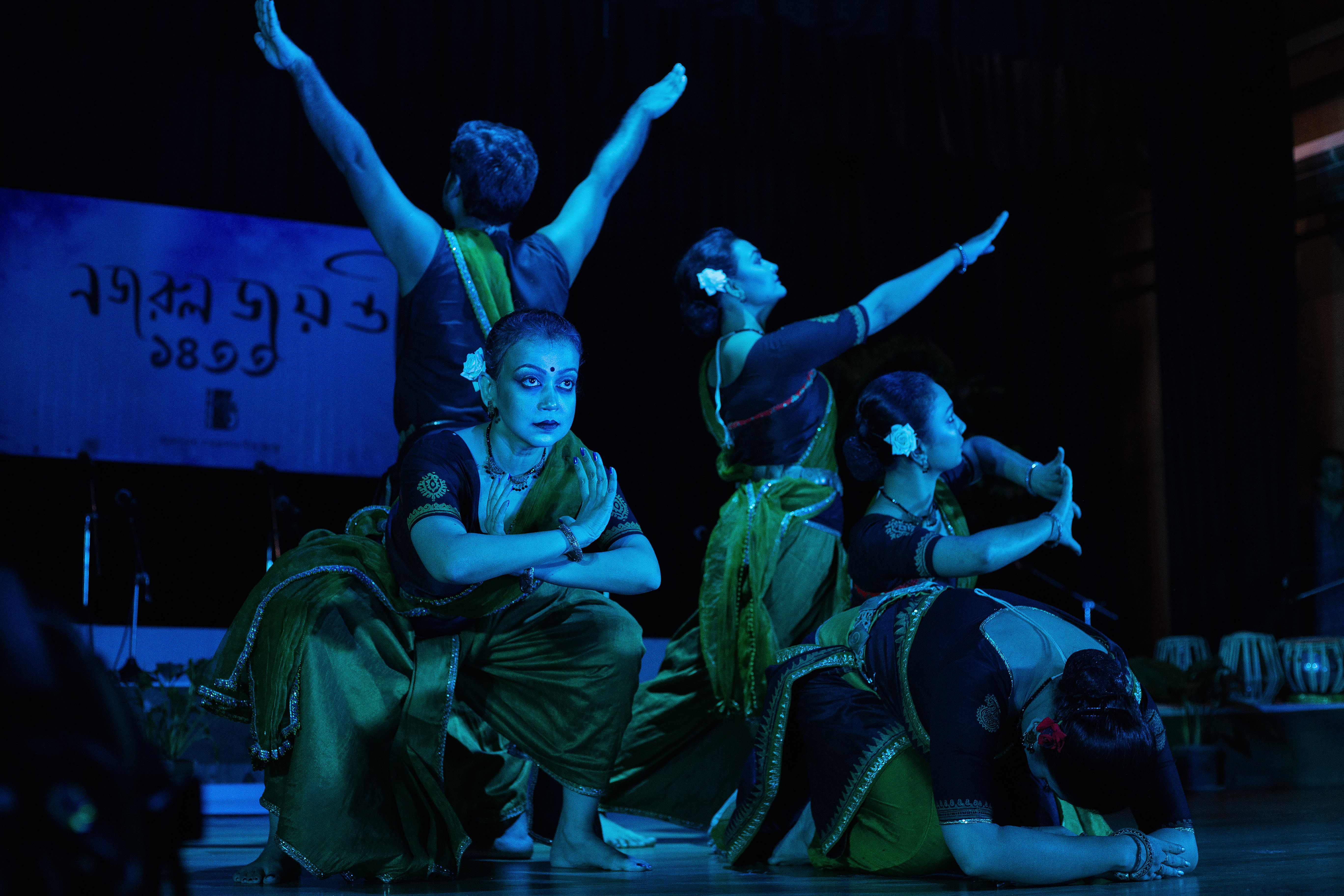
A spine-chilling dance based on a few verses from the poem “Bidrohi” and the song “Joy Hok” was performed by Dhriti Nartanalaya, choreographed by Warda Rihab. Khairul Anam Shakil, in his soothing voice, sang “Benuka O Ke Bajay”. Then Nasima Shaheen Fancy, Toukir Ahmed, Prokriti Roy Sanjh, and Moumita Biswas each performed a solo.
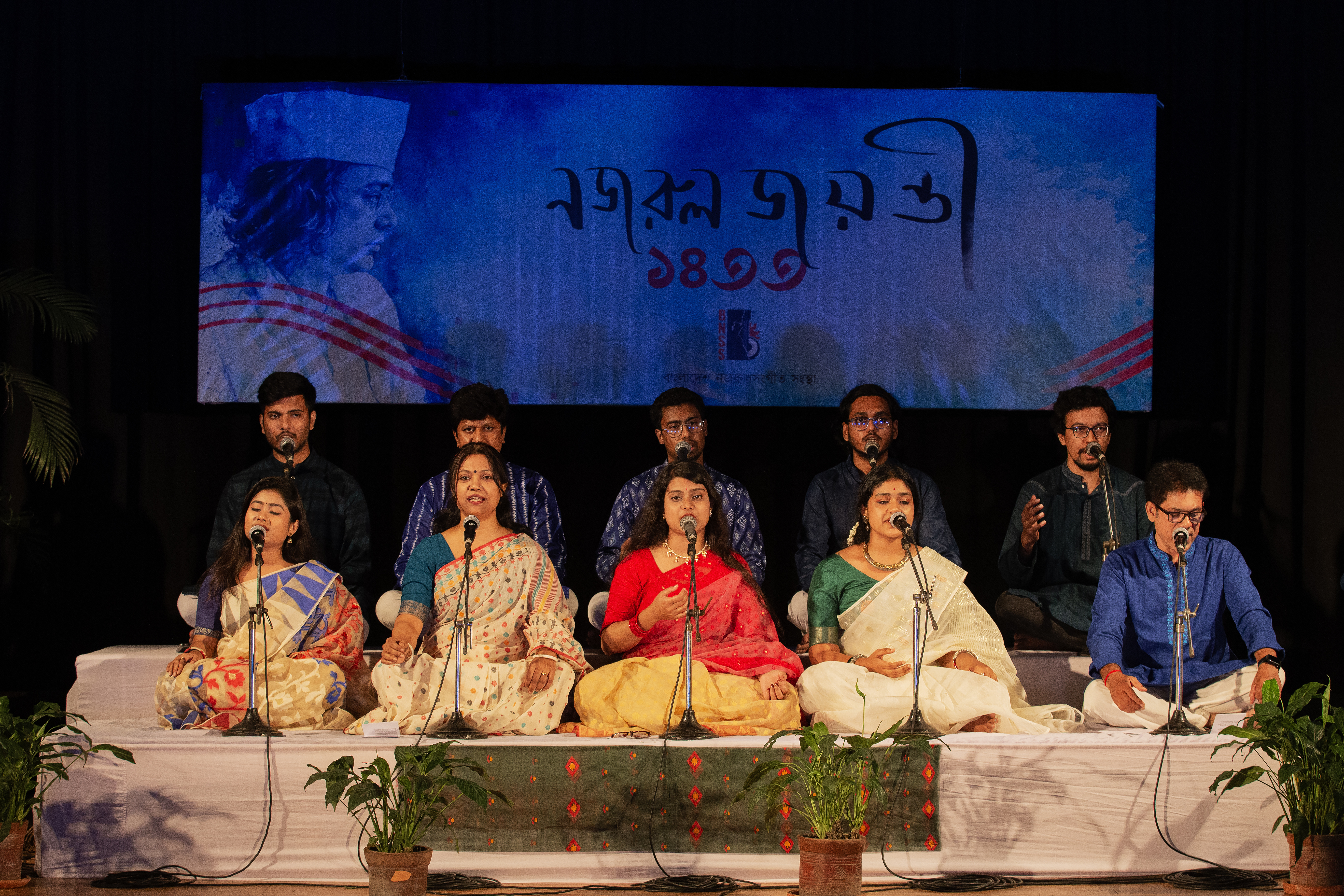
Gulzar Hossain’s rendition of an Islamic Bhaktigeeti with folk flavours was the last solo performance of the night. A chorus of “Gagane Saghana Chamakiche” was the final performance of the programme. Swarup Hossain, Goutam Kumar Sarker, Firoz Khan, Nasir Uddin, and Suman Reza Khan provided the instrumental accompaniment.

All the artistes in this wonderful celebration came together and wished for a healthy environment for cultural practices and for upholding and carrying forward Nazrul’s teachings of unity and youth. The night ended with everyone, including the audience, singing our national anthem.
 For all latest news, follow The Daily Star's Google News channel.
Comments