


Coke Studio Bangla season 4 opens with Nazrul’s ‘Room Jhoom’
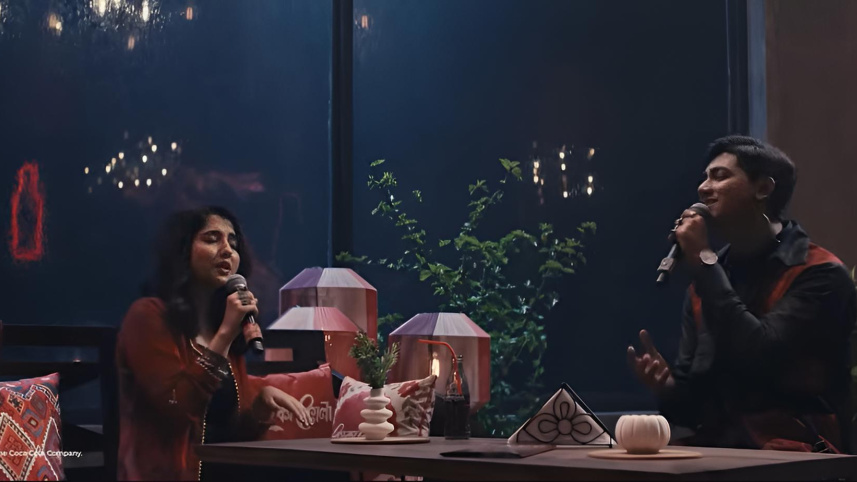
Coke Studio Bangla has launched its fourth season with a tribute to the national poet Kazi Nazrul Islam, releasing a special opening track ahead of his birth anniversary on May 25.
The season begins with a reimagined version of his classic composition “Room Jhoom”, presented as an act of cultural remembrance that celebrates his enduring musical legacy.

The song traces its origin to the Ottoman-Turkish folk song “Üsküdar’a Gider İken”, which Nazrul adapted and transformed into a Bengali monsoon-themed poetic expression.
In Coke Studio Bangla’s reinterpretation, the piece comes full circle by reconnecting its cross-cultural roots, blending South Asian and Turkish musical traditions into a unified contemporary arrangement.

The collaboration features Bangladeshi artistes Mahtim Shakib and Nusrat Jahan alongside Turkish musicians Elif Hande Cevgel and Mustafa Ipek.
The track also marks Mahtim Shakib’s debut on Coke Studio Bangla and introduces Nusrat Jahan as a new voice on the platform.
Across the new season, eight songs are expected to be released, each built around distinct emotional and musical themes that highlight diverse sonic traditions and reinterpretations.
Speaking about the project, Nusrat Jahan described “Room Jhoom” as a deeply personal experience. She noted that the track was produced by Shuvendu Bhaiya, a mentor figure to her and her brother Saeef since childhood, making the collaboration feel like a long-awaited full-circle moment. She added that beginning her journey with Coke Studio Bangla through such a culturally rooted composition made the experience especially meaningful, as it celebrates heritage, collaboration, and music’s ability to connect generations.
Mahtim Shakib also shared that being part of the project was a significant experience for him, as the song carries a strong cultural legacy. He emphasised that Coke Studio Bangla offers a platform where timeless compositions can be reintroduced to younger audiences while still respecting their original essence.

Ultimately, “Room Jhoom” reflects a broader cultural idea beyond a single collaboration. It highlights how musical traditions remain alive through reinterpretation and exchange. By absorbing and reworking influences across languages and cultures, art continues to evolve, ensuring its relevance across generations.
 For all latest news, follow The Daily Star's Google News channel.
Comments