


April 21, 1526: The day a new subcontinent began


History often flatters battles with finality. Yet at times they can also be the commissure of a certitude.
The First Battle of Panipat on April 21, 1526 was one such juncture.

It did not simply conclude the rule of Ibrahim Lodi at the hands of Zaheeruddin Muhammad Babur, it inaugurated a long, intricate process of cultural negotiation. What emerged in its wake was not merely an empire but a civilisation in the mending.
Babur’s triumph introduced a Central Asian political imagination into the Indian subcontinent, yet it did not overwrite what existed.
Instead, it encountered a deeply plural landscape of languages, faiths and social orders.
Consequentially, cultures would meet, mingle and over time merge into something neither entirely foreign nor wholly familiar: Central Asian in origin, Persian in refinement, and destined to be indelibly Indian subcontinental in expression.
The Mughal project that followed was less a monologue of conquest and more a mutual assimilation.
Persianate courtly norms met Indic traditions; Turkic military organisation encountered local administrative practices. The result was not seamless, but it was enduring.

The importance of the Mughal Empire lies precisely in this capacity for synthesis.
Under rulers such as Akbar, the state evolved into a sophisticated apparatus that recognised diversity not as a liability but as a governing principle.
Policies of relative religious freedom, the incorporation of Rajput elites into imperial roles, and the cultivation of a composite culture allowed the empire to stabilise and expand.
The Mughal court became a crucible where artistic traditions were not merely preserved but transformed.
Persian literary forms intertwined with local idioms to produce new registers of expression.
Architectural innovations blended Timurid symmetry with Indian craftsmanship, yielding monuments that still command awe.
Music, cuisine and dress all bore the imprint of this layered exchange. The empire did not erase difference, it curated it.
What makes this convergence historically significant is its afterlife.
The Mughal synthesis seeped beyond courtly confines into the everyday rhythms of the subcontinent.
 For all latest news, follow The Daily Star's Google News channel.
Languages evolved, most notably in the emergence of Hindustani, carrying within it the cadence of multiple civilisational streams.
Social customs absorbed and adapted influences, producing a cultural vocabulary that resisted singular definition. Identity, in this context, became plural by design.
Politically, the Mughal model left an enduring template.
It demonstrated that a vast and heterogeneous territory could be governed through a combination of central authority and local accommodation.
Even as the empire declined, its administrative practices and cultural assumptions lingered, shaping subsequent regimes, including colonial governance.
The British, for all their claims of rupture, often governed through frameworks that the Mughals had refined.
Five centuries on, the legacy of Panipat is less about the battlefield and more about the civilisation it enabled.
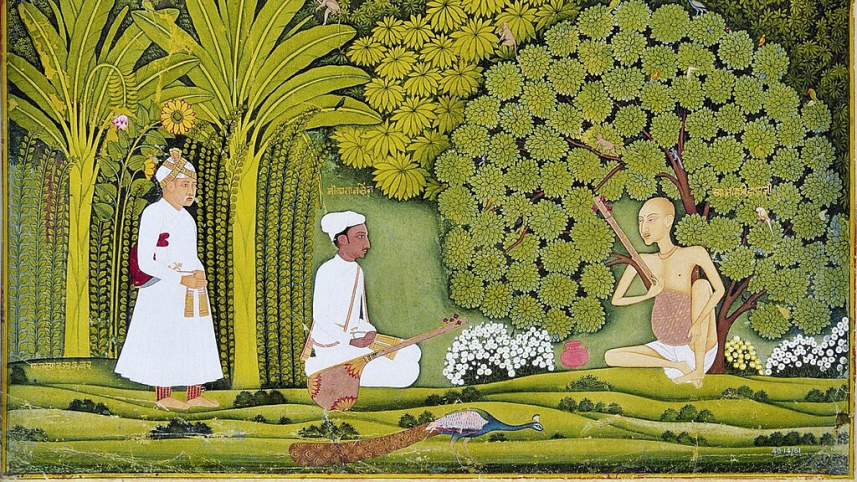
The Indian subcontinent today -- across India, Pakistan and Bangladesh -- continues to reflect that Mughal-era convergence in its languages, its cuisines, its artistic sensibilities, and even its political debates.
Idea of a composite culture, however contested in contemporary discourse, owes much to the processes set in motion after 1526.
Yet this inheritance is not without tension.
The Mughal past is remembered as a period of synthesis, splendour or domination, depending on the lens through which it is viewed. That very contestation, however, underscores its centrality.
One does not argue so fervently about what is peripheral. The Mughal imprint persists because it is embedded in the very fabric of the region’s identity.
Panipat, then, is best understood not as an endpoint but as an origin story of convergence. It reminds us that identities are rarely pure: they are composed, negotiated and, at times, imposed.
In the final reckoning, the significance of April 21, 1526 lies in its quiet audacity. A single victory opened the door to a centuries-long experiment in cultural fusion.
The empire that followed may have faded, but the identity it helped to forge remains -- layered, contested and unmistakably plural.
Comments