


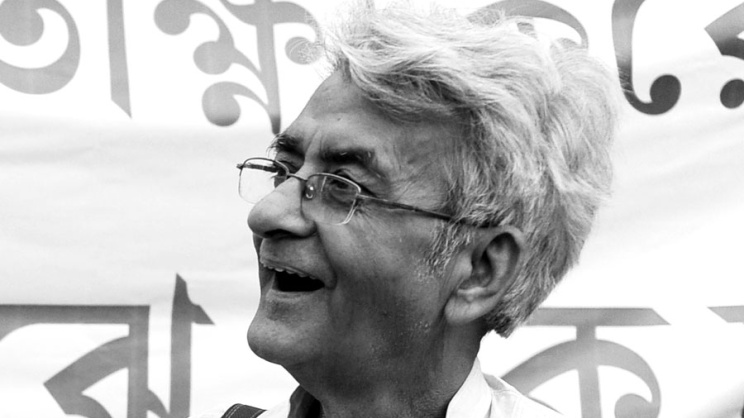
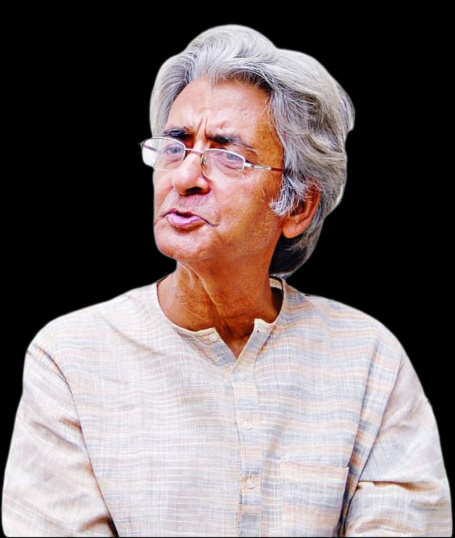
Pratul Mukhopadhyay, a personification of Ekushey February’s spirit

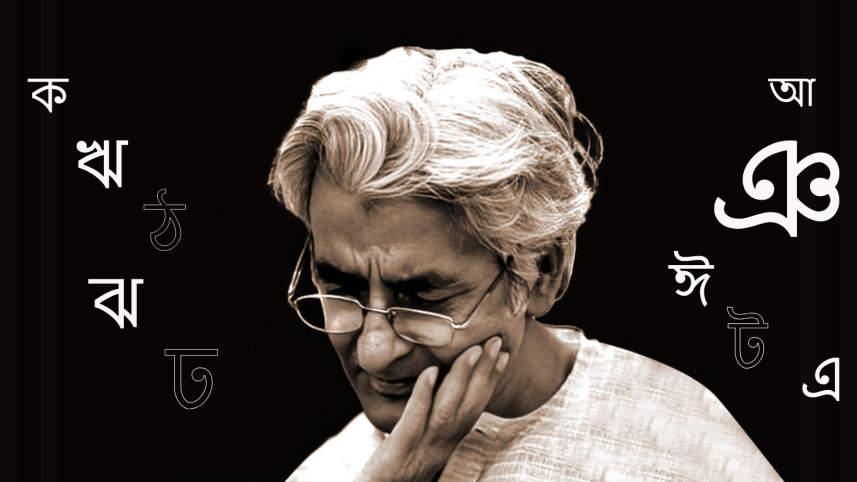
Ami Banglay gaan gai
Ami Banglar gaan gai
Ami amar amike chirodin ei Banglay khuje pai
These verses, simple and intimate, were still being sung by Pratul Mukhopadhyay from his hospital bed days before his death on February 15, 2025. Visitors recall him smiling, stretching the final notes, heedless of frailty: “Ah, kicchhu hobena” (nothing will happen) he told a nurse, as if the act of singing itself could ward off mortality. In that moment, music and identity converged—Bangla was not just a language, it was resistance, ancestral pride, and life itself.
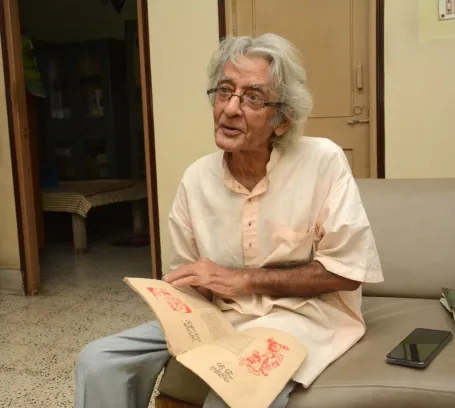
Bengali stage music had rarely been so singular. In the Gananatya and Ganasangeet tradition, songs relied on collective harmony, choirs channeled the pulse of social movements, labour struggles, and dreams of justice. Mukhopadhyay, however, charted a different path. As a lifelong activist, he barely needed to carry instruments on stage, in streets, in marketplaces.
Born in Barishal in 1942, Mukhopadhyay lived through the fractures of partition, the uncertainties of migration, and the routines of middle-class survival. Politics was inherited consciousness, not a slogan. Songwriting became a ledger of conscience: a daily reckoning with history, place, and identity. His voice quivered at the edges, not from lack of technique, but from the weight of feeling itself. Being Bengali was not taught; it had to be experienced.

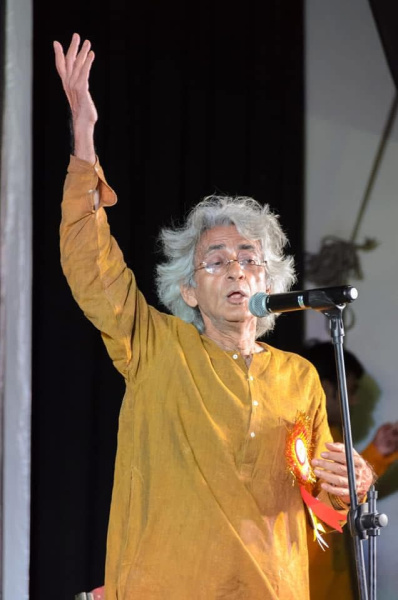
By the 1990s, Bengali music was shifting. Solo singer-songwriters like Kabir Suman and bands such as Mohiner Ghoraguli challenged norms, but Mukhopadhyay remained unique. His first album, “Jete Hobe” (1994), offered a new sonic terrain: instruments existed, but the voice took precedence. Interludes were sparse, carrying only him. His phrasing, tremor, and human imperfection became markers of authenticity. In a mainstream of polished, sugary tones, his voice was a deliberate rupture.
His songs were not just music—they were acts of social consciousness. “Dinga Bhasao Sagore” and “Februaryr Ekush Tarikh” circulated in college canteens, book fairs, and protests. His phrasing—“Bangla is the water that quenches my thirst, the final, satisfying sip.”—was revolutionary, audacious even to 1990s poets. He translated and set to music poems by other Indian-language poets, and adapted Charlie Chaplin’s Limelight Theme, turning private devotion into playful, universal affection.
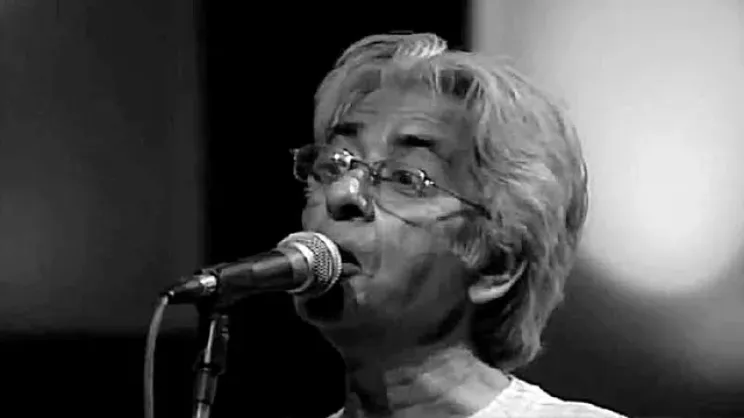
His follow-up album, “Otho Hey”, urged listeners to rise with time. On stage, theatricality was inseparable from song: gaze, expression, gesture, and voice worked in concert. Songs like “Saper Mathay Pa Diye Se Nache” or “Nakosi Skele Africa” showcased a presence that was both political and intimate. Arun Mitra’s prose poem “Ami Eto Boyoshe” gained windswept desolation and raw lyricism under his musical translation. His music was constructed, deliberate, yet alive—never sentimental, always precise.
Mukhopadhyay also extended this care to children. “Kuttus Kattas” carried tenderness in nearly every track, nurturing young listeners toward maturity, following a legacy begun by Salil Chowdhury and extended by Sumon, Nachiketa, and Anjan Dutt.
He had no formal training. “I learned by listening, by striking and striking again,” he said. Audiences initially stumbled over the integrity of a single, unpolished voice. For a generation navigating stagnant politics and pervasive “feel-good” culture, Mukhopadhyay shattered stillness. He sang truth to power, often in marketplaces and streets, bringing the language of art to those whose lives were too often overlooked:
“Born, we must die, everyone knows
Yet even in death, there is a difference, brother—
Not all death is the same.”
His reflections on partition carried both irony and grief:
“Dujonei Bangali chhilam dekho, dekhi kaandokhan
You are now Bangladeshi, I am called Indian!
—Learning, even while giving slogans, who is brother, who is enemy.”
Pratul Mukhopadhyay’s songs do not end with the last note, nor with the closing line of a lyric. They live in the pauses between breaths, in the quiet insistence of memory, in the insistence to see, again and again, the face of Bengal. His music asks questions rather than giving answers: What does it mean to belong? How does a language shape a people? How can art persist beyond mortality, beyond stage and record, beyond the limits of a single life?
“Ami Banglay Gaan Gai”—and in that singing, the work is never truly done.
(Certain historical and biographical details are adapted from Anirban Mukhopadhyay’s Bengali obituary of Pratul Mukhopadhyay, Anandabazar Online, February 15, 2025.)
 For all latest news, follow The Daily Star's Google News channel.
Comments