Gregory Peck and the lost art of masculinity without swagger

Cinema, over the years has been enriched by certain individuals whose presence it seems, with the passage of time, less an artefact of a bygone age and more a quiet rebuke to the present.
One returns to them not out of nostalgia, but out of a lingering suspicion that something essential has been misplaced along the way.

Gregory Peck, on that note with his steely suavity, poises not merely as a star of Hollywood’s golden age, but as a figure of rare equilibrium.
Born on April 5, 1916, he grew into a figure who seemed less a star than a standard -- a measure by which a certain idea of manhood, civilised and self-possessed, might be judged.
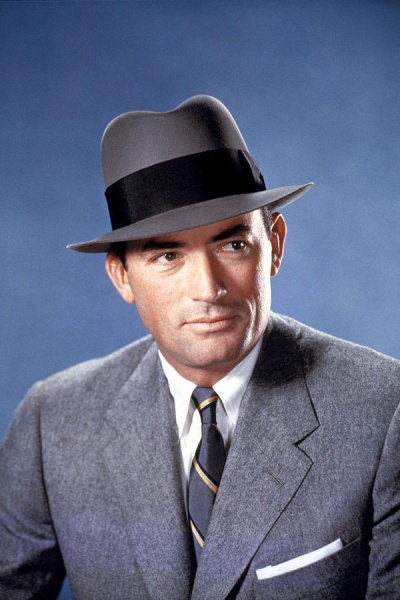
His appeal remains not immediate in the manner of spectacle; it accrued, line by measured line, glance by considered glance, until it settled into something far more enduring -- a broader respect, bordering on reverence.
Before one speaks of his roles, or the films that have since acquired canonical status, one must reckon with the man’s singular effect -- the sense that here was an actor who did not court admiration so much as earn assent.
A silhouette of sonder
Peck’s countenance carried an unusual intelligence.
It was not merely handsome -- though it assuredly was that -- but reflective, almost judicial.
One sensed in it a habit of consideration, a reluctance to react before understanding. In a medium predisposed to immediacy, this deliberation proved quietly arresting.
Where Marlon Brando electrified with his volatility, and Cary Grant charmed with an effortless insouciance, Gregory Peck offered something sterner and, in the end, more enduring -- conviction with a chic.
There was always, in Peck’s screen presence, a curious amalgam of power and restraint.
He possessed the physical credentials of the classical leading man -- tall, assured, unmistakably commanding -- yet he carried that authority with a kind of intellectual modesty.
One felt that he would rather persuade than prevail.
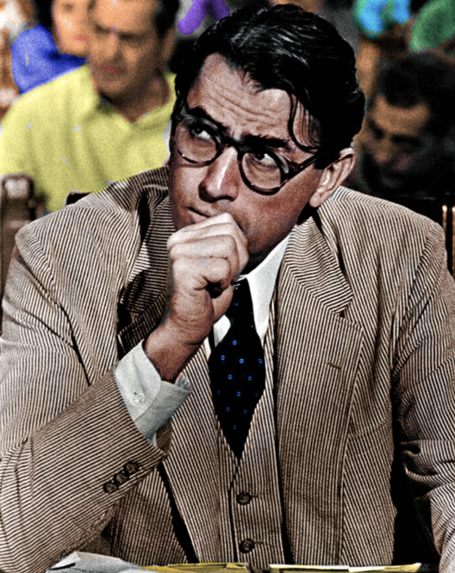
His portrayal of Atticus Finch in “To Kill a Mockingbird” has, by now, passed into the realm of cultural scripture. It is spoken of, quite rightly, with reverence; yet reverence alone does not quite account for its peculiar hold on the imagination.
What Peck achieves here is a studied absence of flourish. There is no grandstanding, no theatrical insistence. His Atticus persuades not by force of rhetoric but by the steadiness of his bearing. He stands, he listens, he speaks when necessary -- and in that economy of gesture lies an authority more compelling than any outburst.
It is a performance that seems to argue, gently but firmly, that decency need not announce itself.
 For all latest news, follow The Daily Star's Google News channel.
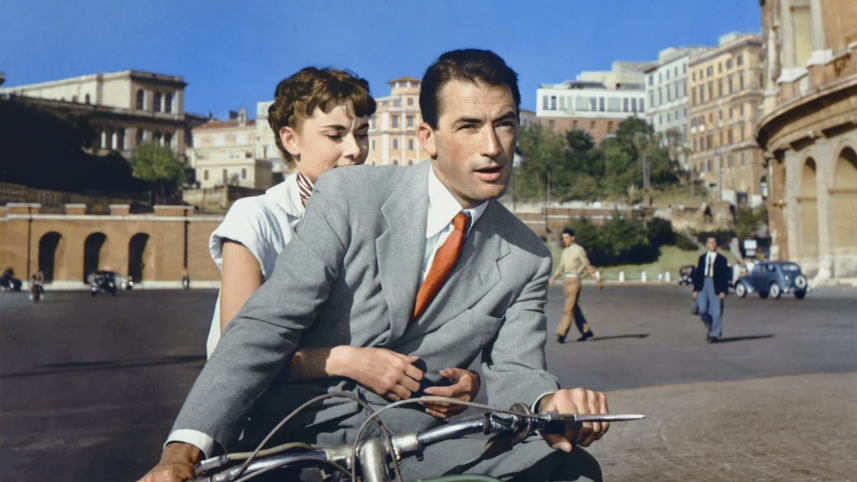
 In “Roman Holiday”, opposite Audrey Hepburn, he exhibits a charm so lightly worn that it scarcely calls attention to itself.
He yields space, allows silence, trusts the moment. It is, if one may put it so, a civilised performance.
Even when cast in sterner narratives such as “Cape Fear”, his authority never curdles into brutality. It remains measured, almost reluctant, as though force were a last resort rather than a reflex.
Gregory Peck’s voice deserves its own consideration.
It was neither ostentatiously sonorous nor theatrically resonant, yet it carried an unmistakable assurance.
There is, in his delivery, a cadence that suggests belief -- not in the sense of dogma, but of considered conviction.
He spoke as one accustomed to weighing words before uttering them. In an art form that often rewards excess, such restraint feels, even now, rather distinguished.
A career of quiet continuity
His career, viewed in retrospect, reveals none of the usual theatrics of stardom.
There are no violent oscillations, no conspicuous reinventions.
Instead, one observes a steady adherence to roles that reflect a coherent sensibility. It is as though Peck understood, instinctively, the kind of man he wished to present to the world -- and saw little reason to deviate from it.
This consistency, far from limiting him, endowed his body of work with an unusual integrity. One encounters not a series of performances, but a sustained argument about character.
The figure he embodied -- morally anchored, intellectually engaged, emotionally articulate without excess -- has grown increasingly rare.
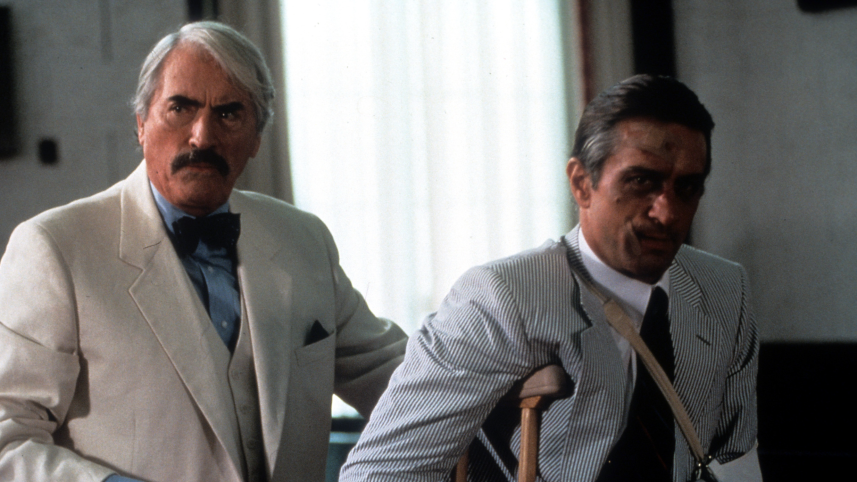
One sees, in his stead, either spectacle or cynicism; seldom the quiet assurance of principle.
His appeal endures precisely because it is not contingent upon fashion. It rests on something more durable -- a belief in the possibility of grace under pressure, of strength without swagger.
Even after a century and decade after he was born, Gregory Peck’s presence lingers not as nostalgia but as a kind of aspiration.
He reminds one that the screen, for all its artifice, can still accommodate sincerity; that dignity, when rendered without affectation, possesses a magnetism all its own.
In the final reckoning, Gregory Peck did not merely occupy the frame. He steadied it.

‘Mon Pakhi’ brings Santal life and culture to the screen

Khairul Basar, Arpita Mitra star in new web-film ‘Tumito Cholei Jabe’

Actress-director Mohsina Akhter ties the knot
Ajay Devgn returns as Vijay Salgaonkar in ‘Drishyam The Conclusion’

Aamir Khan to play 25-year-old in ‘Lalkaara’ after major weight loss

‘Spider-Man: Brand New Day’ heads for fourth box-office win

58 film personalities honoured at ‘Hridoye Dhaka 416’

Runa Khan begins shooting for haor-based film ‘Jolpobon’

Television Playwrights’ Association announces new executive committee