


Regulating “visual pollution”
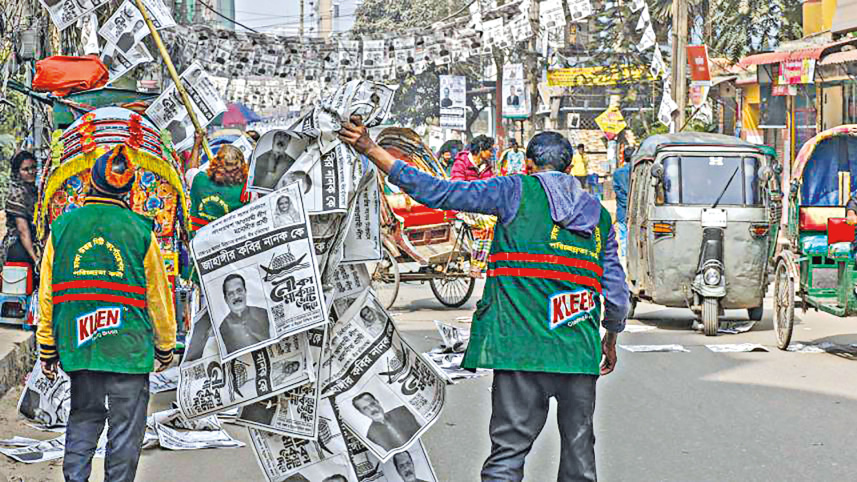
Visual Pollution is an emerging environmental problem of modern urbanisation. It refers to all unnecessary, excessive, and cluttered visual elements that ruin environmental beauty and create visual discomfort for people. It may occur both in natural and urban environments by excessive advertisements, illegal banner-festoons, uncontrolled signboards, graffiti, hanging wires, and scattered wastage. As a result, this sight pollution disrupts people’s concentration and affects their quality of life negatively.
In natural environments, it impacts biodiversity by interrupting various animals’ migration process and disrupting the normal photoperiod of plants. From a social perspective, visual pollution has negative effects on mental health and well-being. Moreover, economically, local government have to spend extra money to maintain urban cleanliness by removing these clutters.

It appears that a lack of comprehensive legal and judicial guidance is one of the limitations, as very few statutory frameworks and judicial decisions explicitly address visual pollution. Due to ambiguous regulatory and enforcement mechanisms, and the absence of a structured system for reporting illegal billboards or visual hazards, citizens often lack clarity about where and how to file complaints. As a result, the legal remedies remain largely inadequate. Although there is still no separate law to control visual pollution in Bangladesh, a few piecemeal approaches are there in some existing laws and policies. For instance, sections 4-6 of the Graffiti writing and Poster Sticking Control Act 2012 empower authorities to designate permissible locations, ensure the removal of unauthorised posters and graffiti, and impose penalties for violations. Whereas section 41 together with the Third Schedule of the Local Government (City Corporation) Act, 2009 allow the authority to undertake urban beautification. Similarly, the Code of Conduct for Political Parties and Candidates in Parliamentary Elections 2008 (section 7) prohibits candidates and their supporters from displaying posters, leaflets, or handbills on certain places. Moreover, the Bangladesh Environment Conservation Act 1995 mandate the control of public nuisance and environmental pollution, respectively. Pertinently, Article 18A of the Constitution of the People’s Republic of Bangladesh requires the State to protect and improve the environment, which, although indirect, still supports the regulation of visual pollution.
However, in my opinion, the absence of a comprehensive regulatory and policy framework to define, prohibit, and penalise visual pollution remains a critical gap. Weak penalties often fail to control illegal political banners, posters, festoons, billboards and graffiti, from which businesses generate significant profit. Notably, the Election Commission exercises its regulatory authority over banners, posters, and billboards only during election periods, although their effects continue year-round.
Several legal reforms appear necessary to strengthen control over visual pollution based on identified gaps in the existing framework. Strict laws should be enacted to ensure that political actors who violate the code of conduct by postering and displaying banners are held accountable. Such measures will not only encourage political parties but also raise awareness among their supporters about complying with local authorities’ directions. With a well-planned, comprehensive legal and implementation mechanism, visual pollution can effectively be controlled. Thus, it can contribute to safer streets, improved urban livability and a more orderly public space.
Amirul Islam Bapon
Law student, Jatiya Kabi Kazi Nazrul Islam University.
 For all latest news, follow The Daily Star's Google News channel.
Comments