


Ghonoghota 2: Monsoon dance returns to Bokultola
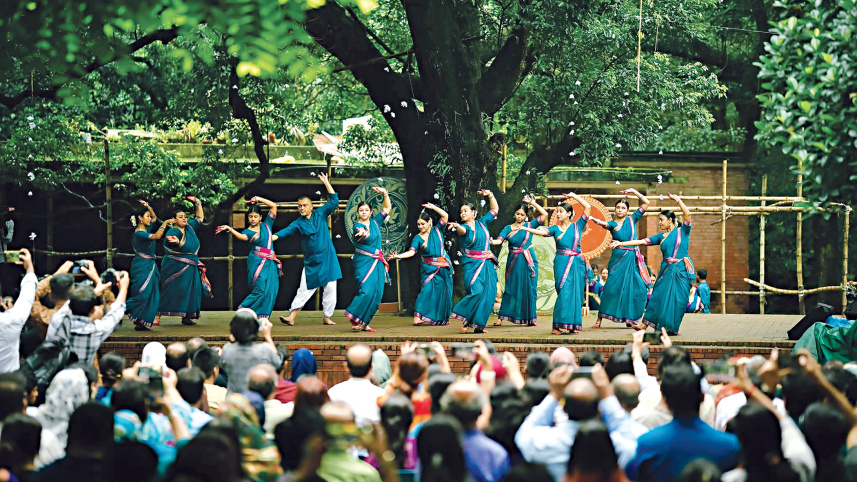
The rains return, and with them, a celebration of rhythm and resilience. Arthy Ahmed Dance Academy, in collaboration with the Faculty of Fine Arts (Charukola Onushod), University of Dhaka, will stage “Ghonoghota 2” -- a monsoon dance recital following the resounding success of last year’s inaugural production.
Set against the leafy backdrop of Bokultola, the show will be held today, from 11:00am to 12:30pm. Dhakaites are invited to embrace the monsoon palette in white, green or blue sarees or panjabis, blending into the day’s harmony.

“This year, the anticipation arrived early. The hype built even before Ghonoghota 2 was announced. Last year, audiences didn’t realise how sprightly and beautiful the production would be until they stood drenched, singing along to Tagore’s songs and watching dancers move with the monsoon.
“Afterwards, social media buzzed with photos, videos and praise. Many wanted to relive the experience; those who missed it pleaded for another chance. That chorus of voices is what brought the festival back,” says Arthy Ahmed, founder and director of the academy.
It is the first production since Arthy received the Ekushey Padak in 2026, honouring her decades of devotion to dance.
Nearly 300 performers -- young and old -- will take the stage, many for the very first time -- ordinary working people chasing childhood dreams, balancing home, family and office life while carving out time for rehearsals.
This isn’t a show of polished professionals. The essence of Ghonoghota is the celebration of dreams -- dreams carried since childhood, deferred, and finally finding their way to the stage.
Every dancer moves with pure joy despite aching knees, sore backs, office deadlines or family responsibilities. Yet they manage to give themselves to this stage. It is a beacon for those who have carried unfulfilled dreams, showing them that if these performers can, then so can they.
Last year’s recital carried its own magic. Every Tagore song was beloved and familiar. Rain poured as the audience sang together; some danced on the sidelines. At the end, tears flowed as people watched dreams fulfilled on stage -- perhaps dreams they themselves had once held. Some confessed they had always wanted to learn dance but never could; one of them is now a student at the academy.
The popularity of Ghonoghota has surprised even its organisers. Last year the production was organised independently; this year, Charukola offered to collaborate, providing support in many ways. If the audience loves it, it could become an annual tradition. Perhaps not just during the monsoon, but in spring, autumn or summer too, if people ask for it.
For now, after Ghonoghota 2, four more productions are already lined up for this year, and preparations are underway.
Ghonoghota 2 promises not just a recital but a vibrant gathering of dance, community and the spirit of the monsoon -- an ode to the city’s pulse and the season’s poetry.
For us, Ghonoghota feels like a true festival, giving us another reason to dress up and be footloose.
 For all latest news, follow The Daily Star's Google News channel.
Comments