


The untold lives of Sadarghat’s boatmen
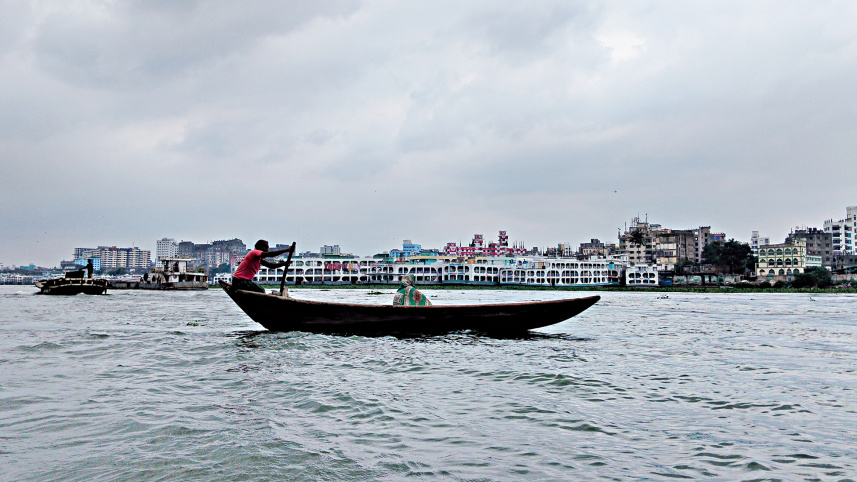
The Buriganga holds unimaginable history, many stories, and so much more. It was never calm from the very beginning. Every day, thousands of people pass through this river, noticing its chaos, but some things are left behind unnoticed -- the faces of men whose lives begin before the sunrise and end long after dusk.
While Dhaka races by on flyovers and metro rails, these river warriors continue to row through the city’s past and present, carrying passengers, stories, and generations of tradition on their wooden boats.

Boatmen of Buriganga, who never left the water, have been living a contrasting life but no one ever noticed that part of Dhaka life.
To an outsider, they may seem like just another part of the scenery. But spend a few minutes on one of their boats, and sadly, an entire new world unfolds.
Mohammad Wahid Ali, who was not supposed to have this boatman life, said, “I realised that if I could earn even Tk 10 consistently every day, it would be better than working two days and sitting for five.” When he first came to Dhaka to earn a living, he used to be a laborer, but managing expenses for family was tougher than he could ever imagine.
For the past 32 years, life has been cruel to Ali, but this river becomes more than home for people like him.
70-year-old Abdul Malek is among the oldest boatman, even witnessing the liberation war, shared how the past two decades have been stuck on life, spent only trying to survive and support his family. “My family lives in Chandpur. I’m the only earner. But it’s not enough for what I earn,” he sighed. “I don’t really have money left for my family, it mostly goes towards food and survival.”
Malek continued, “This boat is like everything to me, I even spend my night here too.” When the sky turns dark and the monsoons bring rain and storms, it’s not something to enjoy for them. “When it rains, polythene sheets are the only shelter I can manage for myself.”
If you go for an hour to Sadarghat in the afternoon, you’ll see how their one boat becomes their office, and their bedroom. A small plastic bottle serves as a water container, a folded cloth becomes a pillow during those quiet afternoons. Under the blazing summer sun, maybe a torn umbrella saves their life from heat stroke. Even during sudden monsoon downpours, they remain on the river, chasing passengers and daily earnings.
Life at Sadarghat runs on a rhythm of its own. Passengers hop on and off boats with urgency, bargaining over fares as if negotiating big deals.
Abdul Majid explained that they usually charge Tk 30 per trip. “But we don’t always get enough passengers. That’s why we sometimes ask for as much as Tk 40 or Tk 50,” he stated. “Even then, people often shout at us, saying we’re charging too much.”
On a good day, Majid earns around Tk 500 to Tk 600, most of which goes straight to his family. “Whether I eat or not, my family has to survive on this small income,” he smiled. “If they can live a good life, that’s enough for me.”
This is how the life of Buriganga’s boatmen goes on. Still, they show up every day, with a smile on their face, and with the tune of Bhatiyali. They expect that one day, this “Nil doriya” will take them someplace where they will live a better life with their loved ones.
 For all latest news, follow The Daily Star's Google News channel.
Comments